Sapindaceae
Norway Maple (Acer platanoides)
Acer platanoides
Plant in full sun to partial shade in well-draining loamy soil. Water regularly during establishment and dry spells. Prune lightly in late autumn to maintain shape. Fertilization is generally unnecessary in good soils.
Every 10 days
Bright indirect
-40° - 35°C
40% - 70%
Categories
What is Norway Maple?
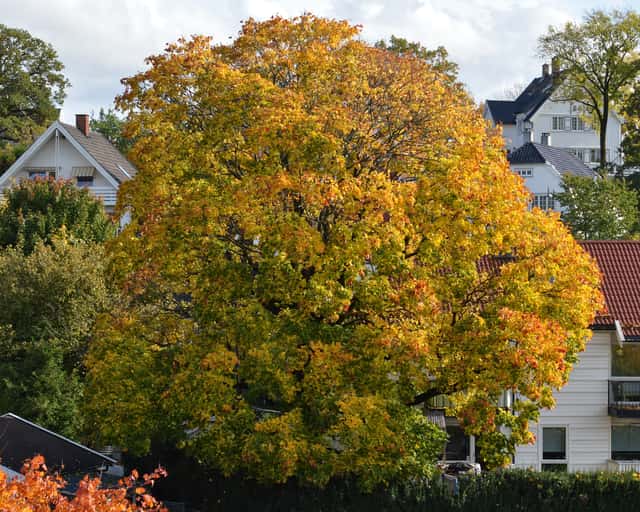
Norway Maple (Acer platanoides) is a medium-care plant from the Sapindaceae family. The Norway Maple (Acer platanoides) is a large deciduous tree native to Europe and western Asia, widely planted as a shade and street tree. It features broad, palmate leaves, small yellow-green spring flowers, and vibrant yellow to orange autumn foliage. Extremely hardy and adaptable, it tolerates a...
Norway Maple grows up to 25.0m, spread of 1200cm, watering every 10 days, -40°C – 35°C, 40–70% humidity. It is not suitable for indoor environments and safe for pets.
Unlike many popular species, Norway Maple is safe to keep around pets.
How to Care for Norway Maple?
TLDR: Norway Maple needs Bright indirect, watering every 10 days, and temperatures between -40-35°C with 40-70% humidity.
How Often Should You Water Norway Maple?
Water young trees weekly during the first two years. Established trees are drought-tolerant and rarely need supplemental irrigation except during prolonged dry periods.
How Much Light Does Norway Maple Need?
Thrives in full sun (6+ hours daily). Tolerates partial shade but develops best color and density in full sun.
What Is the Best Soil for Norway Maple?
Prefers moist, well-draining loamy soil with a pH of 6.0–7.5. Remarkably tolerant of clay, compacted, and alkaline soils.
What Pot Should You Use for Norway Maple?
Not applicable (outdoor tree); plant in open ground with ample root space.
What Is Norway Maple and Where Does It Come From?
The Norway Maple (Acer platanoides) is a large deciduous tree native to Europe and western Asia, widely planted as a shade and street tree. It features broad, palmate leaves, small yellow-green spring flowers, and vibrant yellow to orange autumn foliage. Extremely hardy and adaptable, it tolerates a wide range of soils, pollution, and urban conditions.
How Big Does Norway Maple Grow?
TLDR: Norway Maple can reach up to 25.0m tall with Medium growth rate.
Max height
25.0m
Spread
12.0m
Growth rate
Medium
Foliage
Deciduous
Plant Uses
Ornamental
Great for decoration
Is your plant showing symptoms?
Click on the symptom to discover possible causes:
What Diseases Commonly Affect Norway Maple?
TLDR: Norway Maple is susceptible to 7 known diseases. Monitor regularly for early detection.
Verticillium Wilt
Verticillium wilt is a soil-borne fungal disease caused primarily by the fungi Verticillium dahliae and V. albo-atrum. These pathogens infect plant roots and grow within the vascular tissues, blocking water and nutrient transport, resulting in wilting and eventual plant death. The disease affects over 350 plant species including vegetables, fruits, ornamental flowers, and trees. The fungi can survive in soil for more than 10 years as resistant structures called microsclerotia.
Powdery Mildew
Powdery mildew is a common fungal disease caused by various fungi species including Erysiphe, Podosphaera, Oïdium, and Leveillula. It affects over 10,000 plant species worldwide. The disease thrives in warm, dry climates with high humidity and appears as a distinctive white powdery coating on plant surfaces.
Anthracnose
Anthracnose is a fungal disease caused by fungi in the genus Colletotrichum that affects many plants, including vegetables, fruits, and trees. The disease thrives in cool, wet conditions, causing dark, sunken lesions on leaves, stems, flowers, and fruits.
Aphids
Aphids are small, soft-bodied, pear-shaped insects (1/16 to 1/8 inch long) that feed by sucking nutrient-rich sap from plants. They reproduce rapidly and can quickly weaken plants, causing distorted growth and transmitting plant viruses. Aphids come in various colors including green, black, red, yellow, brown, and gray. They secrete honeydew, a sticky substance that attracts ants and encourages sooty mold growth.
Meaning & Symbolism
Symbolizes strength, endurance, and the beauty of seasonal change.
Fun Facts
Norway Maple produces thousands of winged samaras (helicopter seeds) each year that can travel far on the wind.
Its milky sap when breaking a leaf stalk distinguishes it from other maples like the Sycamore.
It was introduced to North America in the 1700s and is now naturalized across much of the northeastern US and Canada.
Frequently asked questions
Is Norway Maple invasive?
How fast does Norway Maple grow?
Is Norway Maple toxic to pets?
Compare with similar plants
| Attribute | Difficulty | Light | Watering | Pet Safe |
|---|---|---|---|---|
| Dark Fieldcap | Medium | Low light | 2d | ⚠️ |
| Azalea | Medium | Partial shade | 3d | ⚠️ |
| Field Maple | Easy | Bright indirect | 14d | ✓ |
| Muriel's Bamboo | Medium | Partial shade | 3d | ✓ |




