Phytolaccaceae
Ombú: The Majestic Tree of the Pampas
Phytolacca dioica
Extremely tough and low-maintenance plant. Thrives in full sun with well-drained soil. Drought-tolerant thanks to water stored in its trunk. Avoid waterlogging, which causes root and trunk rot. Fertilize every 90 days during the growing season.
Every 12 days
Direct sun
7° - 38°C
40% - 70%
Categories
What is Ombú?
Ombú (Phytolacca dioica) is a medium-care plant from the Phytolaccaceae family. Ombú (Phytolacca dioica) is a majestic South American tree from the family Phytolaccaceae, native to the pampas of Argentina and Uruguay. Despite resembling a true tree, its trunk is composed primarily of water and soft tissue rather than wood, making it unusually light. It is a fast-growing, dioeci...
Ombú grows up to 15.0m, spread of 1200cm, watering every 12 days, 7°C – 38°C, 40–70% humidity. It is not suitable for indoor environments and not safe for pets.
Without precautions, ingestion can cause irritation in pets. Keep out of reach of cats and dogs.
How to Care for Ombú?
TLDR: Ombú needs Direct sun, watering every 12 days, and temperatures between 7-38°C with 40-70% humidity.
How Often Should You Water Ombú?
Water only when the top 2–3 cm of soil has dried out. The ombú stores water in its spongy trunk, making it highly drought-tolerant. Overwatering is the main threat — never allow water to pool at the base and reduce watering in winter.
How Much Light Does Ombú Need?
Requires full sun to develop its characteristic spreading canopy. Tolerates partial shade but grows more vigorously and flowers more abundantly in full sunlight. Best suited to large open gardens, parks, and landscape settings.
What Is the Best Soil for Ombú?
Prefers loamy, well-drained, moderately fertile soil. Adapts to pH 5.5–7.5. Avoid waterlogged or heavy clay soils. Adding coarse sand or perlite improves drainage and aeration.
What Pot Should You Use for Ombú?
Not suitable for containers due to its large size and extensive surface root system. Plant directly in the ground in open spaces with plenty of room for roots to spread.
Care Schedule
Fertilize
Every 90 days
What Is Ombú and Where Does It Come From?
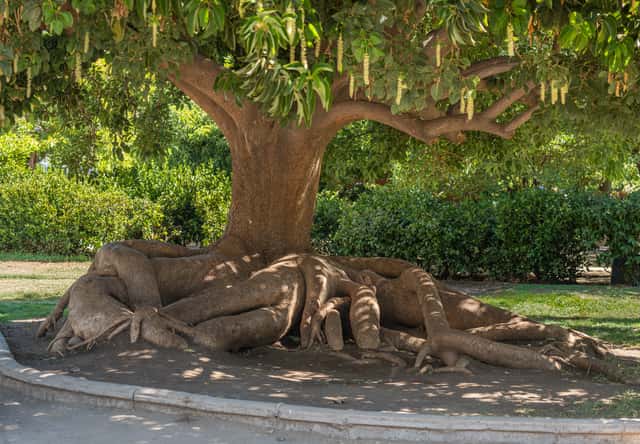
Ombú (Phytolacca dioica) is a majestic South American tree from the family Phytolaccaceae, native to the pampas of Argentina and Uruguay. Despite resembling a true tree, its trunk is composed primarily of water and soft tissue rather than wood, making it unusually light. It is a fast-growing, dioecious species — male and female flowers appear on separate plants. The ombú can reach 15+ meters in height with a broad, dense canopy that provides generous shade, and is celebrated as a cultural icon of the gaucho identity.
How to Propagate Ombú?
Seed Sowing
Seeds germinate best when fresh. Store in a cool, dry place if not sowing immediately. Use sterilized substrate to prevent fungal damping-off.
- 1 Harvest ripe berries and remove pulp to extract seeds
- 2 Sow in light, moist seed-raising mix in spring at 18–24°C
- 3 Keep substrate slightly moist until germination
- 4 Transplant seedlings when 10–15 cm tall
Materials needed:
How Big Does Ombú Grow?
TLDR: Ombú can reach up to 15.0m tall with Fast growth rate.
Max height
15.0m
Spread
12.0m
Growth rate
Fast
Foliage
Semi-evergreen
Warning: Toxic Plant
This plant can be toxic if ingested. Keep out of reach of:
Plant Uses
Ornamental
Great for decoration
Medicinal
Medicinal properties
Medicinal Uses
- Historically, leaves and roots were used in traditional medicine as a purgative and emetic, but must be handled with extreme caution due to high toxicity.
Culinary Uses
- Young leaves have been consumed cooked in small quantities in some traditional cultures, though consumption is not recommended due to the plant's toxic compounds.
Is your plant showing symptoms?
Click on the symptom to discover possible causes:
What Diseases Commonly Affect Ombú?
TLDR: Ombú is susceptible to 9 known diseases. Monitor regularly for early detection.
Root Rot
Root rot is a serious fungal disease that affects the root system of plants, causing them to decay and die. It is primarily caused by overwatering, poor drainage, or soil-borne fungi such as Pythium, Phytophthora, Rhizoctonia, and Fusarium. The disease thrives in waterlogged conditions where roots are deprived of oxygen, making them susceptible to fungal infection.
Overwatering
Overwatering occurs when plants receive too much water, depriving roots of oxygen and causing root rot. This environmental stress is one of the most common causes of houseplant death, as waterlogged soil prevents roots from breathing and functioning properly.
Aphids
Aphids are small, soft-bodied, pear-shaped insects (1/16 to 1/8 inch long) that feed by sucking nutrient-rich sap from plants. They reproduce rapidly and can quickly weaken plants, causing distorted growth and transmitting plant viruses. Aphids come in various colors including green, black, red, yellow, brown, and gray. They secrete honeydew, a sticky substance that attracts ants and encourages sooty mold growth.
Mealybugs
Mealybugs are small, soft-bodied insects covered with a white, waxy, cottony material. They are common pests of houseplants and outdoor plants in mild climates. These sap-sucking insects feed on plant tissue, causing damage, stunted growth, and can lead to plant death if left untreated. They produce sticky honeydew which attracts sooty mold.
Meaning & Symbolism
Symbol of hospitality, resilience, and refuge in Argentine and Uruguayan culture. The ombú is an iconic emblem of the South American pampas and gaucho heritage, celebrated in literature and folklore as the "tree of the traveler."
Fun Facts
The ombú's trunk is composed mainly of water and soft tissue — it is not true wood and does not burn easily.
On the open pampas, the ombú was often the only shade for miles, making it a legendary gathering point for gauchos and travelers.
Despite its tree-like appearance, ombú is botanically classified as a giant herb because its trunk does not form true wood.
Ombú berries were historically used as a source of red dye for fabrics and inks.
Frequently asked questions
Is ombú toxic to pets?
How often should I water ombú?
Can ombú be grown in a pot?
Does ombú lose its leaves in winter?
Compare with similar plants
| Attribute | Difficulty | Light | Watering | Pet Safe |
|---|---|---|---|---|
| Dark Fieldcap | Medium | Low light | 2d | ⚠️ |
| Azalea | Medium | Partial shade | 3d | ⚠️ |
| Muriel's Bamboo | Medium | Partial shade | 3d | ✓ |
| Bougainvillea | Medium | Direct sun | 7d | ⚠️ |




