Plantaginaceae
Purple Bells: Fast Growing
Rhodochiton atrosanguineus
Give Purple Bells full sun, rich well-draining soil kept evenly moist, and a sturdy trellis or support to climb. It is frost-tender and should be brought indoors or grown as an annual where winters drop below 4°C (40°F). Feed monthly during the growing season and deadhead spent blooms to encourage continuous flowering.
Every 4 days
Bright indirect
15° - 27°C
40% - 70%
Categories
What is Purple Bells?
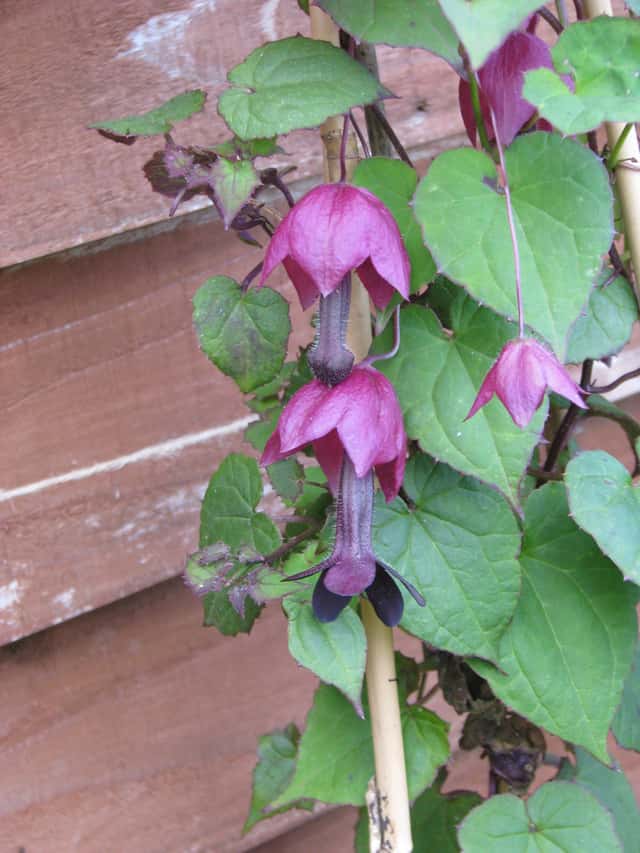
Purple Bells (Rhodochiton atrosanguineus) is a medium-care plant from the Plantaginaceae family. Purple Bells is a fast-growing, deciduous climbing vine native to southwestern Mexico, prized for its unusual pendant flowers: a bright pink or magenta calyx cupping a deep maroon-purple tubular corolla, giving the plant a bell-within-a-bell look. It climbs by twining leaf stalks around supports, re...
Purple Bells grows up to 3.5m, spread of 40cm, watering every 4 days, 15°C – 27°C, 40–70% humidity. It is suitable for indoor environments and safe for pets.
Unlike many popular species, Purple Bells is safe to keep around pets. Without adequate drainage, root rot can develop within 8 days.
How to Care for Purple Bells?
TLDR: Purple Bells needs Bright indirect, watering every 4 days, and temperatures between 15-27°C with 40-70% humidity.
How Often Should You Water Purple Bells?
Keep the soil consistently moist but never waterlogged - this vine is sensitive to both drought and soggy roots. Water when the top 2-5 cm of soil feels dry, increasing frequency in hot weather. Water at the base rather than overhead to reduce fungal issues on foliage.
How Much Light Does Purple Bells Need?
Full sun produces the best flowering, though the vine tolerates partial shade, especially afternoon shade in very hot climates. Indoors, place near the brightest window available or supplement with grow lights.
What Is the Best Soil for Purple Bells?
Use a rich, humus-heavy, well-draining potting mix or garden soil. It tolerates loam, sand, or chalky soils and a wide pH range, but performs best in soil that is neutral to slightly acidic and never stays soggy.
What Pot Should You Use for Purple Bells?
Choose a pot with ample drainage holes and pair with a moss pole, trellis, or hanging arrangement so the twining stems have something to climb. Terracotta helps prevent waterlogging in humid climates.
Care Schedule
Fertilize
Every 30 days
Misting
Every 7 days
Rotate
Every 7 days
Repot
Every 365 days
What Is Purple Bells and Where Does It Come From?
Purple Bells is a fast-growing, deciduous climbing vine native to southwestern Mexico, prized for its unusual pendant flowers: a bright pink or magenta calyx cupping a deep maroon-purple tubular corolla, giving the plant a bell-within-a-bell look. It climbs by twining leaf stalks around supports, reaching 2-3.5 m in a single season, and blooms continuously from summer through fall. Grown as a tender perennial in warm climates (USDA zones 9-11) or as a frost-tender annual elsewhere, it thrives in full sun with consistently moist, well-draining soil.
How Big Does Purple Bells Grow?
TLDR: Purple Bells can reach up to 3.5m tall with Fast growth rate.
Max height
3.5m
Spread
40cm
Growth rate
Fast
Foliage
Deciduous
Plant Uses
Ornamental
Great for decoration
Is your plant showing symptoms?
Click on the symptom to discover possible causes:
What Diseases Commonly Affect Purple Bells?
TLDR: Purple Bells is susceptible to 10 known diseases. Monitor regularly for early detection.
Whiteflies
Whiteflies are small, soft-bodied, winged insects closely related to aphids and mealybugs. They are moth-like in appearance, about 1/16 inch long, triangular in shape, and gray-white in color. These sap-sucking pests feed on plant tissue, causing yellowing, stunted growth, and wilting. They also excrete honeydew, which attracts ants and promotes sooty mold growth. Whiteflies can transmit serious plant viruses.
Spider Mites
Spider mites are tiny arachnids (less than 1/20 inch long) related to spiders and ticks that feed on plant sap. They thrive in hot, dry conditions and can cause significant damage to ornamental and vegetable plants. During severe infestations, crop losses can reach 14% or higher as these pests disrupt vital plant processes including photosynthesis, carbon dioxide absorption, and transpiration.
Aphids
Aphids are small, soft-bodied, pear-shaped insects (1/16 to 1/8 inch long) that feed by sucking nutrient-rich sap from plants. They reproduce rapidly and can quickly weaken plants, causing distorted growth and transmitting plant viruses. Aphids come in various colors including green, black, red, yellow, brown, and gray. They secrete honeydew, a sticky substance that attracts ants and encourages sooty mold growth.
Mealybugs
Mealybugs are small, soft-bodied insects covered with a white, waxy, cottony material. They are common pests of houseplants and outdoor plants in mild climates. These sap-sucking insects feed on plant tissue, causing damage, stunted growth, and can lead to plant death if left untreated. They produce sticky honeydew which attracts sooty mold.
Meaning & Symbolism
In Victorian-era flower symbolism, bell-shaped blooms like Rhodochiton are associated with gratitude and lasting connection; its pendant, heart-shaped flowers are sometimes linked to romantic devotion.
Compare with similar plants
| Attribute | Difficulty | Light | Watering | Pet Safe |
|---|---|---|---|---|
| Dark Fieldcap | Medium | Low light | 2d | ⚠️ |
| Azalea | Medium | Partial shade | 3d | ⚠️ |
| Bougainvillea | Medium | Direct sun | 7d | ⚠️ |
| Wild Lettuce | Medium | Direct sun | 7d | ⚠️ |



