Apocynaceae
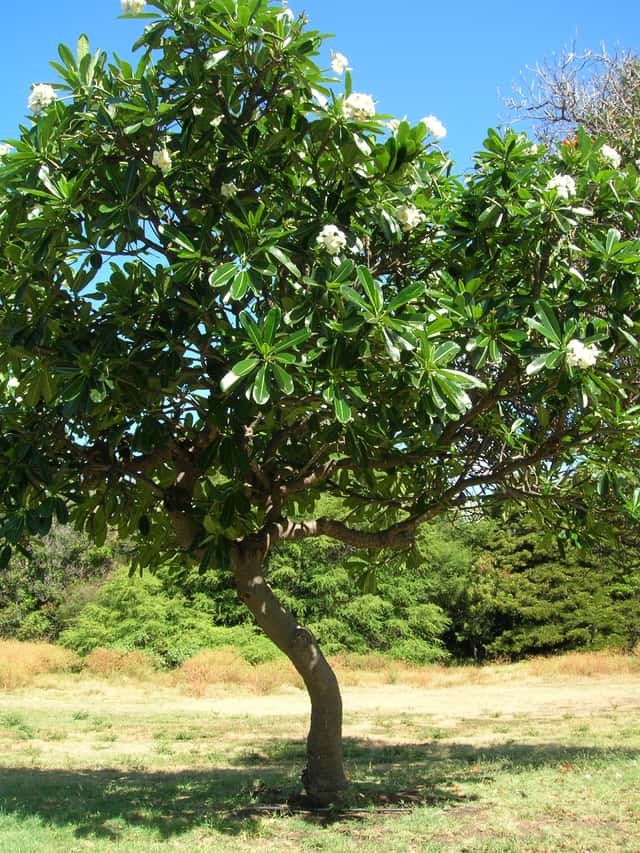
Singapore Graveyard Flower (Plumeria obtusa)
Plumeria obtusa
Requires full sun (6-8+ hours of direct sunlight daily) and well-draining sandy soil. Water every 7-10 days during active growth, allowing soil to dry almost completely between waterings. Very drought-tolerant once established; overwatering is the most common cause of failure. Fertilize every 3 weeks during spring and summer with a balanced fertilizer.
Every 10 days
Direct sun
10° - 38°C
30% - 60%
Categories
What is Singapore Graveyard Flower?
Singapore Graveyard Flower (Plumeria obtusa) is a easy-care plant from the Apocynaceae family. Plumeria obtusa, commonly known as the Singapore graveyard flower or white frangipani, is a tropical tree in the family Apocynaceae native to the Caribbean and Central America. It is widely cultivated across Southeast Asia, Hawaii, and tropical regions worldwide for its intensely fragrant white flow...
Singapore Graveyard Flower grows up to 8.0m, spread of 400cm, watering every 10 days, 10°C – 38°C, 30–60% humidity. It is not suitable for indoor environments and not safe for pets.
Unlike many tropical plants, Singapore Graveyard Flower tolerates watering mistakes. Best for beginners. Without precautions, ingestion can cause irritation in pets. Keep out of reach of cats and dogs.
How to Care for Singapore Graveyard Flower?
TLDR: Singapore Graveyard Flower needs Direct sun, watering every 10 days, and temperatures between 10-38°C with 30-60% humidity.
How Often Should You Water Singapore Graveyard Flower?
Water every 7-10 days in spring/summer, every 14-20 days in fall. Reduce to nearly zero in winter if the plant drops its leaves. Always allow the top soil to dry out completely before watering again to prevent root rot.
How Much Light Does Singapore Graveyard Flower Need?
Needs full direct sun — at least 6-8 hours per day. Position outdoors in the sunniest spot available. Insufficient light leads to sparse flowering or none at all.
What Is the Best Soil for Singapore Graveyard Flower?
Use a fast-draining sandy or gritty mix, such as cactus soil amended with extra perlite. pH 6.0–7.5. Excellent drainage is non-negotiable — soggy soil causes rapid root rot.
What Pot Should You Use for Singapore Graveyard Flower?
Unglazed terracotta or ceramic pot with large drainage holes. Avoid plastic pots that retain moisture.
Care Schedule
Fertilize
Every 21 days
Rotate
Every 7 days
Repot
Every 730 days
What Is Singapore Graveyard Flower and Where Does It Come From?
Plumeria obtusa, commonly known as the Singapore graveyard flower or white frangipani, is a tropical tree in the family Apocynaceae native to the Caribbean and Central America. It is widely cultivated across Southeast Asia, Hawaii, and tropical regions worldwide for its intensely fragrant white flowers with yellow centers. The species is semi-evergreen in tropical climates and is a staple of temple gardens throughout Asia.
How to Propagate Singapore Graveyard Flower?
Stem Cutting
Seeds
How Big Does Singapore Graveyard Flower Grow?
TLDR: Singapore Graveyard Flower can reach up to 8.0m tall with Medium growth rate.
Max height
8.0m
Spread
4.0m
Growth rate
Medium
Foliage
Semi-evergreen
Warning: Toxic Plant
This plant can be toxic if ingested. Keep out of reach of:
Plant Uses
Ornamental
Great for decoration
Aromatic
Pleasant fragrance
Is your plant showing symptoms?
Click on the symptom to discover possible causes:
What Diseases Commonly Affect Singapore Graveyard Flower?
TLDR: Singapore Graveyard Flower is susceptible to 19 known diseases. Monitor regularly for early detection.
Powdery Mildew
Powdery mildew is a common fungal disease caused by various fungi species including Erysiphe, Podosphaera, Oïdium, and Leveillula. It affects over 10,000 plant species worldwide. The disease thrives in warm, dry climates with high humidity and appears as a distinctive white powdery coating on plant surfaces.
Root Rot
Root rot is a serious fungal disease that affects the root system of plants, causing them to decay and die. It is primarily caused by overwatering, poor drainage, or soil-borne fungi such as Pythium, Phytophthora, Rhizoctonia, and Fusarium. The disease thrives in waterlogged conditions where roots are deprived of oxygen, making them susceptible to fungal infection.
Damping Off
Damping off is a soil-borne fungal disease that affects seeds and young seedlings, causing rotting of stem and root tissues at and below the soil line. It is caused by several fungi including Pythium, Rhizoctonia, Fusarium, and Phytophthora. The disease thrives in cold, wet conditions with poor air circulation.
Rust
Rust is a common fungal disease caused by fungi in the order Pucciniales that affects a wide variety of plants. The disease gets its name from the characteristic orange, yellow, or reddish-brown pustules that appear on leaves, resembling metal rust. This obligate fungal parasite requires living plants to survive and can cause significant economic losses in agricultural crops.
Meaning & Symbolism
In Hawaiian culture, frangipani flowers are strung into leis symbolizing love and welcome. Across Southeast Asia, the tree is planted near temples and cemeteries, associated with the soul's journey, devotion, and eternal life.
Fun Facts
Plumeria obtusa is more resistant to frangipani rust fungus than Plumeria rubra, making it a popular choice for humid tropical gardens.
The milky white latex sap of frangipani is toxic — it contains iridoids and low levels of cardiotonic glycosides that can irritate skin, eyes, and the digestive system.
In Cambodia, frangipani (locally called "Champa") is the national flower, symbolizing sincerity and devotion.
Frangipani flowers do not produce nectar — they deceive pollinators like hawk moths with their scent alone.
Compare with similar plants
| Attribute | Difficulty | Light | Watering | Pet Safe |
|---|---|---|---|---|
| Small Scabious | Easy | Direct sun | 7d | ✓ |
| Field Maple | Easy | Bright indirect | 14d | ✓ |
| Silver Birch | Easy | Direct sun | 14d | ✓ |
| Red valerian | Easy | Direct sun | 10d | ✓ |
Choose & Compare
Sources & References
- Plumeria (Frangipani): How to Grow, Care For, and Get More Blooms - Gardenia.net
- Pests & Diseases Guide - The Ultimate Plumeria Care Guide
- Plumeria cuidados generales - El Jardín en Casa
- Plumeria Diseases & Pathogens - Florida Colors Nursery
- Plumeria obtusa cuidados - PictureThis
- Plumeria obtusa - Wikimedia Commons


