Moraceae
Rock Fig (Ficus petiolaris)
Ficus petiolaris
Give this caudiciform fig abundant bright to direct light, let the soil dry almost completely between waterings, and pot it in a fast-draining mix. It is highly sensitive to overwatering and will drop leaves seasonally as part of its natural dry-deciduous cycle.
Every 10 days
Direct sun
10° - 32°C
30% - 50%
Categories
What is Rock Fig?
Rock Fig (Ficus petiolaris) is a medium-care plant from the Moraceae family. Ficus petiolaris, the rock fig, is a dry-deciduous fig tree native to the rocky canyons and cliffs of Baja California, Sonora, and south to Oaxaca in Mexico. In the wild it grows 6-10 m tall, its roots gripping bare stone in search of soil and swelling into a striking caudex-like base. Cultivated sp...
Rock Fig grows up to 10.0m, spread of 600cm, watering every 10 days, 10°C – 32°C, 30–50% humidity. It is suitable for indoor environments and not safe for pets.
Without precautions, ingestion can cause irritation in pets. Keep out of reach of cats and dogs. Without adequate drainage, root rot can develop within 20 days.
How to Care for Rock Fig?
TLDR: Rock Fig needs Direct sun, watering every 10 days, and temperatures between 10-32°C with 30-50% humidity.
How Often Should You Water Rock Fig?
Water thoroughly, then let the soil dry out almost completely before watering again — roughly every 10 days indoors. The swollen caudex stores moisture, so err on the dry side to avoid root rot.
How Much Light Does Rock Fig Need?
Place in the brightest spot available, ideally within a foot of a south-facing window; it does not tolerate low light and can also take direct sun.
What Is the Best Soil for Rock Fig?
Use a fast-draining mix — coarse sand or pumice blended with a standard potting mix — to protect the caudex and roots from staying wet.
What Pot Should You Use for Rock Fig?
A shallow, wide bonsai-style pot with generous drainage holes best shows off the caudex and keeps roots from sitting in moisture.
Care Schedule
Fertilize
Every 30 days
Repot
Every 730 days
What Is Rock Fig and Where Does It Come From?
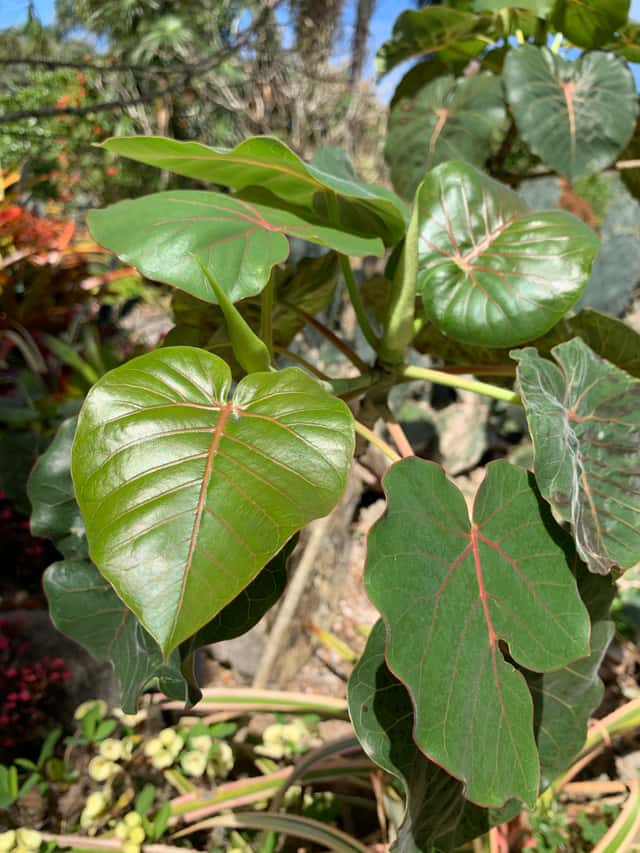
Ficus petiolaris, the rock fig, is a dry-deciduous fig tree native to the rocky canyons and cliffs of Baja California, Sonora, and south to Oaxaca in Mexico. In the wild it grows 6-10 m tall, its roots gripping bare stone in search of soil and swelling into a striking caudex-like base. Cultivated specimens are prized for their heart-shaped leaves with rose-tinted veins and are popular as container and bonsai subjects.
How to Propagate Rock Fig?
Stem cutting
Ficus sap is a skin irritant, so wear gloves when taking cuttings. Bottom heat speeds rooting.
- 1 Take a 15-20 cm semi-hardwood cutting from a healthy stem
- 2 Let the cut end callus over for 1-2 days to seal the latex sap
- 3 Dip the end in rooting hormone
- 4 Insert into a well-draining, slightly moist cutting mix
- 5 Keep warm and in bright indirect light until roots form
Materials needed:
How Big Does Rock Fig Grow?
TLDR: Rock Fig can reach up to 10.0m tall with Slow growth rate.
Max height
10.0m
Spread
6.0m
Growth rate
Slow
Foliage
Deciduous
Warning: Toxic Plant
This plant can be toxic if ingested. Keep out of reach of:
Plant Uses
Ornamental
Great for decoration
Air Purifying
Improves air quality
Is your plant showing symptoms?
Click on the symptom to discover possible causes:
What Diseases Commonly Affect Rock Fig?
TLDR: Rock Fig is susceptible to 5 known diseases. Monitor regularly for early detection.
Root Rot
Root rot is a serious fungal disease that affects the root system of plants, causing them to decay and die. It is primarily caused by overwatering, poor drainage, or soil-borne fungi such as Pythium, Phytophthora, Rhizoctonia, and Fusarium. The disease thrives in waterlogged conditions where roots are deprived of oxygen, making them susceptible to fungal infection.
Phytophthora Root Rot
Disease caused by fungus-like organisms (oomycetes) that live in soil and can survive for years. It affects roots, stem, and crown of plants, being especially severe in waterlogged or poorly drained soils. It is the second most common cause of root rot in trees and shrubs.
Scale Insects
Scale insects are small sap-sucking pests that appear as brown, shell-like bumps on plant stems and leaves. There are over 25 species, divided into armored (hard) and unarmored (soft) scales. They feed by piercing plant tissue and extracting sap, which weakens the plant and can lead to yellowing, stunted growth, and even death if left untreated. They also excrete honeydew, which attracts ants and promotes sooty mold growth.
Mealybugs
Mealybugs are small, soft-bodied insects covered with a white, waxy, cottony material. They are common pests of houseplants and outdoor plants in mild climates. These sap-sucking insects feed on plant tissue, causing damage, stunted growth, and can lead to plant death if left untreated. They produce sticky honeydew which attracts sooty mold.
Meaning & Symbolism
In its native Mexican canyons the rock fig symbolizes tenacity and adaptation, thriving where its roots find only bare rock.
Fun Facts
In the wild it grows straight out of bare rock faces in Baja California and Sonora, wrapping its roots around stone in search of soil.
Its swollen, water-storing caudex makes it one of the most popular figs for bonsai and container growing.
The heart-shaped leaves show striking rose-pink veins that deepen in bright light.
Frequently asked questions
How often should I water my rock fig?
Is Ficus petiolaris toxic to pets?
Why is my rock fig dropping leaves?
Compare with similar plants
| Attribute | Difficulty | Light | Watering | Pet Safe |
|---|---|---|---|---|
| Dark Fieldcap | Medium | Low light | 2d | ⚠️ |
| Azalea | Medium | Partial shade | 3d | ⚠️ |
| Muriel's Bamboo | Medium | Partial shade | 3d | ✓ |
| Bougainvillea | Medium | Direct sun | 7d | ⚠️ |




