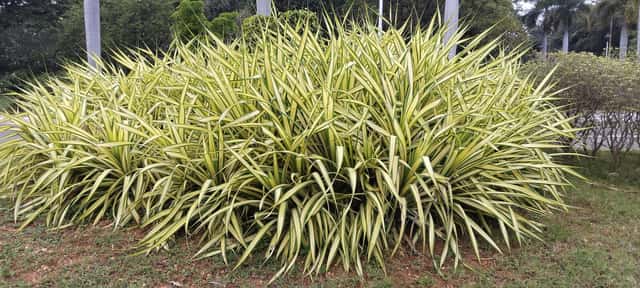
Pandanaceae
Screw Pine: Aromatic Plant
Pandanus
Give Pandanus bright, indirect light, water once the top couple inches of soil dry out, and keep it warm and humid in a well-draining, nutrient-rich mix. It tolerates occasional neglect but dislikes soggy roots and cold drafts.
Every 7 days
Bright indirect
13° - 30°C
50% - 70%
Categories
What is Screw Pine?
Screw Pine (Pandanus) is a medium-care plant from the Pandanaceae family. Pandanus is a large genus of palm-like, dioecious trees and shrubs native to the Old World tropics, spanning coastal Africa, Madagascar, South and Southeast Asia, and the Pacific islands. Known for its strap-shaped, often spiny leaves arranged in a spiral around the stem and distinctive stilt roots...
Screw Pine grows up to 20.0m, spread of 600cm, watering every 7 days, 13°C – 30°C, 50–70% humidity. It is suitable for indoor environments and safe for pets.
Unlike many popular species, Screw Pine is safe to keep around pets. Without adequate drainage, root rot can develop within 14 days.
How to Care for Screw Pine?
TLDR: Screw Pine needs Bright indirect, watering every 7 days, and temperatures between 13-30°C with 50-70% humidity.
How Often Should You Water Screw Pine?
Water thoroughly once the top 2-3 inches of soil have dried, roughly weekly in the growing season; let it dry a bit more in winter to avoid root rot.
How Much Light Does Screw Pine Need?
Provide bright, indirect light for 6-8 hours a day; Pandanus struggles in deep shade and can scorch in harsh direct sun.
What Is the Best Soil for Screw Pine?
Pot in a rich, well-draining mix - equal parts potting soil, perlite or coarse sand, and peat or compost - to keep roots aerated and prevent waterlogging.
What Pot Should You Use for Screw Pine?
Choose a sturdy terracotta or other unglazed pot with generous drainage holes - the porous material helps excess moisture evaporate, suiting this plant's dislike of wet feet.
Care Schedule
Fertilize
Every 30 days
Repot
Every 730 days
What Is Screw Pine and Where Does It Come From?
Pandanus is a large genus of palm-like, dioecious trees and shrubs native to the Old World tropics, spanning coastal Africa, Madagascar, South and Southeast Asia, and the Pacific islands. Known for its strap-shaped, often spiny leaves arranged in a spiral around the stem and distinctive stilt roots that anchor top-heavy trunks, Pandanus ranges from compact houseplant-sized shrubs to towering 20-meter trees. Female plants produce pineapple-like fruit clusters that ripen to orange or red, while the fragrant leaves of some species (notably Pandanus amaryllifolius) are prized across Southeast Asian kitchens.
How to Propagate Screw Pine?
Basal Offset Division
- Choose an offset that already has a few small roots of its own
- Keep the new plant in a warm, humid spot out of direct sun until established
- 1 Locate a basal offset (sucker) growing at the base of the parent plant
- 2 Cut it away cleanly, keeping any attached roots intact
- 3 Pot the offset in a well-draining mix and water lightly
- 4 Keep warm and humid until new growth appears
Materials needed:
Seed Propagation
- Soak seeds before sowing to soften the fibrous coat
- Germination can be slow and uneven
- 1 Extract seeds from a ripe fruit segment
- 2 Soak seeds in water for 24 hours
- 3 Sow shallowly in a sandy, well-draining mix
- 4 Keep warm and consistently moist until germination
Materials needed:
How Big Does Screw Pine Grow?
TLDR: Screw Pine can reach up to 20.0m tall with Medium growth rate.
Max height
20.0m
Spread
6.0m
Growth rate
Medium
Foliage
Evergreen
Plant Uses
Ornamental
Great for decoration
Edible
Can be consumed
Medicinal
Medicinal properties
Aromatic
Pleasant fragrance
Medicinal Uses
- Leaf infusions used traditionally as a mild sedative for restlessness and insomnia
- Leaves soaked in coconut oil applied topically for rheumatic pain
- Used in folk remedies for mild dyspepsia and headaches
Culinary Uses
- Fragrant leaves of Pandanus amaryllifolius used to flavor and color rice, desserts, and beverages across Southeast Asia
- Karuka nuts from some species eaten as a staple food in New Guinea
- Ripe fruit segments eaten fresh or cooked in some Pacific Island cultures
Is your plant showing symptoms?
Click on the symptom to discover possible causes:
What Diseases Commonly Affect Screw Pine?
TLDR: Screw Pine is susceptible to 6 known diseases. Monitor regularly for early detection.
Root Rot
Root rot is a serious fungal disease that affects the root system of plants, causing them to decay and die. It is primarily caused by overwatering, poor drainage, or soil-borne fungi such as Pythium, Phytophthora, Rhizoctonia, and Fusarium. The disease thrives in waterlogged conditions where roots are deprived of oxygen, making them susceptible to fungal infection.
Scale Insects
Scale insects are small sap-sucking pests that appear as brown, shell-like bumps on plant stems and leaves. There are over 25 species, divided into armored (hard) and unarmored (soft) scales. They feed by piercing plant tissue and extracting sap, which weakens the plant and can lead to yellowing, stunted growth, and even death if left untreated. They also excrete honeydew, which attracts ants and promotes sooty mold growth.
Mealybugs
Mealybugs are small, soft-bodied insects covered with a white, waxy, cottony material. They are common pests of houseplants and outdoor plants in mild climates. These sap-sucking insects feed on plant tissue, causing damage, stunted growth, and can lead to plant death if left untreated. They produce sticky honeydew which attracts sooty mold.
Spider Mites
Spider mites are tiny arachnids (less than 1/20 inch long) related to spiders and ticks that feed on plant sap. They thrive in hot, dry conditions and can cause significant damage to ornamental and vegetable plants. During severe infestations, crop losses can reach 14% or higher as these pests disrupt vital plant processes including photosynthesis, carbon dioxide absorption, and transpiration.
Meaning & Symbolism
Across Southeast Asia and the Pacific, Pandanus symbolizes prosperity, hospitality, and protection; its fragrant leaves are woven into ceremonial offerings, mats, and decorations for important occasions.
Compare with similar plants
| Attribute | Difficulty | Light | Watering | Pet Safe |
|---|---|---|---|---|
| Dark Fieldcap | Medium | Low light | 2d | ⚠️ |
| Azalea | Medium | Partial shade | 3d | ⚠️ |
| Muriel's Bamboo | Medium | Partial shade | 3d | ✓ |
| Bougainvillea | Medium | Direct sun | 7d | ⚠️ |




