Asteraceae
Silphium: Aromatic Plant
Silphium
Silphium are easy-care, hardy perennials that thrive in full sun and well-draining soil with a pH of 5.5–7.5. Established plants are extremely drought-tolerant and require almost no watering or fertilization. They are very winter-hardy (zone 3–9) and grow quickly. Best planted with good spacing (90–150 cm) as they spread vigorously. No serious disease problems have been documented; aphids may occur.
Every 10 days
Direct sun
-25° - 40°C
30% - 60%
Categories
What is Silphium?
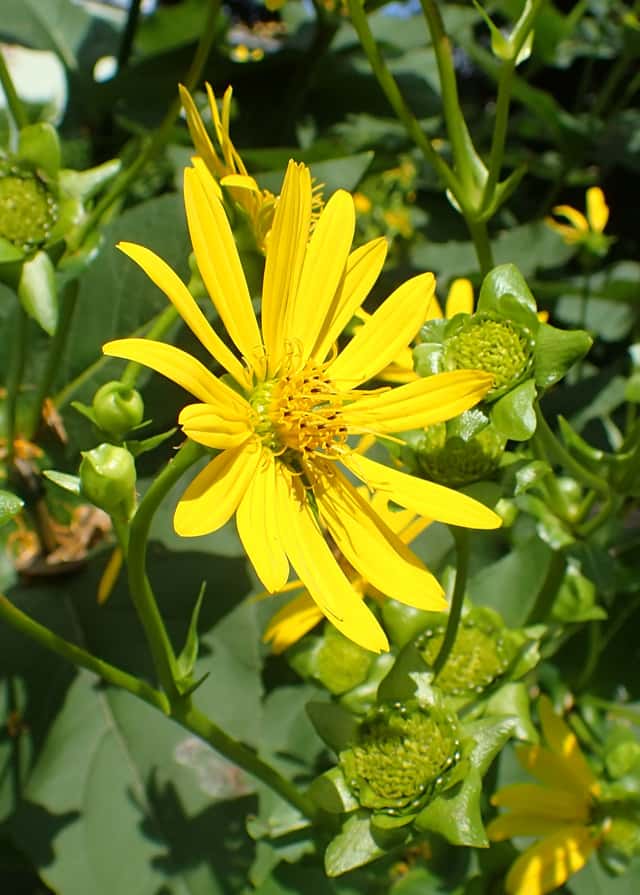
Silphium (Silphium) is a easy-care plant from the Asteraceae family. Silphium is a genus of robust, perennial prairie plants from North America, belonging to the sunflower family (Asteraceae). The genus comprises approximately 17–18 species, including the well-known Cup Plant (Silphium perfoliatum), Compass Plant (Silphium laciniatum), and Wholeleaf Rosinweed (Silphi...
Silphium grows up to 3.0m, spread of 150cm, watering every 10 days, -25°C – 40°C, 30–60% humidity. It is not suitable for indoor environments and safe for pets.
Unlike many tropical plants, Silphium tolerates watering mistakes. Best for beginners. Unlike many popular species, Silphium is safe to keep around pets.
How to Care for Silphium?
TLDR: Silphium needs Direct sun, watering every 10 days, and temperatures between -25-40°C with 30-60% humidity.
How Often Should You Water Silphium?
Water newly planted plants regularly during the first season, approximately once a week. Established plants (from the 2nd year) are drought-tolerant and only require watering during periods of extreme drought. Avoid waterlogged conditions – well-draining soil is crucial. Overwatering is a greater risk than underwatering for this robust prairie plant.
How Much Light Does Silphium Need?
Silphium requires full sun – at least 6–8 hours of direct sunlight daily. The more sun, the stronger and more upright the growth. In partial shade, plants will grow but become more leggy with fewer flowers. Full sun also prevents stems from bending over on their own.
What Is the Best Soil for Silphium?
Thrives in most soil types, including clay, loamy, and sandy soils, as long as there is good drainage. Prefers deep, nutrient-rich, and slightly moist soil (pH 5.5–7.5). Avoid very nitrogen-rich soil, as this promotes foliage growth at the expense of flowers. The Cup Plant (S. perfoliatum) tolerates heavier, moister soil than other species.
What Pot Should You Use for Silphium?
Silphium is not suitable for pot cultivation. The plants develop a deep, strong taproot system that requires free access to deep garden soil. Plant directly in the garden in a permanent location, as they are difficult to move once established.
Care Schedule
Fertilize
Every 90 days
What Is Silphium and Where Does It Come From?
Silphium is a genus of robust, perennial prairie plants from North America, belonging to the sunflower family (Asteraceae). The genus comprises approximately 17–18 species, including the well-known Cup Plant (Silphium perfoliatum), Compass Plant (Silphium laciniatum), and Wholeleaf Rosinweed (Silphium integrifolium). These impressive perennials can reach up to 3 meters in height and bear bright yellow, sunflower-like flower heads in summer and autumn. The leaves of the Compass Plant orient themselves north-south to minimize water loss in the intense midday sun, while the Cup Plant's perfoliate leaves form natural "cups" that collect rainwater for birds and insects. Silphium species are essential for prairie biodiversity and attract a wide variety of pollinators, birds, and insects.
How to Propagate Silphium?
Seed Propagation
- Direct fall sowing is the easiest method.
- Keep seedbeds moist until germination begins.
- 1 Collection
Collect mature seeds in late September–October when the seed head is dry and brown.
- 2 Cold Stratification
Mix seeds with moist sand or perlite and store in the refrigerator for 60–90 days to break dormancy.
- 3 Sowing
Sow seeds directly in the garden in the fall (allowing nature to provide stratification) or indoors in the spring after stratification. Plant seeds 1 cm deep.
- 4 Transplanting
Plant out with 90–150 cm spacing. The plant will only flower after 2–3 years from seed.
Materials needed:
Root Division
- Avoid dividing older plants with very deep taproots.
- Seed propagation is recommended over division.
- 1 Excavation
Carefully dig around a young plant in early spring before shoots emerge.
- 2 Division
Use a sharp spade to divide the root mass. Take as much of the taproot as possible.
- 3 Replanting
Plant divisions immediately and water thoroughly. Provide shade for the first few weeks to reduce stress.
Materials needed:
How Big Does Silphium Grow?
TLDR: Silphium can reach up to 3.0m tall with Fast growth rate.
Max height
3.0m
Spread
1.5m
Growth rate
Fast
Foliage
Deciduous
Plant Uses
Ornamental
Great for decoration
Medicinal
Medicinal properties
Aromatic
Pleasant fragrance
Medicinal Uses
- Native American peoples (including Chippewa and Pawnee) used root extract for chest and back pain, as well as a cough suppressant.
- The resin exudate from the stems was chewed as natural chewing gum to relieve nausea and freshen breath.
- Root tea was traditionally used as a tonic, fever-reducing, and expectorant remedy for lung ailments.
- Root tinctures were historically used for treating liver and spleen disorders, as well as intermittent fevers.
Culinary Uses
- The dried resin from the stems can be used as natural chewing gum.
- Young leaves and shoots have historically been used in the folk diet of prairie indigenous peoples, though not as an established food plant.
Is your plant showing symptoms?
Click on the symptom to discover possible causes:
What Diseases Commonly Affect Silphium?
TLDR: Silphium is susceptible to 5 known diseases. Monitor regularly for early detection.
Aphids
Aphids are small, soft-bodied, pear-shaped insects (1/16 to 1/8 inch long) that feed by sucking nutrient-rich sap from plants. They reproduce rapidly and can quickly weaken plants, causing distorted growth and transmitting plant viruses. Aphids come in various colors including green, black, red, yellow, brown, and gray. They secrete honeydew, a sticky substance that attracts ants and encourages sooty mold growth.
Spider Mites
Spider mites are tiny arachnids (less than 1/20 inch long) related to spiders and ticks that feed on plant sap. They thrive in hot, dry conditions and can cause significant damage to ornamental and vegetable plants. During severe infestations, crop losses can reach 14% or higher as these pests disrupt vital plant processes including photosynthesis, carbon dioxide absorption, and transpiration.
White Mold
White mold (Sclerotinia sclerotiorum) is a devastating fungal disease affecting over 400 plant species worldwide. The fungus produces black, seed-like structures (sclerotia) that can survive in soil for 5 or more years. The disease is favored by cool, moist weather (50-68°F/10-20°C), especially during flowering.
Leaf Spot
Leaf spot is a common fungal disease caused by various pathogens including Alternaria, Ascochyta, Colletotrichum, Septoria, and Venturia. It primarily affects leaves, causing discolored spots that can lead to premature leaf drop if left untreated.
Meaning & Symbolism
In the prairie landscape, Silphium symbolizes orientation and navigation – the Compass Plant's leaves point north and south, and it has historically guided travelers across the vast plains. The genus also represents hardiness and ancient heritage: these plants survived before humans cultivated the fields. Among Native American peoples, the resin was a sign of nature's generosity and healing power.
Compare with similar plants
| Attribute | Difficulty | Light | Watering | Pet Safe |
|---|---|---|---|---|
| Field Maple | Easy | Bright indirect | 14d | ✓ |
| Silver Birch | Easy | Direct sun | 14d | ✓ |
| Cushion Bush | Easy | Direct sun | 14d | ✓ |
| Wild Lettuce | Medium | Direct sun | 7d | ⚠️ |





