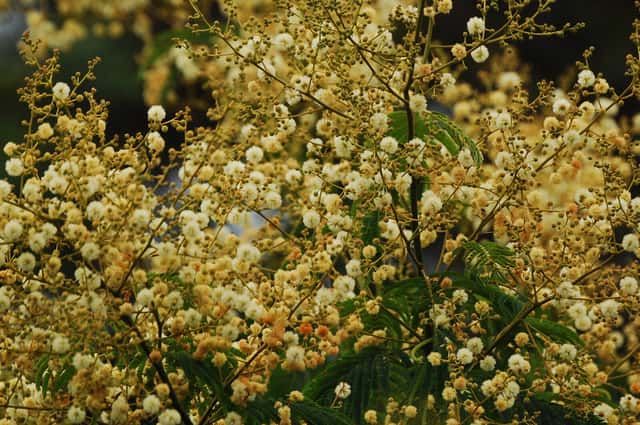
Fabaceae
Silver Wattle: Aromatic Plant
Acacia dealbata
Silver wattle thrives in full sun and acidic, fresh, well-drained soil. Young plants require regular watering, while mature ones are quite drought-tolerant. It is sensitive to prolonged frost below -5°C (23°F) and cold winds. It requires little maintenance: fertilization in late winter and light pruning immediately after flowering.
Every 10 days
Direct sun
-5° - 38°C
30% - 60%
Categories
What is Silver Wattle?
Silver Wattle (Acacia dealbata) is a medium-care plant from the Fabaceae family. Acacia dealbata, commonly known as silver wattle or mimosa, is a fast-growing evergreen tree native to southeastern Australia and Tasmania. Introduced to Europe in the 19th century, it is now widely naturalized along Mediterranean coasts, particularly in the French Riviera and Liguria. It is disting...
Silver Wattle grows up to 15.0m, spread of 800cm, watering every 10 days, -5°C – 38°C, 30–60% humidity. It is not suitable for indoor environments and safe for pets.
Unlike many popular species, Silver Wattle is safe to keep around pets.
How to Care for Silver Wattle?
TLDR: Silver Wattle needs Direct sun, watering every 10 days, and temperatures between -5-38°C with 30-60% humidity.
How Often Should You Water Silver Wattle?
Water young or potted plants regularly, allowing the soil surface to dry out between waterings. Mature plants established in the ground generally rely on rainfall, except during prolonged summer droughts. Avoid waterlogging, which promotes root rot.
How Much Light Does Silver Wattle Need?
Place the silver wattle in full sun, sheltered from cold winds and drafts. A sunny and warm exposure is essential for abundant flowering.
What Is the Best Soil for Silver Wattle?
It prefers acidic or sub-acidic, fresh, rich, and well-drained soil; avoid calcareous or compact soils, which cause leaf chlorosis. For pots, use a potting mix for acid-loving plants enriched with pumice or expanded clay for drainage.
What Pot Should You Use for Silver Wattle?
When grown in pots, prefer wide and deep terracotta containers with large drainage holes; repot every 2 years using acidic potting soil and drainage material at the bottom.
Care Schedule
Fertilize
Every 21 days
Repot
Every 730 days
What Is Silver Wattle and Where Does It Come From?
Acacia dealbata, commonly known as silver wattle or mimosa, is a fast-growing evergreen tree native to southeastern Australia and Tasmania. Introduced to Europe in the 19th century, it is now widely naturalized along Mediterranean coasts, particularly in the French Riviera and Liguria. It is distinguished by its light silvery-green foliage and fragrant, bright yellow globular flower clusters that appear between February and March, before most other spring blooms. In the wild, it can reach 10-15 meters in height, while in pots it remains more compact, around 2 meters. It is the symbolic plant for International Women's Day in Italy. In several Mediterranean regions, it is considered a potentially invasive species due to its rapid spread via seeds and root suckers.
How to Propagate Silver Wattle?
Semi-hardwood cutting propagation
- Silver wattle roots with difficulty from cuttings: increase your chances by taking multiple cuttings.
- Avoid direct sun during rooting.
- Use a sterile substrate to prevent rot.
- 1 Cutting collection
Cut a 10-15 cm semi-hardwood cutting from a healthy branch of the current year, just below a node.
- 2 Hormone application
Dip the base of the cutting into rooting hormone powder or gel.
- 3 Planting
Plant the cutting in a moist, draining substrate; cover with a transparent bag to maintain humidity.
- 4 Rooting
Place in a bright spot without direct sun; keep the substrate slightly moist until rooting occurs.
Materials needed:
Seed propagation
- Unscarified seeds can take months to germinate.
- Silver wattle grows very quickly from seed.
- 1 Seed scarification
Soak seeds in very hot water for 24 hours to soften the hard seed coat and encourage germination.
- 2 Sowing
Sow about 1 cm deep in a moist, draining substrate.
- 3 Germination
Keep the substrate moist and in a warm, bright place; germination typically occurs in 2-4 weeks.
- 4 Transplanting
Transplant seedlings into individual pots once they have developed 2-3 true leaves.
Materials needed:
How Big Does Silver Wattle Grow?
TLDR: Silver Wattle can reach up to 15.0m tall with Fast growth rate.
Max height
15.0m
Spread
8.0m
Growth rate
Fast
Foliage
Evergreen
Warning: Toxic Plant
This plant can be toxic if ingested. Keep out of reach of:
Plant Uses
Ornamental
Great for decoration
Aromatic
Pleasant fragrance
Is your plant showing symptoms?
Click on the symptom to discover possible causes:
What Diseases Commonly Affect Silver Wattle?
TLDR: Silver Wattle is susceptible to 8 known diseases. Monitor regularly for early detection.
Root Rot
Root rot is a serious fungal disease that affects the root system of plants, causing them to decay and die. It is primarily caused by overwatering, poor drainage, or soil-borne fungi such as Pythium, Phytophthora, Rhizoctonia, and Fusarium. The disease thrives in waterlogged conditions where roots are deprived of oxygen, making them susceptible to fungal infection.
Phytophthora Root Rot
Disease caused by fungus-like organisms (oomycetes) that live in soil and can survive for years. It affects roots, stem, and crown of plants, being especially severe in waterlogged or poorly drained soils. It is the second most common cause of root rot in trees and shrubs.
Canker
Canker is a disease caused by various fungi and bacteria that create necrotic, sunken areas on bark of branches, stems, and trunks. Pathogens enter through wounds and natural openings, especially when plants are stressed. Canker can gradually weaken or kill branches by disrupting water and nutrient flow.
Rust
Rust is a common fungal disease caused by fungi in the order Pucciniales that affects a wide variety of plants. The disease gets its name from the characteristic orange, yellow, or reddish-brown pustules that appear on leaves, resembling metal rust. This obligate fungal parasite requires living plants to survive and can cause significant economic losses in agricultural crops.
Meaning & Symbolism
A symbol of International Women's Day (March 8th) in Italy since the post-WWII era, the mimosa represents femininity, solidarity among women, and spring rebirth; its early golden blooms have evoked the return of light after winter for centuries.
Compare with similar plants
| Attribute | Difficulty | Light | Watering | Pet Safe |
|---|---|---|---|---|
| Dark Fieldcap | Medium | Low light | 2d | ⚠️ |
| Azalea | Medium | Partial shade | 3d | ⚠️ |
| Muriel's Bamboo | Medium | Partial shade | 3d | ✓ |
| Bougainvillea | Medium | Direct sun | 7d | ⚠️ |




