Orchidaceae
Snow Queen Orchid (Coelogyne cristata): Complete Care Guide
Coelogyne cristata
Coelogyne cristata thrives with bright indirect light, high humidity, and a cool winter rest period essential for flowering. Water weekly during the growing season and reduce watering significantly in autumn and winter. Avoid wetting pseudobulbs and use well-draining orchid bark mix.
Every 7 days
Bright indirect
6° - 24°C
60% - 85%
Categories
What is Snow Queen Orchid?
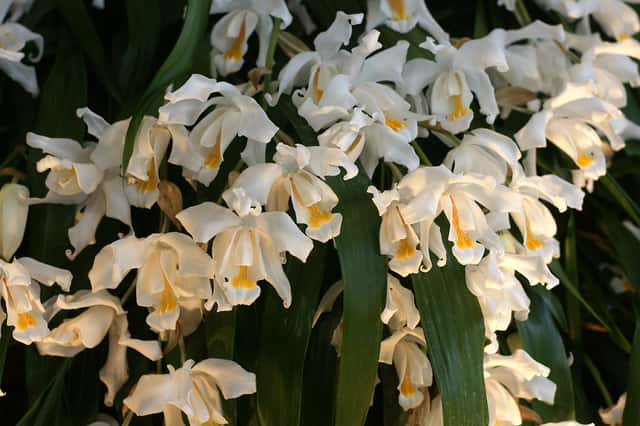
Snow Queen Orchid (Coelogyne cristata) is a medium-care plant from the Orchidaceae family. Coelogyne cristata is a stunning epiphytic orchid native to the cool, moist Himalayan foothills. It produces cascading sprays of pristine white flowers with golden-yellow markings on the lip, blooming in late winter to early spring. Its evergreen strap-like leaves emerge from oval pseudobulbs. This...
Snow Queen Orchid grows up to 30cm, spread of 40cm, watering every 7 days, 6°C – 24°C, 60–85% humidity. It is suitable for indoor environments and safe for pets.
Unlike many popular species, Snow Queen Orchid is safe to keep around pets. Without adequate drainage, root rot can develop within 14 days.
How to Care for Snow Queen Orchid?
TLDR: Snow Queen Orchid needs Bright indirect, watering every 7 days, and temperatures between 6-24°C with 60-85% humidity.
How Often Should You Water Snow Queen Orchid?
Water once a week during active growth (spring to summer), allowing the medium to approach dryness before re-watering. In autumn and winter, reduce watering to once every 2-3 weeks. Always use tepid water and water from the base to avoid wetting pseudobulbs.
How Much Light Does Snow Queen Orchid Need?
Provide bright indirect light of 15,000-40,000 lux. Avoid direct midday summer sun which can scorch leaves. In winter, maximize light exposure to help trigger flowering. East or west-facing windowsills work well; supplement with grow lights if needed.
What Is the Best Soil for Snow Queen Orchid?
Use a well-draining orchid medium: medium-grade fir bark or pine bark mixed with perlite, sphagnum moss, and a small amount of horticultural charcoal. Avoid heavy, water-retentive soils. Slightly acidic pH of 5.5-6.5 is ideal.
What Pot Should You Use for Snow Queen Orchid?
Shallow plastic or terracotta pot with good drainage holes, or a slatted wooden orchid basket for excellent aeration. Avoid deep pots. The plant also grows beautifully mounted on cork bark.
Care Schedule
Fertilize
Every 14 days
Misting
Every 3 days
Repot
Every 730 days
What Is Snow Queen Orchid and Where Does It Come From?
Coelogyne cristata is a stunning epiphytic orchid native to the cool, moist Himalayan foothills. It produces cascading sprays of pristine white flowers with golden-yellow markings on the lip, blooming in late winter to early spring. Its evergreen strap-like leaves emerge from oval pseudobulbs. This orchid is treasured by collectors for its spectacular winter blooms and intoxicating fragrance.
How to Propagate Snow Queen Orchid?
Rhizome Division
Divide only when necessary as this orchid dislikes disturbance. The plant may refuse to bloom for 1-2 seasons after division. Use clean, sterilized tools.
- 1 Wait until spring, immediately after flowering ends
- 2 Carefully remove the plant from its pot
- 3 Divide the rhizome ensuring each section has at least 3-4 mature pseudobulbs
- 4 Dust cut surfaces with cinnamon or fungicide powder
- 5 Pot each division in fresh orchid medium and water lightly
Materials needed:
How Big Does Snow Queen Orchid Grow?
TLDR: Snow Queen Orchid can reach up to 30cm tall with Slow growth rate.
Max height
30cm
Spread
40cm
Growth rate
Slow
Foliage
Evergreen
Plant Uses
Ornamental
Great for decoration
Is your plant showing symptoms?
Click on the symptom to discover possible causes:
What Diseases Commonly Affect Snow Queen Orchid?
TLDR: Snow Queen Orchid is susceptible to 9 known diseases. Monitor regularly for early detection.
Root Rot
Root rot is a serious fungal disease that affects the root system of plants, causing them to decay and die. It is primarily caused by overwatering, poor drainage, or soil-borne fungi such as Pythium, Phytophthora, Rhizoctonia, and Fusarium. The disease thrives in waterlogged conditions where roots are deprived of oxygen, making them susceptible to fungal infection.
Overwatering
Overwatering occurs when plants receive too much water, depriving roots of oxygen and causing root rot. This environmental stress is one of the most common causes of houseplant death, as waterlogged soil prevents roots from breathing and functioning properly.
Scale Insects
Scale insects are small sap-sucking pests that appear as brown, shell-like bumps on plant stems and leaves. There are over 25 species, divided into armored (hard) and unarmored (soft) scales. They feed by piercing plant tissue and extracting sap, which weakens the plant and can lead to yellowing, stunted growth, and even death if left untreated. They also excrete honeydew, which attracts ants and promotes sooty mold growth.
Mealybugs
Mealybugs are small, soft-bodied insects covered with a white, waxy, cottony material. They are common pests of houseplants and outdoor plants in mild climates. These sap-sucking insects feed on plant tissue, causing damage, stunted growth, and can lead to plant death if left untreated. They produce sticky honeydew which attracts sooty mold.
Meaning & Symbolism
In Victorian England, the Snow Queen Orchid symbolized purity, beauty, and perseverance — a flower that blooms amid winter cold, representing hope and resilience.
Fun Facts
Coelogyne cristata can produce chains of up to 10-20 flowers on a single drooping spike
It is native to the cool Himalayan foothills at altitudes of 1,300-2,900 meters
The golden crested lip that gives it its name (cristata = crested) produces a sweet, heady fragrance
It was first described by botanist John Lindley in 1821 from Himalayan specimens
Frequently asked questions
How often should I water Coelogyne cristata?
Why is my Coelogyne cristata not blooming?
Is Coelogyne cristata toxic to pets?
What light does Coelogyne cristata need?
When should I repot Coelogyne cristata?
Compare with similar plants
| Attribute | Difficulty | Light | Watering | Pet Safe |
|---|---|---|---|---|
| Dark Fieldcap | Medium | Low light | 2d | ⚠️ |
| Azalea | Medium | Partial shade | 3d | ⚠️ |
| Muriel's Bamboo | Medium | Partial shade | 3d | ✓ |
| Bougainvillea | Medium | Direct sun | 7d | ⚠️ |