Ericaceae
Great Laurel (Rhododendron maximum): Complete Care Guide
Rhododendron maximum
Great laurel thrives in dappled to full shade with consistently moist, acidic, well-drained soil rich in organic matter. Keep roots cool and never let them dry out completely, but avoid waterlogging, which causes root rot. Mulch heavily with pine bark or needles, avoid disturbing the shallow root system, and prune only right after flowering.
Every 7 days
Partial shade
-37° - 28°C
50% - 80%
Categories
What is Great Laurel?
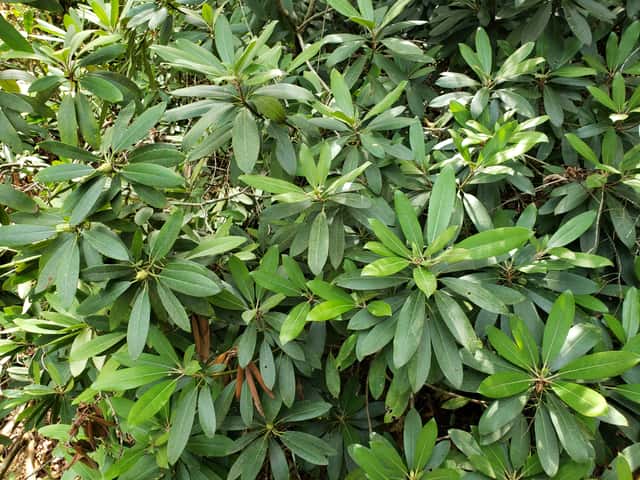
Great Laurel (Rhododendron maximum) is a medium-care plant from the Ericaceae family. Rhododendron maximum, commonly called great laurel or rosebay rhododendron, is a large broadleaf evergreen shrub native to the Appalachian Mountains of eastern North America, from Nova Scotia south to Alabama. It forms dense thickets in moist, shaded forest understories and along stream banks, and i...
Great Laurel grows up to 6.0m, spread of 365cm, watering every 7 days, -37°C – 28°C, 50–80% humidity. It is not suitable for indoor environments and not safe for pets.
Without precautions, ingestion can cause irritation in pets. Keep out of reach of cats and dogs.
How to Care for Great Laurel?
TLDR: Great Laurel needs Partial shade, watering every 7 days, and temperatures between -37-28°C with 50-80% humidity.
How Often Should You Water Great Laurel?
Water deeply about once a week so soil stays evenly moist; increase to twice weekly for newly planted shrubs during their first growing season, and reduce once established except during dry spells of 2-3 weeks or more.
How Much Light Does Great Laurel Need?
Give dappled or partial shade with protection from hot afternoon sun; too much direct sun scorches the leaves, while deep shade reduces flowering.
What Is the Best Soil for Great Laurel?
Plant in acidic (pH 4.5-6.0), humus-rich, well-drained soil; amend heavy clay with organic matter and set the root ball slightly high to prevent rot.
What Pot Should You Use for Great Laurel?
Best grown in the ground rather than containers; if potting is necessary, use a wide, well-draining acidic-mix container and a raised bed for good drainage.
Care Schedule
Fertilize
Every 365 days
What Is Great Laurel and Where Does It Come From?
Rhododendron maximum, commonly called great laurel or rosebay rhododendron, is a large broadleaf evergreen shrub native to the Appalachian Mountains of eastern North America, from Nova Scotia south to Alabama. It forms dense thickets in moist, shaded forest understories and along stream banks, and is the official state flower of West Virginia. In early-to-mid summer it produces large clusters of funnel-shaped white, pink, or rose-purple flowers, often marked with olive-green to orange spots, above leathery, dark green leaves with rust-colored undersides.
How to Propagate Great Laurel?
Layering
Layering is the most reliable propagation method for great laurel because rooted stem cuttings can be slow and unpredictable. Keep the layered section shaded and evenly moist throughout rooting.
- 1 Choose a low, flexible branch and wound the underside where it will touch the soil
- 2 Bend the branch down and bury the wounded section 5-10 cm deep, leaving the tip exposed
- 3 Anchor the buried section with a stake or rock and keep the soil consistently moist
- 4 Check for root development after 6-12 months, then sever from the parent plant once well rooted
Materials needed:
Semi-hardwood stem cutting
Rhododendron maximum roots slowly and inconsistently from cuttings; bottom heat and a strong rooting hormone improve success.
- 1 Take 10-15 cm semi-hardwood cuttings from the current season's growth in mid to late summer
- 2 Wound the base of the cutting and dip it in rooting hormone
- 3 Insert into a moist, well-drained, acidic propagation mix
- 4 Keep under high humidity (mist or a plastic cover) and bright, indirect light until roots form
Materials needed:
How Big Does Great Laurel Grow?
TLDR: Great Laurel can reach up to 6.0m tall with Slow growth rate.
Max height
6.0m
Spread
3.6m
Growth rate
Slow
Foliage
Evergreen
Warning: Toxic Plant
This plant can be toxic if ingested. Keep out of reach of:
Plant Uses
Ornamental
Great for decoration
Is your plant showing symptoms?
Click on the symptom to discover possible causes:
What Diseases Commonly Affect Great Laurel?
TLDR: Great Laurel is susceptible to 13 known diseases. Monitor regularly for early detection.
Canker
Canker is a disease caused by various fungi and bacteria that create necrotic, sunken areas on bark of branches, stems, and trunks. Pathogens enter through wounds and natural openings, especially when plants are stressed. Canker can gradually weaken or kill branches by disrupting water and nutrient flow.
Crown Rot
Crown rot is a serious fungal disease that attacks the crown (base) of the plant where the stem meets the soil. It is caused by various fungal pathogens including Phytophthora, Fusarium, and Rhizoctonia. The disease thrives in waterlogged conditions and can quickly spread to kill the entire plant if not addressed promptly.
Root Rot
Root rot is a serious fungal disease that affects the root system of plants, causing them to decay and die. It is primarily caused by overwatering, poor drainage, or soil-borne fungi such as Pythium, Phytophthora, Rhizoctonia, and Fusarium. The disease thrives in waterlogged conditions where roots are deprived of oxygen, making them susceptible to fungal infection.
Phytophthora Root Rot
Disease caused by fungus-like organisms (oomycetes) that live in soil and can survive for years. It affects roots, stem, and crown of plants, being especially severe in waterlogged or poorly drained soils. It is the second most common cause of root rot in trees and shrubs.
Meaning & Symbolism
As the state flower of West Virginia since 1903, great laurel symbolizes resilience and the enduring spirit of the Appalachian people; its lush, hardy blooms flourishing in rugged mountain terrain are often read as a symbol of endurance and quiet strength.
Fun Facts
Rhododendron maximum has been the official state flower of West Virginia since 1903, chosen by a vote of the state's schoolchildren.
Dense thickets of great laurel, nicknamed 'rhododendron hells' by early Appalachian settlers, can be nearly impassable and exclude almost all other plants.
Its leaves curl and droop in freezing temperatures, a reversible protective response that has made it a folk 'thermometer' for gauging winter cold.
Frequently asked questions
Is Rhododendron maximum toxic to pets?
How much sun does great laurel need?
Why are the leaves curling or drooping?
How often should I fertilize?
Compare with similar plants
| Attribute | Difficulty | Light | Watering | Pet Safe |
|---|---|---|---|---|
| Dark Fieldcap | Medium | Low light | 2d | ⚠️ |
| Azalea | Medium | Partial shade | 3d | ⚠️ |
| Muriel's Bamboo | Medium | Partial shade | 3d | ✓ |
| Bougainvillea | Medium | Direct sun | 7d | ⚠️ |
Choose & Compare
Sources & References
- NC State Extension Gardener Plant Toolbox - Rhododendron maximum
- Missouri Botanical Garden Plant Finder - Rhododendron maximum
- Wikipedia - Rhododendron maximum
- Pet Poison Helpline - Rhododendrons
- ASPCA - Toxic and Non-Toxic Plants: Rhododendron
- State Symbols USA - West Virginia State Flower: Rhododendron
- Gardening Know How - Common Problems of Rhododendron




