Orchidaceae
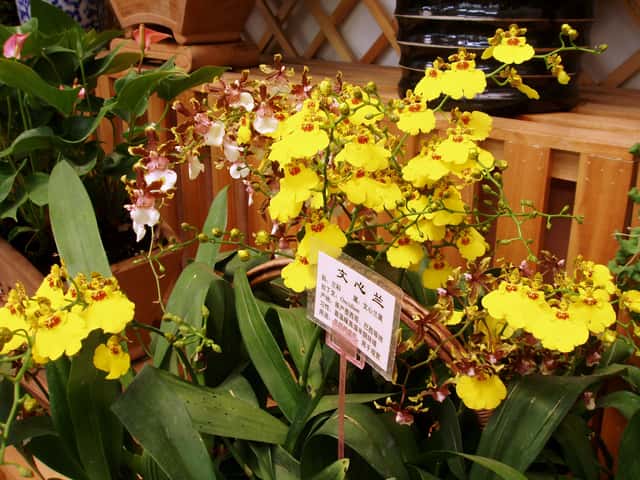
Oncidium flexuosum (Dancing Doll Orchid)
Oncidium flexuosum
Grow in bright indirect light with strong air movement and high humidity. Water only once the potting medium has dried out, avoiding soggy conditions that lead to root rot.
Every 5 days
Bright indirect
14° - 28°C
60% - 80%
Categories
What is Dancing Doll Orchid?
Dancing Doll Orchid (Oncidium flexuosum) is a medium-care plant from the Orchidaceae family. Oncidium flexuosum, commonly known as the Dancing Doll Orchid or Bent Oncidium, is an epiphytic orchid native to eastern and southern Brazil, extending into northern Argentina, Paraguay and Uruguay. It forms compact clumps of oval pseudobulbs bearing narrow, glossy leaves. From fall through winter i...
Dancing Doll Orchid grows up to 30cm, spread of 45cm, watering every 5 days, 14°C – 28°C, 60–80% humidity. It is suitable for indoor environments and safe for pets.
Unlike many popular species, Dancing Doll Orchid is safe to keep around pets. Without adequate drainage, root rot can develop within 10 days.
How to Care for Dancing Doll Orchid?
TLDR: Dancing Doll Orchid needs Bright indirect, watering every 5 days, and temperatures between 14-28°C with 60-80% humidity.
How Often Should You Water Dancing Doll Orchid?
Water thoroughly only when the bark mix is completely dry to the touch—usually every 2-3 days in summer and about once a week in winter.
How Much Light Does Dancing Doll Orchid Need?
Provide strong indirect light (18,000-25,000 lux); direct midday sun can scorch the leaves within minutes. An east- or west-facing window with light filtering works well.
What Is the Best Soil for Dancing Doll Orchid?
Use a loose, fast-draining epiphytic orchid mix, such as medium-grade fir bark combined with charcoal and coconut husk or sphagnum moss; avoid mixes that hold excess moisture.
What Pot Should You Use for Dancing Doll Orchid?
Slotted clay pots or hanging baskets that promote drainage and root aeration.
Care Schedule
Fertilize
Every 14 days
Misting
Every 3 days
Repot
Every 730 days
What Is Dancing Doll Orchid and Where Does It Come From?
Oncidium flexuosum, commonly known as the Dancing Doll Orchid or Bent Oncidium, is an epiphytic orchid native to eastern and southern Brazil, extending into northern Argentina, Paraguay and Uruguay. It forms compact clumps of oval pseudobulbs bearing narrow, glossy leaves. From fall through winter it produces long, arching, branched flower spikes—up to 1.5 m (5 ft)—carrying dozens of small golden-yellow flowers marked with reddish-brown blotches at the base and lip, which flutter in the breeze and give the plant its playful common name.
How to Propagate Dancing Doll Orchid?
Clump division
Avoid watering right after dividing; let the cuts callus for a few days first, and always use sterilized tools to prevent spreading disease between plants.
- 1 Wait until the clump has at least 4-5 pseudobulbs before dividing
- 2 Remove the plant from its pot and gently clear excess medium from the roots
- 3 Using a sterilized tool, cut the rhizome between pseudobulbs, keeping at least 3 pseudobulbs per division
- 4 Dust the cut surfaces with cinnamon powder or fungicide to prevent infection
- 5 Pot each division into its own container or basket with fresh orchid mix
- 6 Keep in a shaded, humid spot until new roots appear
Materials needed:
How Big Does Dancing Doll Orchid Grow?
TLDR: Dancing Doll Orchid can reach up to 30cm tall with Slow growth rate.
Max height
30cm
Spread
45cm
Growth rate
Slow
Foliage
Evergreen
Plant Uses
Ornamental
Great for decoration
Is your plant showing symptoms?
Click on the symptom to discover possible causes:
What Diseases Commonly Affect Dancing Doll Orchid?
TLDR: Dancing Doll Orchid is susceptible to 15 known diseases. Monitor regularly for early detection.
Root Rot
Root rot is a serious fungal disease that affects the root system of plants, causing them to decay and die. It is primarily caused by overwatering, poor drainage, or soil-borne fungi such as Pythium, Phytophthora, Rhizoctonia, and Fusarium. The disease thrives in waterlogged conditions where roots are deprived of oxygen, making them susceptible to fungal infection.
Gray Mold (Botrytis Blight)
Gray mold, caused by the fungus Botrytis cinerea, is a widespread necrotrophic pathogen affecting over 1,400 plant species. It thrives in cool, humid conditions and attacks weakened or aging plant tissues, causing soft rot and characteristic gray fuzzy growth.
Gray Mold (Botrytis Blight)
Gray mold, caused by the fungus Botrytis cinerea, is one of the most common fungal diseases in plants. It affects over 200 plant species, including ornamentals, vegetables, fruits, and houseplants. The disease thrives in cool, humid conditions with poor air circulation, causing grayish spots and soft rot on infected tissues.
Leaf Spot
Leaf spot is a common fungal disease caused by various pathogens including Alternaria, Ascochyta, Colletotrichum, Septoria, and Venturia. It primarily affects leaves, causing discolored spots that can lead to premature leaf drop if left untreated.
Fun Facts
The species name 'flexuosum' refers to its long, wavy flower spikes, which can reach 1.5 m and arch under the weight of the blooms.
It's nicknamed the 'golden shower orchid' for the cascade of bright yellow flowers it produces.
It's native to eastern and southern Brazil and is one of the most widely grown Brazilian orchids thanks to its relative ease of culture and generous flowering.
Frequently asked questions
How often should I water a Dancing Doll Orchid?
Does Oncidium flexuosum need direct sun?
When does the Dancing Doll Orchid bloom?
Is Oncidium flexuosum toxic to cats and dogs?
How do you propagate a Dancing Doll Orchid?
Compare with similar plants
| Attribute | Difficulty | Light | Watering | Pet Safe |
|---|---|---|---|---|
| Dark Fieldcap | Medium | Low light | 2d | ⚠️ |
| Azalea | Medium | Partial shade | 3d | ⚠️ |
| Muriel's Bamboo | Medium | Partial shade | 3d | ✓ |
| Bougainvillea | Medium | Direct sun | 7d | ⚠️ |
Choose & Compare
Sources & References
- Oncidium Culture Sheet - American Orchid Society
- Oncidium flexuosum (Gomesa flexuosa) - Wikipedia
- Oncidium flexuosum (Dancing Doll Orchid) - Backyard Gardener
- Grow and Care Oncidium flexuosum Orchid - The Bent Oncidium
- Orquidea Bailarina: como cuidar e plantar do jeito certo
- Cuidados de la orquidea oncidium o Dama danzante




