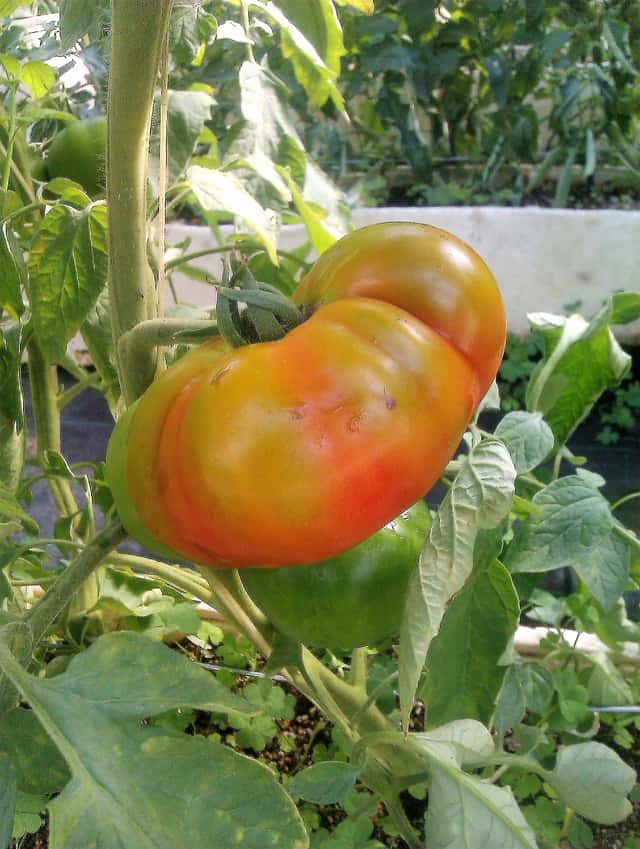
Solanaceae
Cherry Tomato Care Guide
Solanum lycopersicum var. cerasiforme
Grow in full sun (6-8 hours daily) with warm temperatures between 21-29°C. Water deeply and consistently 2-3 times per week to prevent blossom-end rot and fruit cracking. Stake or cage indeterminate varieties and prune suckers weekly. Feed every two weeks with a balanced or tomato-specific fertilizer during the growing season.
Every 3 days
Direct sun
10° - 35°C
40% - 70%
Categories
What is Cherry Tomato?
Cherry Tomato (Solanum lycopersicum var. cerasiforme) is a medium-care plant from the Solanaceae family. Cherry tomato (Solanum lycopersicum var. cerasiforme) is a small-fruited tomato variety native to the Andean region of Peru and Ecuador, believed to be the closest wild relative of cultivated tomatoes. It produces clusters of round, bite-sized fruits ranging from red to yellow, orange, and even blac...
Cherry Tomato grows up to 2.0m, spread of 60cm, watering every 3 days, 10°C – 35°C, 40–70% humidity. It is suitable for indoor environments and not safe for pets.
Without precautions, ingestion can cause irritation in pets. Keep out of reach of cats and dogs. Without adequate drainage, root rot can develop within 7 days.
How to Care for Cherry Tomato?
TLDR: Cherry Tomato needs Direct sun, watering every 3 days, and temperatures between 10-35°C with 40-70% humidity.
How Often Should You Water Cherry Tomato?
Water deeply at the base of the plant, keeping the soil evenly moist but never waterlogged. Avoid wetting the foliage to reduce fungal disease risk, and mulch to retain moisture and stabilize watering between sessions.
How Much Light Does Cherry Tomato Need?
Cherry tomatoes need at least 6 hours of direct sun daily; 8+ hours produces the sweetest, most abundant fruit.
What Is the Best Soil for Cherry Tomato?
Plant in rich, well-draining, organic-matter-heavy soil with a pH of 6.2-6.8. Amend with compost before planting and side-dress with additional compost mid-season.
What Pot Should You Use for Cherry Tomato?
Use a large container of at least 40 L (10 gallons) with generous drainage holes, paired with a stake or tomato cage for support.
Care Schedule
Fertilize
Every 14 days
What Is Cherry Tomato and Where Does It Come From?
Cherry tomato (Solanum lycopersicum var. cerasiforme) is a small-fruited tomato variety native to the Andean region of Peru and Ecuador, believed to be the closest wild relative of cultivated tomatoes. It produces clusters of round, bite-sized fruits ranging from red to yellow, orange, and even black, on sprawling indeterminate vines (or compact determinate bushes in dwarf cultivars). Fast-growing and highly productive, it thrives in warm, sunny conditions and is one of the most popular vegetables for home gardens and containers.
How to Propagate Cherry Tomato?
Seed starting
Bottom heat speeds germination; use a heat mat set to about 24°C for best results.
- 1 Sow seeds 6-8 weeks before the last frost in seed-starting mix, 6mm deep
- 2 Keep soil moist and at 21-27°C until germination
- 3 Once seedlings have 2-3 true leaves, transplant to individual pots
- 4 Harden off for 7-10 days before moving outdoors after the last frost
Materials needed:
Sucker (stem) cutting
Suckers root very easily in plain water within a couple of weeks, making this a fast way to clone a productive plant.
- 1 Snap off a healthy sucker (side shoot) at least 10cm long
- 2 Remove the lowest leaves and place the cutting in water or moist potting mix
- 3 Keep in bright, indirect light until roots form
- 4 Transplant into soil once roots reach 2-3cm long
Materials needed:
How Big Does Cherry Tomato Grow?
TLDR: Cherry Tomato can reach up to 2.0m tall with Fast growth rate.
Max height
2.0m
Spread
60cm
Growth rate
Fast
Foliage
Deciduous
Warning: Toxic Plant
This plant can be toxic if ingested. Keep out of reach of:
Plant Uses
Edible
Can be consumed
Culinary Uses
- Fresh salads
- Snacking
- Roasting
- Sauces and salsas
- Skewers and appetizers
Is your plant showing symptoms?
Click on the symptom to discover possible causes:
What Diseases Commonly Affect Cherry Tomato?
TLDR: Cherry Tomato is susceptible to 17 known diseases. Monitor regularly for early detection.
Fusarium Wilt
Fusarium wilt is a serious fungal disease caused by the soil-borne fungus Fusarium oxysporum. The fungus invades roots and blocks the water-conducting vessels (xylem) of the plant, causing progressive wilting and eventual death. Host-specific forms of the pathogen exist that attack different plant species.
Verticillium Wilt
Verticillium wilt is a soil-borne fungal disease caused primarily by the fungi Verticillium dahliae and V. albo-atrum. These pathogens infect plant roots and grow within the vascular tissues, blocking water and nutrient transport, resulting in wilting and eventual plant death. The disease affects over 350 plant species including vegetables, fruits, ornamental flowers, and trees. The fungi can survive in soil for more than 10 years as resistant structures called microsclerotia.
Septoria Leaf Spot
Septoria leaf spot is a destructive fungal disease caused by Septoria lycopersici, particularly devastating during seasons of moderate temperature and abundant rainfall. The disease starts on lower leaves and progresses upward, causing small circular spots with tan to gray centers and dark brown margins. If left untreated, it can dramatically reduce plant yields and cause complete leaf blight.
Alternaria Leaf Spot
Alternaria leaf spot is a common fungal disease caused by Alternaria solani and Alternaria alternata that affects a wide range of plants including tomatoes, potatoes, brassicas, and ornamentals. The disease thrives in warm, humid conditions and can cause significant crop damage if left untreated. Spores overwinter on plant debris and can attach to seeds, making complete elimination difficult.
Fun Facts
Cherry tomatoes are considered the closest living relative to the wild ancestor of all cultivated tomatoes.
A single indeterminate plant can produce hundreds of fruits over a single growing season.
Despite being used as a vegetable in cooking, the tomato is botanically a fruit.
Frequently asked questions
How often should I water cherry tomatoes?
Are cherry tomato plants toxic to pets?
How much sun do cherry tomatoes need?
What are the most common cherry tomato diseases?
Compare with similar plants
| Attribute | Difficulty | Light | Watering | Pet Safe |
|---|---|---|---|---|
| Dark Fieldcap | Medium | Low light | 2d | ⚠️ |
| Azalea | Medium | Partial shade | 3d | ⚠️ |
| Muriel's Bamboo | Medium | Partial shade | 3d | ✓ |
| Bougainvillea | Medium | Direct sun | 7d | ⚠️ |
Choose & Compare
Sources & References
- How to Plant, Grow, and Care for Cherry Tomatoes - Epic Gardening
- Recognizing Common Tomato Pests, Pathogens, and Problems - CSU Extension
- Toxic and Non-toxic Plants: Tomato Plant - ASPCA
- Cherry Tomatoes - UF/IFAS Gardening Solutions
- Managing Tomato Diseases, Disorders, and Pests - Iowa State Extension




