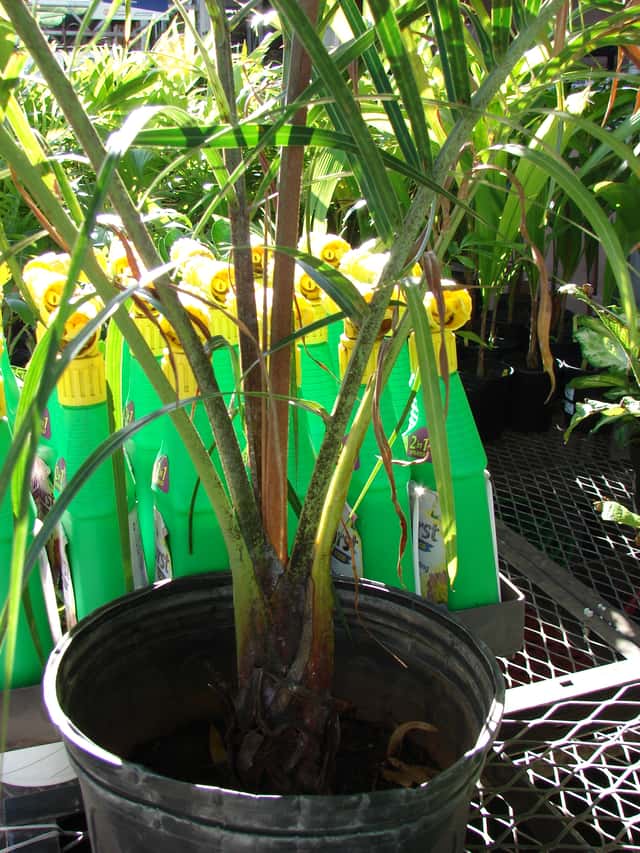
Arecaceae
Triangle Palm – Dypsis decaryi
Dypsis decaryi
The Triangle Palm thrives in full sun with well-draining soil. Water deeply once a week during the growing season, letting soil nearly dry out between waterings. Reduce watering significantly in winter. It is drought-tolerant once established and does not tolerate frost.
Every 7 days
Direct sun
10° - 35°C
40% - 70%
Categories
What is Triangle Palm?
Triangle Palm (Dypsis decaryi) is a medium-care plant from the Arecaceae family. Dypsis decaryi, the Triangle Palm, is a striking palm endemic to southern Madagascar. Its leaves emerge from three distinct sides of the trunk, creating a perfect triangular silhouette that makes it one of the most architecturally distinctive palms in the world.
Triangle Palm grows up to 9.0m, spread of 460cm, watering every 7 days, 10°C – 35°C, 40–70% humidity. It is suitable for indoor environments and safe for pets.
Unlike many popular species, Triangle Palm is safe to keep around pets. Without adequate drainage, root rot can develop within 14 days.
How to Care for Triangle Palm?
TLDR: Triangle Palm needs Direct sun, watering every 7 days, and temperatures between 10-35°C with 40-70% humidity.
How Often Should You Water Triangle Palm?
Water deeply once a week during spring and summer, allowing the top 5 cm of soil to dry between waterings. In winter, reduce to once every two weeks. Never let the roots sit in standing water — ensure excellent drainage.
How Much Light Does Triangle Palm Need?
Place in full sun for best growth — at least 6 hours of direct sunlight daily. Indoors, position near a large south- or west-facing window. It can tolerate partial shade but grows slower with less light.
What Is the Best Soil for Triangle Palm?
Use a well-draining palm mix or blend sandy loam with coarse sand and perlite. Slightly acidic to neutral pH (6.0–7.0) is ideal. Avoid clay-heavy soils that retain moisture and promote root rot.
What Pot Should You Use for Triangle Palm?
A large terracotta or glazed ceramic pot with a wide base provides stability and good drainage. Outdoors, planting directly in the ground is preferred for full development.
Care Schedule
Fertilize
Every 90 days
Repot
Every 730 days
What Is Triangle Palm and Where Does It Come From?
Dypsis decaryi, the Triangle Palm, is a striking palm endemic to southern Madagascar. Its leaves emerge from three distinct sides of the trunk, creating a perfect triangular silhouette that makes it one of the most architecturally distinctive palms in the world.
How to Propagate Triangle Palm?
Seed Propagation
Fresh seeds germinate far better than stored ones. Maintain consistent warmth and moisture for best results.
- 1 Soak fresh seeds in warm water for 24 hours to improve germination
- 2 Plant in a well-draining seed mix at 25–30°C in a bright warm spot
- 3 Keep the substrate consistently moist but not waterlogged
- 4 Expect germination in 2 to 3 months
- 5 Transplant seedlings once they have 2–3 leaves
Materials needed:
Offset Division
Offsets are rare on this species. Only attempt division on well-rooted offshoots and be gentle to avoid damaging the parent palm.
- 1 Identify a well-developed offset at the base of the parent palm
- 2 Wait until it has developed its own root system
- 3 Carefully separate with a sterile, sharp knife
- 4 Pot in well-draining mix and keep in partial shade until established
Materials needed:
How Big Does Triangle Palm Grow?
TLDR: Triangle Palm can reach up to 9.0m tall with Slow growth rate.
Max height
9.0m
Spread
4.6m
Growth rate
Slow
Foliage
Evergreen
Plant Uses
Ornamental
Great for decoration
Is your plant showing symptoms?
Click on the symptom to discover possible causes:
What Diseases Commonly Affect Triangle Palm?
TLDR: Triangle Palm is susceptible to 6 known diseases. Monitor regularly for early detection.
Root Rot
Root rot is a serious fungal disease that affects the root system of plants, causing them to decay and die. It is primarily caused by overwatering, poor drainage, or soil-borne fungi such as Pythium, Phytophthora, Rhizoctonia, and Fusarium. The disease thrives in waterlogged conditions where roots are deprived of oxygen, making them susceptible to fungal infection.
Leaf Spot
Leaf spot is a common fungal disease caused by various pathogens including Alternaria, Ascochyta, Colletotrichum, Septoria, and Venturia. It primarily affects leaves, causing discolored spots that can lead to premature leaf drop if left untreated.
Spider Mites
Spider mites are tiny arachnids (less than 1/20 inch long) related to spiders and ticks that feed on plant sap. They thrive in hot, dry conditions and can cause significant damage to ornamental and vegetable plants. During severe infestations, crop losses can reach 14% or higher as these pests disrupt vital plant processes including photosynthesis, carbon dioxide absorption, and transpiration.
Scale Insects
Scale insects are small sap-sucking pests that appear as brown, shell-like bumps on plant stems and leaves. There are over 25 species, divided into armored (hard) and unarmored (soft) scales. They feed by piercing plant tissue and extracting sap, which weakens the plant and can lead to yellowing, stunted growth, and even death if left untreated. They also excrete honeydew, which attracts ants and promotes sooty mold growth.
Meaning & Symbolism
The Triangle Palm symbolizes exotic elegance, resilience, and the architectural beauty of tropical landscapes.
Fun Facts
Endemic to the dry south of Madagascar, the Triangle Palm grows naturally on rocky, semi-arid slopes — a testament to its drought tolerance.
The perfect triangular arrangement of its leaves is unique among all palm species, making it a prized specimen for botanical gardens worldwide.
Despite its slow growth rate, it can live for many decades and becomes a remarkable landscape landmark.
It tolerates salty coastal winds, poor soils, and periods of drought, making it exceptionally robust once established.
Frequently asked questions
How often should I water a Triangle Palm?
Is the Triangle Palm toxic to pets?
Can I grow a Triangle Palm indoors?
What hardiness zone does the Triangle Palm need?
How tall does the Triangle Palm grow?
Compare with similar plants
| Attribute | Difficulty | Light | Watering | Pet Safe |
|---|---|---|---|---|
| Dark Fieldcap | Medium | Low light | 2d | ⚠️ |
| Azalea | Medium | Partial shade | 3d | ⚠️ |
| Muriel's Bamboo | Medium | Partial shade | 3d | ✓ |
| Bougainvillea | Medium | Direct sun | 7d | ⚠️ |




