Araceae
Anthurium Amnicola (Tulip Anthurium) Care Guide
Anthurium amnicola
Give it bright, indirect light, keep humidity high (70-80%), and water generously in a fast-draining aroid mix, letting the surface dry slightly between waterings.
Every 4 days
Partial shade
15° - 32°C
70% - 80%
Categories
What is Tulip Anthurium?
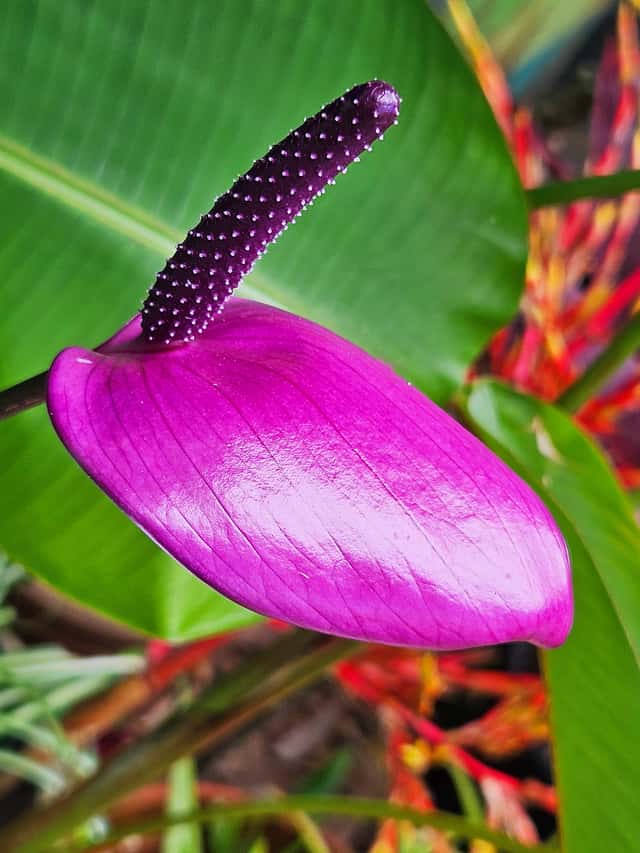
Tulip Anthurium (Anthurium amnicola) is a medium-care plant from the Araceae family. Anthurium amnicola, commonly called the tulip anthurium, is a compact epiphytic aroid native to the wet montane forests of Panama and parts of northern South America. It is prized for its tulip-shaped white spathes with contrasting yellow spadices, produced repeatedly through the year on a low, clum...
Tulip Anthurium grows up to 30cm, spread of 30cm, watering every 4 days, 15°C – 32°C, 70–80% humidity. It is suitable for indoor environments and not safe for pets.
Without precautions, ingestion can cause irritation in pets. Keep out of reach of cats and dogs. Without adequate drainage, root rot can develop within 8 days.
How to Care for Tulip Anthurium?
TLDR: Tulip Anthurium needs Partial shade, watering every 4 days, and temperatures between 15-32°C with 70-80% humidity.
How Often Should You Water Tulip Anthurium?
Water thoroughly about twice a week during the growing season, letting excess water drain fully; reduce frequency and use tepid water in winter.
How Much Light Does Tulip Anthurium Need?
Provide bright, filtered light such as an east- or north-facing window; direct sun scorches the leaves, while low light reduces flowering.
What Is the Best Soil for Tulip Anthurium?
Pot in a chunky, well-draining aroid mix (equal parts peat, perlite, and orchid bark) to keep roots aerated and prevent rot.
What Pot Should You Use for Tulip Anthurium?
A terracotta or nursery pot with generous drainage holes suits this species best, since porous walls help excess moisture evaporate.
Care Schedule
Fertilize
Every 15 days
Misting
Every 3 days
Rotate
Every 14 days
Repot
Every 730 days
What Is Tulip Anthurium and Where Does It Come From?
Anthurium amnicola, commonly called the tulip anthurium, is a compact epiphytic aroid native to the wet montane forests of Panama and parts of northern South America. It is prized for its tulip-shaped white spathes with contrasting yellow spadices, produced repeatedly through the year on a low, clumping plant that rarely exceeds 30 cm in height.
How to Propagate Tulip Anthurium?
Offset division
Keep the newly separated offset in high humidity and out of direct sun for the first two weeks to reduce transplant stress.
- 1 Wait until a plantlet at the base has at least two leaves and its own roots.
- 2 Gently unpot the mother plant and separate the offset with a clean cut or by teasing roots apart.
- 3 Pot the offset in a small container with fresh aroid mix and water lightly.
Materials needed:
Stem cutting in water
Aerial roots present on the cutting greatly speed up establishment once potted.
- 1 Cut a stem section with at least four leaf nodes and any aerial roots present.
- 2 Place the cutting in a jar of water, submerging the nodes but keeping leaves above the waterline.
- 3 Change the water weekly and move to potting mix once roots reach a few centimeters.
Materials needed:
How Big Does Tulip Anthurium Grow?
TLDR: Tulip Anthurium can reach up to 30cm tall with Slow growth rate.
Max height
30cm
Spread
30cm
Growth rate
Slow
Foliage
Evergreen
Warning: Toxic Plant
This plant can be toxic if ingested. Keep out of reach of:
Plant Uses
Ornamental
Great for decoration
Is your plant showing symptoms?
Click on the symptom to discover possible causes:
What Diseases Commonly Affect Tulip Anthurium?
TLDR: Tulip Anthurium is susceptible to 9 known diseases. Monitor regularly for early detection.
Root Rot
Root rot is a serious fungal disease that affects the root system of plants, causing them to decay and die. It is primarily caused by overwatering, poor drainage, or soil-borne fungi such as Pythium, Phytophthora, Rhizoctonia, and Fusarium. The disease thrives in waterlogged conditions where roots are deprived of oxygen, making them susceptible to fungal infection.
Anthracnose
Anthracnose is a fungal disease caused by fungi in the genus Colletotrichum that affects many plants, including vegetables, fruits, and trees. The disease thrives in cool, wet conditions, causing dark, sunken lesions on leaves, stems, flowers, and fruits.
Bacterial Blight
Bacterial blight is a serious plant disease caused by pathogenic bacteria that enters plants through wounds or natural openings. It spreads rapidly in warm, wet conditions and can cause significant damage to leaves, stems, and flowers. The bacteria are transmitted by water splash, contaminated tools, and insects.
Spider Mites
Spider mites are tiny arachnids (less than 1/20 inch long) related to spiders and ticks that feed on plant sap. They thrive in hot, dry conditions and can cause significant damage to ornamental and vegetable plants. During severe infestations, crop losses can reach 14% or higher as these pests disrupt vital plant processes including photosynthesis, carbon dioxide absorption, and transpiration.
Meaning & Symbolism
Represents hospitality and abundance, and the compact tulip-like blooms are also associated with cheerful, understated elegance.
Fun Facts
Its common name comes from the tulip-shaped spathe rather than any relation to true tulips.
It was once grown commercially in Hawaii as a cut flower for the floral trade.
Aerial roots along its stem help it climb and absorb moisture in its native humid forests.
Frequently asked questions
Is Anthurium amnicola toxic to pets?
How often does Anthurium amnicola bloom?
Why are the leaves turning yellow?
Does it need to be misted?
Compare with similar plants
| Attribute | Difficulty | Light | Watering | Pet Safe |
|---|---|---|---|---|
| Dark Fieldcap | Medium | Low light | 2d | ⚠️ |
| Azalea | Medium | Partial shade | 3d | ⚠️ |
| Muriel's Bamboo | Medium | Partial shade | 3d | ✓ |
| Bougainvillea | Medium | Direct sun | 7d | ⚠️ |




