Poaceae
Wall barley: Ground Cover Plant
Hordeum murinum
Extremely low-maintenance and essentially self-sufficient once established. Needs full sun, well-drained soil, and only occasional watering during germination — after that it is drought-tolerant and thrives on neglect. Fast-growing and self-seeding, it can quickly spread if seed heads are not removed before maturity.
Every 14 days
Direct sun
-15° - 35°C
20% - 80%
Categories
What is Wall barley?
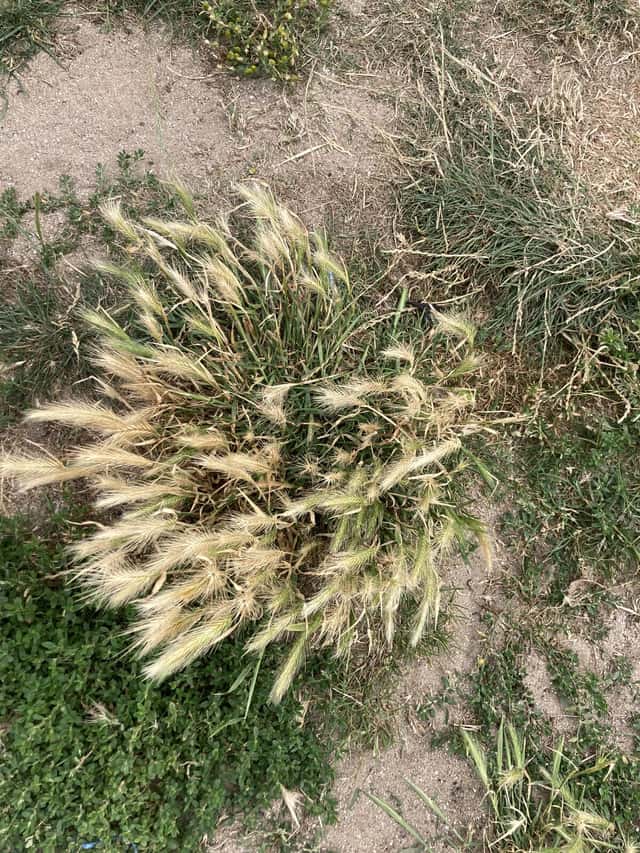
Wall barley (Hordeum murinum) is a easy-care plant from the Poaceae family. Wall barley is a low, tufted annual grass in the barley genus, native to the Mediterranean, Central Europe, Western Asia, and North Africa, and now widely naturalized across temperate regions worldwide. It grows 30-50 cm tall, forming unbranched spikes up to 10 cm long that ripen from green to straw...
Wall barley grows up to 50cm, spread of 25cm, watering every 14 days, -15°C – 35°C, 20–80% humidity. It is not suitable for indoor environments and not safe for pets.
Unlike many tropical plants, Wall barley tolerates watering mistakes. Best for beginners. Without precautions, ingestion can cause irritation in pets. Keep out of reach of cats and dogs.
How to Care for Wall barley?
TLDR: Wall barley needs Direct sun, watering every 14 days, and temperatures between -15-35°C with 20-80% humidity.
How Often Should You Water Wall barley?
Keep soil lightly moist for the first 1-2 weeks until seeds germinate. Once established, wall barley is drought-tolerant and rarely needs supplemental watering except in prolonged dry spells.
How Much Light Does Wall barley Need?
Requires full sun and will not grow in shade — site it in the brightest, most exposed spot available.
What Is the Best Soil for Wall barley?
Adapts to sandy, loamy, or clay soils as long as drainage is good; prefers dry, nitrogen-rich, disturbed ground and tolerates a wide pH range from acidic to alkaline.
What Pot Should You Use for Wall barley?
Not typically container-grown since it thrives in open ground; if grown ornamentally in a pot, use a wide, shallow, well-draining container so roots and self-seeding are easy to contain.
What Is Wall barley and Where Does It Come From?
Wall barley is a low, tufted annual grass in the barley genus, native to the Mediterranean, Central Europe, Western Asia, and North Africa, and now widely naturalized across temperate regions worldwide. It grows 30-50 cm tall, forming unbranched spikes up to 10 cm long that ripen from green to straw-yellow. A classic plant of disturbed, nitrogen-rich ground, it thrives in pavement cracks, walls, roadsides, and waste areas, flowering from May through July. Though a difficult weed in cereal fields and pastures, it also serves as forage for grazing livestock in dry regions.
How Big Does Wall barley Grow?
TLDR: Wall barley can reach up to 50cm tall with Fast growth rate.
Max height
50cm
Spread
25cm
Growth rate
Fast
Foliage
Deciduous
Warning: Toxic Plant
This plant can be toxic if ingested. Keep out of reach of:
Plant Uses
Ground Cover
Soil coverage
Edible
Can be consumed
Medicinal
Medicinal properties
Medicinal Uses
- Traditional decoction of the plant used as a mild diuretic for bladder ailments and urinary complaints (folk remedy only, not clinically verified)
Culinary Uses
- Seeds can be cooked whole or ground into a coarse flour for bread, porridge, or gruel — historically eaten only when better grains were unavailable, due to poor palatability
Is your plant showing symptoms?
Click on the symptom to discover possible causes:
What Diseases Commonly Affect Wall barley?
TLDR: Wall barley is susceptible to 3 known diseases. Monitor regularly for early detection.
Rust
Rust is a common fungal disease caused by fungi in the order Pucciniales that affects a wide variety of plants. The disease gets its name from the characteristic orange, yellow, or reddish-brown pustules that appear on leaves, resembling metal rust. This obligate fungal parasite requires living plants to survive and can cause significant economic losses in agricultural crops.
Powdery Mildew
Powdery mildew is a common fungal disease caused by various fungi species including Erysiphe, Podosphaera, Oïdium, and Leveillula. It affects over 10,000 plant species worldwide. The disease thrives in warm, dry climates with high humidity and appears as a distinctive white powdery coating on plant surfaces.
Aphids
Aphids are small, soft-bodied, pear-shaped insects (1/16 to 1/8 inch long) that feed by sucking nutrient-rich sap from plants. They reproduce rapidly and can quickly weaken plants, causing distorted growth and transmitting plant viruses. Aphids come in various colors including green, black, red, yellow, brown, and gray. They secrete honeydew, a sticky substance that attracts ants and encourages sooty mold growth.
Meaning & Symbolism
A symbol of resilience and tenacity — a scrappy wild grass that colonizes pavement cracks, walls, and wastelands where little else can take root.
Compare with similar plants
| Attribute | Difficulty | Light | Watering | Pet Safe |
|---|---|---|---|---|
| Field Maple | Easy | Bright indirect | 14d | ✓ |
| Muriel's Bamboo | Medium | Partial shade | 3d | ✓ |
| Silver Birch | Easy | Direct sun | 14d | ✓ |
| Common Blanketflower | Easy | Direct sun | 10d | ✓ |





