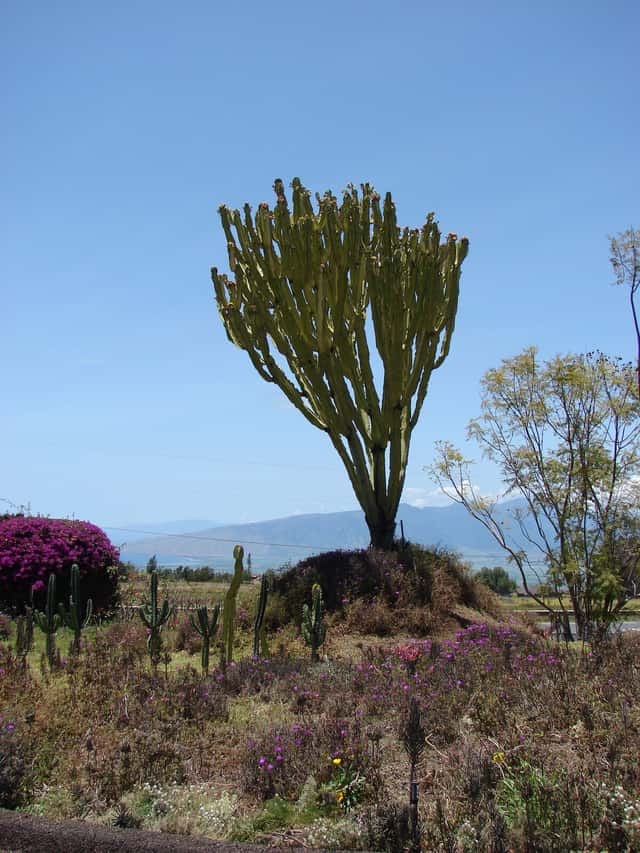
Euphorbiaceae
African Candelabra (Euphorbia ammak)
Euphorbia ammak
Easy: full sun, fast-draining soil, and water only when the soil is dry, almost none in winter. Standing water kills it. It is frost tender; in cold climates keep it indoors in the brightest spot. It grows fast and can get very tall, so choose the spot with care. Wear gloves to handle it, as the latex is toxic.
Every 10 days
Direct sun
5° - °C
% - %
Categories
What is African candelabra?
African candelabra (Euphorbia ammak) is a easy-care plant from the Euphorbiaceae family. African candelabra (Euphorbia ammak) is a tree-like succulent spurge native to the arid regions of Saudi Arabia and Yemen, where it grows on rocky plains, steep slopes and thorn scrub at 1,000 to 1,500 m. Despite the name, it is neither African nor a cactus. It has a short trunk and a crown of uprig...
African candelabra grows up to 10.0m, spread of 450cm, watering every 10 days. It is suitable for indoor environments and not safe for pets.
Unlike many tropical plants, African candelabra tolerates watering mistakes. Best for beginners. Without precautions, ingestion can cause irritation in pets. Keep out of reach of cats and dogs. Without adequate drainage, root rot can develop within 20 days.
How to Care for African candelabra?
TLDR: African candelabra needs Direct sun, watering every 10 days, and temperatures between 5-30°C with 40-70% humidity.
How Often Should You Water African candelabra?
In spring and summer, water when the soil is completely dry, about every 10 days in a pot. In winter, keep it nearly dry. Never leave water in the saucer: wet roots rot.
How Much Light Does African candelabra Need?
Full sun. Indoors, the brightest window you have, with direct sun. A plant grown in shade should be moved into sun gradually.
What Is the Best Soil for African candelabra?
A sandy, fast-draining mix like cactus and succulent soil, with coarse sand or grit. It tolerates acid or alkaline soils.
What Pot Should You Use for African candelabra?
A heavy terracotta or ceramic pot with a drainage hole, so the tall plant does not tip over. The pot need not be much larger than the root ball.
What Is African candelabra and Where Does It Come From?
African candelabra (Euphorbia ammak) is a tree-like succulent spurge native to the arid regions of Saudi Arabia and Yemen, where it grows on rocky plains, steep slopes and thorn scrub at 1,000 to 1,500 m. Despite the name, it is neither African nor a cactus. It has a short trunk and a crown of upright branches shaped like a candelabra; the branches have 4 or 5 toothed angles, are dark green to blue-green and carry pairs of brown spines up to 1 cm long. In the wild it reaches 10 m. Small leaves appear only at the tips in warm, humid weather and soon drop. A variegated form, 'Variegata', striped cream to lime green, is widely grown. Like every euphorbia, it bleeds a toxic, irritant white latex. It is listed as vulnerable in the wild.
How to Propagate African candelabra?
Branch cuttings
Do it in the warm season. The latex is toxic and irritates eyes and skin: protect yourself and wash your tools.
- 1 Wearing gloves and goggles, cut a branch at the joint with a clean knife
- 2 Rinse the cut with water to stop the latex
- 3 Let the cutting dry in shade for 1 to 2 weeks until callused
- 4 Plant it in dry sandy mix, staked if tall
- 5 Water lightly only after a week
Materials needed:
How Big Does African candelabra Grow?
TLDR: African candelabra can reach up to 10.0m tall with Fast growth rate.
Max height
10.0m
Spread
4.5m
Growth rate
Fast
Foliage
Evergreen
Warning: Toxic Plant
This plant can be toxic if ingested. Keep out of reach of:
Plant Uses
Ornamental
Great for decoration
Is your plant showing symptoms?
Click on the symptom to discover possible causes:
What Diseases Commonly Affect African candelabra?
TLDR: African candelabra is susceptible to 4 known diseases. Monitor regularly for early detection.
Root Rot
Root rot is a serious fungal disease that affects the root system of plants, causing them to decay and die. It is primarily caused by overwatering, poor drainage, or soil-borne fungi such as Pythium, Phytophthora, Rhizoctonia, and Fusarium. The disease thrives in waterlogged conditions where roots are deprived of oxygen, making them susceptible to fungal infection.
Cold Damage
Cold damage, also known as frost injury, occurs when plants are exposed to freezing or near-freezing temperatures. This environmental stress can cause cellular damage as ice crystals form within plant tissues, rupturing cells and disrupting normal plant functions. Chilling injury can also occur in sensitive species at temperatures between 32-55°F (0-10°C), even without actual freezing.
Mealybugs
Mealybugs are small, soft-bodied insects covered with a white, waxy, cottony material. They are common pests of houseplants and outdoor plants in mild climates. These sap-sucking insects feed on plant tissue, causing damage, stunted growth, and can lead to plant death if left untreated. They produce sticky honeydew which attracts sooty mold.
Sunburn (Sun Scorch)
Sunburn or sun scorch is an environmental condition that occurs when plants are exposed to intense, direct sunlight beyond their tolerance level. This causes the breakdown of chlorophyll in the leaves, resulting in bleached, dried, and damaged foliage. The damage can happen rapidly, sometimes within just a few hours of exposure.
Fun Facts
Despite its name, it is native to the Arabian Peninsula, not Africa
In the wild it can grow taller than 10 m
It is listed as vulnerable and its trade is regulated under CITES
Frequently asked questions
Is African candelabra a cactus?
Is African candelabra toxic?
How often should I water African candelabra?
Can African candelabra take cold?
Compare with similar plants
| Attribute | Difficulty | Light | Watering | Pet Safe |
|---|---|---|---|---|
| Field Maple | Easy | Bright indirect | 14d | ✓ |
| Iberian Houseleek | Easy | Direct sun | 14d | ✓ |
| Silver Birch | Easy | Direct sun | 14d | ✓ |
| Common Blanketflower | Easy | Direct sun | 10d | ✓ |





