Arecaceae
Oil palm: Edible Plant
Elaeis guineensis
The oil palm requires full sun exposure, constant warmth (25-32°C), and high atmospheric humidity. The soil must remain consistently fresh to moist, well-drained, and rich in organic matter, with a slightly acidic pH. It is a demanding plant, not well-suited for indoor cultivation.
Every 4 days
Direct sun
15° - 35°C
70% - 85%
Categories
What is Oil palm?
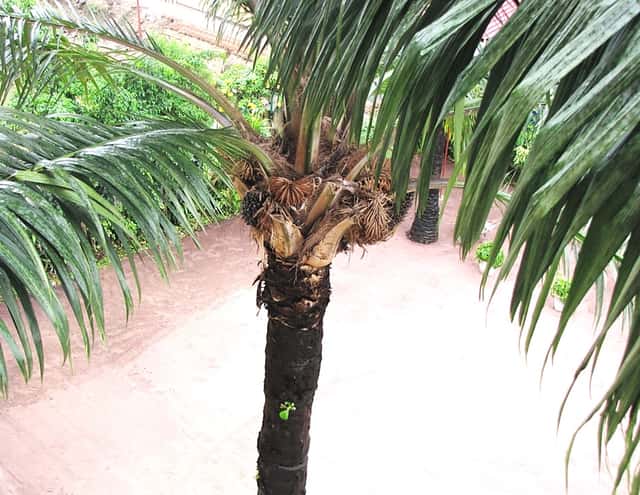
Oil palm (Elaeis guineensis) is a hard-care plant from the Arecaceae family. The oil palm (Elaeis guineensis) is a palm from the Arecaceae family, native to the low tropical regions of West Africa, particularly along the Gulf of Guinea. In the wild, it reaches 20 to 25 m in height, but in cultivation, it rarely exceeds 15 m. Its single trunk, marked by scars from old leaves,...
Oil palm grows up to 25.0m, spread of 700cm, watering every 4 days, 15°C – 35°C, 70–85% humidity. It is not suitable for indoor environments and safe for pets.
Unlike easy-care plants, Oil palm demands constant attention to humidity and light. Not recommended for beginners. Unlike many popular species, Oil palm is safe to keep around pets.
How to Care for Oil palm?
TLDR: Oil palm needs Direct sun, watering every 4 days, and temperatures between 15-35°C with 70-85% humidity.
How Often Should You Water Oil palm?
Keep the substrate consistently fresh to moist, never allowing it to dry out completely or become excessively waterlogged; in tropical ground, this palm tolerates brief periods of waterlogging if the water is not stagnant.
How Much Light Does Oil palm Need?
Place this palm in full direct sun: it is a sun-loving species that cannot tolerate shade, even when young.
What Is the Best Soil for Oil palm?
Prefer deep, well-drained but moisture-retentive soil, rich in organic matter, with a slightly acidic pH between 4.5 and 6.5; avoid extremely sandy, peaty, or compacted soils.
What Pot Should You Use for Oil palm?
For young plants only (before planting in the ground), use a large, deep pot with excellent drainage, as the species rapidly develops a significant root system and is not intended to remain in a pot at maturity.
Care Schedule
Fertilize
Every 90 days
Misting
Every 3 days
Rotate
Every 14 days
Repot
Every 365 days
What Is Oil palm and Where Does It Come From?
The oil palm (Elaeis guineensis) is a palm from the Arecaceae family, native to the low tropical regions of West Africa, particularly along the Gulf of Guinea. In the wild, it reaches 20 to 25 m in height, but in cultivation, it rarely exceeds 15 m. Its single trunk, marked by scars from old leaves, bears a crown of long pinnate fronds 5 to 7 m long. Separate male and female inflorescences produce clusters of reddish-orange ovoid fruits whose pulp and kernel provide palm oil and palm kernel oil, making this species the world's primary source of vegetable fat.
How to Propagate Oil palm?
How Big Does Oil palm Grow?
TLDR: Oil palm can reach up to 25.0m tall with Slow growth rate.
Max height
25.0m
Spread
7.0m
Growth rate
Slow
Foliage
Evergreen
Plant Uses
Edible
Can be consumed
Medicinal
Medicinal properties
Ornamental
Great for decoration
Medicinal Uses
- In traditional African medicine, various parts of the oil palm are used to treat gonorrhea, menorrhagia, and perinatal pain; the oil and sap are used for their analgesic, anti-emetic, and diuretic properties.
Culinary Uses
- The fruit provides palm oil (from the pulp) and palm kernel oil (from the kernel), widely used for frying and in margarine. The terminal bud is eaten as heart of palm, and fermented sap yields palm wine.
Is your plant showing symptoms?
Click on the symptom to discover possible causes:
What Diseases Commonly Affect Oil palm?
TLDR: Oil palm is susceptible to 2 known diseases. Monitor regularly for early detection.
Fusarium Wilt
Fusarium wilt is a serious fungal disease caused by the soil-borne fungus Fusarium oxysporum. The fungus invades roots and blocks the water-conducting vessels (xylem) of the plant, causing progressive wilting and eventual death. Host-specific forms of the pathogen exist that attack different plant species.
Root Rot
Root rot is a serious fungal disease that affects the root system of plants, causing them to decay and die. It is primarily caused by overwatering, poor drainage, or soil-borne fungi such as Pythium, Phytophthora, Rhizoctonia, and Fusarium. The disease thrives in waterlogged conditions where roots are deprived of oxygen, making them susceptible to fungal infection.
Compare with similar plants
| Attribute | Difficulty | Light | Watering | Pet Safe |
|---|---|---|---|---|
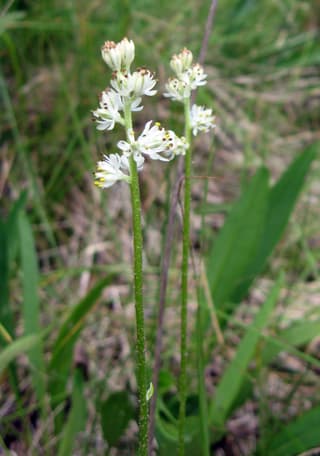
| Sticky false asphodel | Hard | Bright indirect | 1d | ✓ |
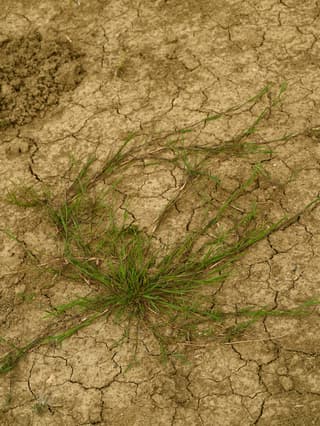
| Creeping bentgrass | Hard | Direct sun | 3d | ✓ |
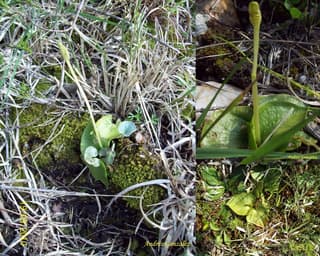
| Bulbous Adder's-tongue | Hard | Partial shade | 4d | ✓ |
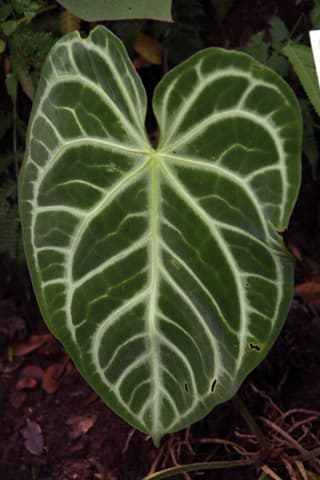
| Crystal Anthurium | Hard | Partial shade | 7d | ⚠️ |