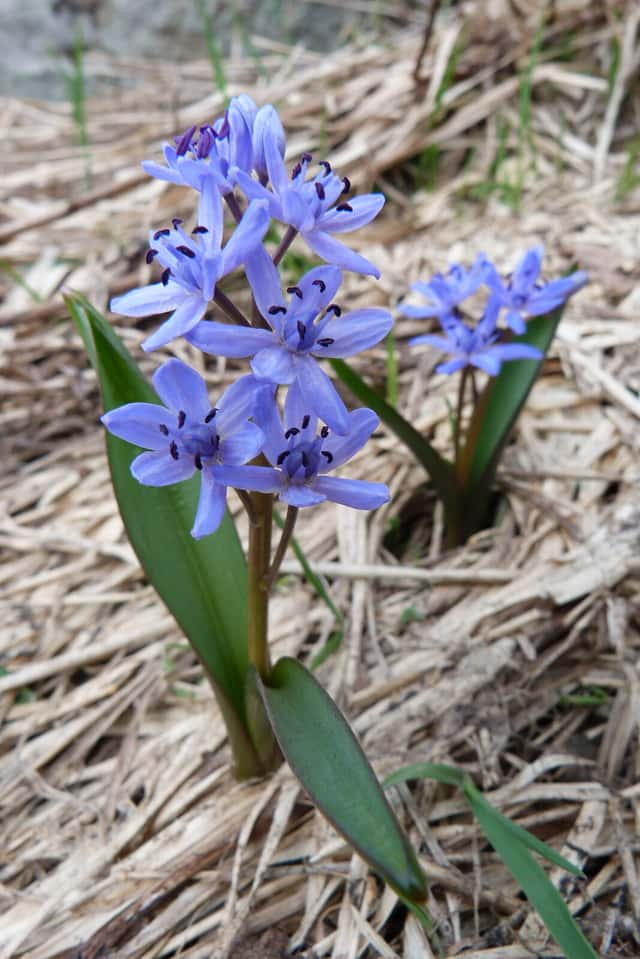
Asparagaceae
Alpine Squill (Scilla bifolia)
Scilla bifolia
Plant bulbs in autumn in sun or part shade and well-drained soil. Water while it is in leaf and flower, then let it go dry during its summer dormancy. Very hardy (to about -20 °C) and needs winter cold to flower.
Every 7 days
Partial shade
-20° - °C
% - %
Categories
What is Alpine squill?
Alpine squill (Scilla bifolia) is a easy-care plant from the Asparagaceae family. Scilla bifolia, the alpine squill, is a small bulbous perennial in the asparagus family (Asparagaceae) native to Europe and western Russia south to Turkey and Syria, where it grows in beech and deciduous woods and mountain grassland up to 2,000 m. Each bulb produces two (rarely three) glossy, lance-...
Alpine squill grows up to 20cm, spread of 10cm, watering every 7 days. It is not suitable for indoor environments and not safe for pets.
Unlike many tropical plants, Alpine squill tolerates watering mistakes. Best for beginners. Without precautions, ingestion can cause irritation in pets. Keep out of reach of cats and dogs.
How to Care for Alpine squill?
TLDR: Alpine squill needs Partial shade, watering every 7 days, and temperatures between -20-30°C with 40-70% humidity.
How Often Should You Water Alpine squill?
Keep the soil slightly moist from late winter until flowering, watering about once a week if there is no rain. Once the leaves yellow, stop watering: bulbs in soggy soil rot.
How Much Light Does Alpine squill Need?
Full sun or partial shade. Ideal under deciduous trees, which let light through in spring and shade it in summer.
What Is the Best Soil for Alpine squill?
Any well-drained soil (sand, clay, loam or chalk), acid to alkaline, moist in spring. Avoid waterlogged ground.
What Pot Should You Use for Alpine squill?
A wide, shallow pot with drainage holes and gritty compost; it does best naturalized in borders, lawns or under trees.
What Is Alpine squill and Where Does It Come From?
Scilla bifolia, the alpine squill, is a small bulbous perennial in the asparagus family (Asparagaceae) native to Europe and western Russia south to Turkey and Syria, where it grows in beech and deciduous woods and mountain grassland up to 2,000 m. Each bulb produces two (rarely three) glossy, lance-shaped leaves and a 10-20 cm stem with 6 to 10 upward-facing, star-shaped flowers, usually violet-blue, less often white or pink. It flowers in early spring and dies back by summer.
How to Propagate Alpine squill?
Separating offsets
Wear gloves: the bulb is toxic and may irritate skin.
- 1 Wait until the leaves have fully died back after flowering
- 2 Lift the clump carefully
- 3 Separate the small offsets from the mother bulb
- 4 Replant in autumn 5-8 cm deep
Materials needed:
Seed
In gardens it self-seeds and slowly forms blue carpets.
- 1 Collect seed as soon as the capsules ripen
- 2 Sow straight away in pots of gritty compost
- 3 Keep the pots in a cold frame, shaded and never dry
- 4 Pot on the young bulbs after one or two years
Materials needed:
How Big Does Alpine squill Grow?
TLDR: Alpine squill can reach up to 20cm tall with Medium growth rate.
Max height
20cm
Spread
10cm
Growth rate
Medium
Foliage
Deciduous
Warning: Toxic Plant
This plant can be toxic if ingested. Keep out of reach of:
Plant Uses
Ornamental
Great for decoration
Is your plant showing symptoms?
Click on the symptom to discover possible causes:
What Diseases Commonly Affect Alpine squill?
TLDR: Alpine squill is susceptible to 3 known diseases. Monitor regularly for early detection.
Root Rot
Root rot is a serious fungal disease that affects the root system of plants, causing them to decay and die. It is primarily caused by overwatering, poor drainage, or soil-borne fungi such as Pythium, Phytophthora, Rhizoctonia, and Fusarium. The disease thrives in waterlogged conditions where roots are deprived of oxygen, making them susceptible to fungal infection.
Mosaic Virus
Mosaic virus is a group of plant viruses that cause mottled, patchy patterns on leaves and can affect a wide variety of plants. The virus creates characteristic yellow, white, and green mosaic patterns, often accompanied by stunted growth and deformed plant parts. This highly contagious disease spreads rapidly through insect vectors and contaminated tools.
Overwatering
Overwatering occurs when plants receive too much water, depriving roots of oxygen and causing root rot. This environmental stress is one of the most common causes of houseplant death, as waterlogged soil prevents roots from breathing and functioning properly.
Fun Facts
The name bifolia is Latin for "two-leaved".
Unlike Siberian squill, its flowers face upwards.
It holds the Royal Horticultural Society's Award of Garden Merit.
Frequently asked questions
When should I plant alpine squill?
Is Scilla bifolia poisonous?
How is it different from Scilla siberica?
Does it spread?
Compare with similar plants
| Attribute | Difficulty | Light | Watering | Pet Safe |
|---|---|---|---|---|
| Field Maple | Easy | Bright indirect | 14d | ✓ |
| Iberian Houseleek | Easy | Direct sun | 14d | ✓ |
| Silver Birch | Easy | Direct sun | 14d | ✓ |
| Common Blanketflower | Easy | Direct sun | 10d | ✓ |





