Alismataceae
Amazon Sword: Perfect Indoor Houseplant
Echinodorus grisebachii
A hardy and adaptable plant, the Amazon sword tolerates a wide range of water parameters but performs best with medium to intense lighting, water temperatures between 72 and 82°F (22-28°C), and a deep, fertile substrate. It feeds primarily through its roots, so it benefits from root tabs placed at its base. It grows relatively quickly, producing about 1-2 new leaves per week, and requires regular pruning of old or damaged leaves.
Every 1 days
Partial shade
22° - 28°C
80% - 100%
Categories
What is Amazon Sword?
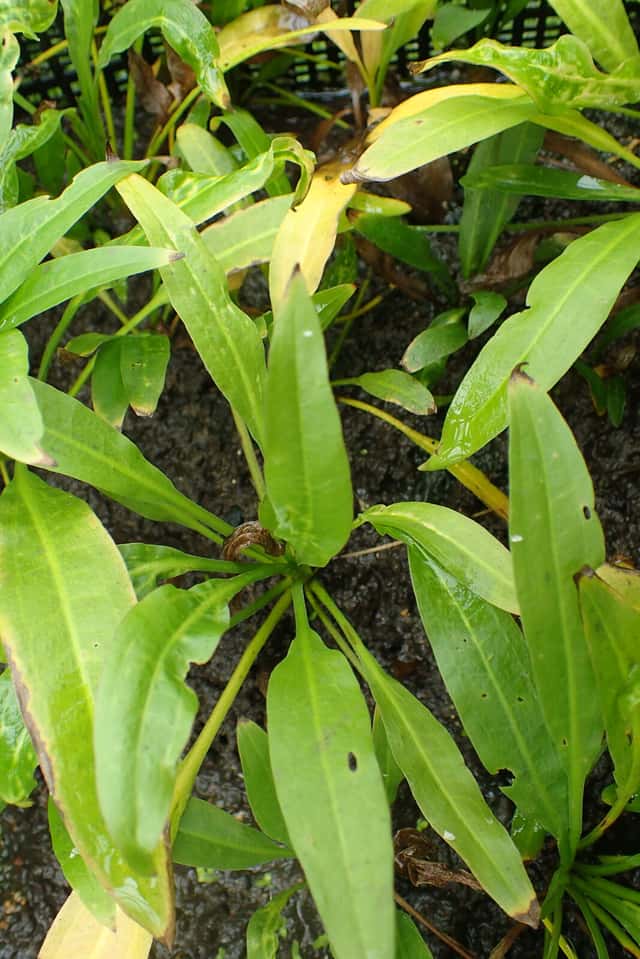
Amazon Sword (Echinodorus grisebachii) is a easy-care plant from the Alismataceae family. The Amazon sword (Echinodorus grisebachii) is an aquatic plant from the Alismataceae family, native to the river basins of South America, where it grows along banks and in shallow margins, often submerged for much of the year. It is one of the most popular and easy-to-grow aquarium plants, prized fo...
Amazon Sword grows up to 60cm, spread of 45cm, watering every 1 days, 22°C – 28°C, 80–100% humidity. It is suitable for indoor environments and safe for pets.
Unlike many tropical plants, Amazon Sword tolerates watering mistakes. Best for beginners. Unlike many popular species, Amazon Sword is safe to keep around pets. Without adequate drainage, root rot can develop within 7 days.
How to Care for Amazon Sword?
TLDR: Amazon Sword needs Partial shade, watering every 1 days, and temperatures between 22-28°C with 80-100% humidity.
How Often Should You Water Amazon Sword?
As a fully submerged plant, it is never watered in the traditional sense: it must remain permanently in water. Perform regular partial water changes (about 20-30% per week) to maintain stable parameters and prevent the buildup of harmful substances that can cause leaf yellowing or rot.
How Much Light Does Amazon Sword Need?
It prefers medium to intense lighting (about 10-12 hours per day) for compact development and a bright green color; however, it also tolerates lower light well, though it will grow more slowly. Excessive lighting without adequate fertilization encourages the appearance of algae on the leaves.
What Is the Best Soil for Amazon Sword?
It requires a deep substrate (at least 2.5-3 inches) rich in nutrients, such as a specialized plant substrate covered by coarse sand or fine gravel, to anchor its robust root system. It is essential to plant it with the crown (the point where the roots meet the stem) just above the substrate level: if buried too deeply, the crown will rot.
What Pot Should You Use for Amazon Sword?
It should be planted directly into the fertile substrate at the bottom of the aquarium, with the crown clearly visible above the surface; it is not suitable for cultivation in pots as a houseplant, as it requires permanent submersion in water.
Care Schedule
Fertilize
Every 7 days
What Is Amazon Sword and Where Does It Come From?
The Amazon sword (Echinodorus grisebachii) is an aquatic plant from the Alismataceae family, native to the river basins of South America, where it grows along banks and in shallow margins, often submerged for much of the year. It is one of the most popular and easy-to-grow aquarium plants, prized for its bright green lanceolate leaves that can reach up to 24 inches (60 cm) when submerged. It grows in a rosette pattern from a central rhizome (the crown) and reproduces via long inflorescences that bear adventitious plantlets. It is perfect as a focal point in medium to large-sized aquariums.
How to Propagate Amazon Sword?
Division of runner plantlets (adventitious plants)
- 1 Wait for the inflorescence
The mature mother plant sends out a long inflorescence which, if allowed to grow, develops small adventitious plantlets with their own leaves and roots along the stem.
- 2 Separation
When the plantlet has at least 3-4 leaves and visible roots, carefully detach it from the mother stem using clean, disinfected scissors.
- 3 Replanting
Plant the new plantlet in a fertile substrate, with the crown exposed above the bottom, and maintain stable water parameters until it takes root.
Materials needed:
How Big Does Amazon Sword Grow?
TLDR: Amazon Sword can reach up to 60cm tall with Medium growth rate.
Max height
60cm
Spread
45cm
Growth rate
Medium
Foliage
Evergreen
Plant Uses
Ornamental
Great for decoration
Is your plant showing symptoms?
Click on the symptom to discover possible causes:
What Diseases Commonly Affect Amazon Sword?
TLDR: Amazon Sword is susceptible to 6 known diseases. Monitor regularly for early detection.
Iron Deficiency
Iron deficiency, commonly known as iron chlorosis, is a nutrient deficiency disorder where plants cannot access sufficient iron from the soil. While iron is typically abundant in soil, various soil conditions can limit plant uptake, resulting in characteristic yellowing of leaves while veins remain green.
Nutrient Deficiency
Nutrient deficiency occurs when a plant cannot access one or more essential mineral elements in sufficient quantities for healthy growth. Plants require 17 essential nutrients: macronutrients (N, P, K, Ca, Mg, S) and micronutrients (Fe, Zn, Mn, Cu, B, Mo, Cl). Each plays a unique role in metabolism, structure, and reproduction. Deficiencies arise from depleted soils, incorrect pH blocking uptake, poor watering practices leaching nutrients, root damage, or imbalanced fertilization. Understanding whether a nutrient is mobile or immobile determines where symptoms first appear: mobile nutrients (N, P, K, Mg) show symptoms on older leaves first, while immobile nutrients (Ca, Fe, Zn, Cu, B) show symptoms on new growth first.
Potassium Deficiency
Potassium deficiency is a nutritional disorder that affects a plant's ability to regulate stomatal opening and closing, resulting in characteristic leaf edge burn. Potassium is a mobile nutrient, so symptoms first appear on older, lower leaves.
Crown Rot
Crown rot is a serious fungal disease that attacks the crown (base) of the plant where the stem meets the soil. It is caused by various fungal pathogens including Phytophthora, Fusarium, and Rhizoctonia. The disease thrives in waterlogged conditions and can quickly spread to kill the entire plant if not addressed promptly.
Meaning & Symbolism
In the aquarium hobby, the Amazon sword symbolizes the abundance and lush vitality of the Amazon rainforest; its majestic stature often makes it the focal point of the tank, evoking strength and constant growth.
Compare with similar plants
| Attribute | Difficulty | Light | Watering | Pet Safe |
|---|---|---|---|---|
| Field Maple | Easy | Bright indirect | 14d | ✓ |
| Silver Birch | Easy | Direct sun | 14d | ✓ |
| Common Blanketflower | Easy | Direct sun | 10d | ✓ |
| Cushion Bush | Easy | Direct sun | 14d | ✓ |
Choose & Compare
Sources & References
- Amazon Sword (Echinodorus Grisebachii) Care In Aquariums - Modest Fish
- Amazon Sword Plant: Definitive Guide (Care, Planting, Propagation) - Fishkeeping World
- Aquarius grisebachii 'Amazonicus' - Acquariofilia Consapevole
- Amazon Sword Planting Depth - The Secret To Preventing Melt And Crown Rot - AquiFarm
- Amazon Sword Plant Care: Light, Substrate & Growth Guide - Canton Aquatics





