Asteraceae
American Asters (genus Symphyotrichum)
Symphyotrichum
Easy in temperate and subtropical gardens: full sun, fertile well-drained soil and water when the soil dries. Feed sparingly or not at all, since too much nitrogen gives leaves instead of flowers. Pinch the stems once in early summer for a bushier plant, divide clumps every 2 to 3 years and cut back dead stems after flowering. Generous spacing and good air flow help prevent powdery mildew.
Every 7 days
Bright indirect
° - °C
% - %
Categories
What is American Asters (genus)?
American Asters (genus) (Symphyotrichum) is a easy-care plant from the Asteraceae family. Symphyotrichum is a genus of about 100 species of annual and perennial herbs in the daisy family (Asteraceae), almost all native to North America, with a few in the Caribbean, Central and South America. They were long included in Aster and gardeners still call them asters. The flowers look like smal...
American Asters (genus) grows up to 2.4m, watering every 7 days. It is not suitable for indoor environments and safe for pets.
Unlike many tropical plants, American Asters (genus) tolerates watering mistakes. Best for beginners. Unlike many popular species, American Asters (genus) is safe to keep around pets.
How to Care for American Asters (genus)?
TLDR: American Asters (genus) needs Bright indirect, watering every 7 days, and temperatures between 15-30°C with 40-70% humidity.
How Often Should You Water American Asters (genus)?
Water when the soil surface feels dry, usually about once a week in summer. Established plants tolerate dry spells but bloom better with steady moisture; very dry soil encourages powdery mildew and soggy soil causes wilt. Keep newly divided plants evenly moist for about 4 weeks.
How Much Light Does American Asters (genus) Need?
Full sun, at least 6 hours a day. A few species, such as white wood aster, tolerate shade; in very hot climates light afternoon shade helps.
What Is the Best Soil for American Asters (genus)?
Fertile, well-drained soil loosened with compost. Avoid heavy clay that stays wet. Rich soil is not needed: leaner soil gives shorter, sturdier plants.
What Pot Should You Use for American Asters (genus)?
A deep 30-40 cm pot with good drainage for tall species; dwarf forms do well in 20-25 cm pots.
What Is American Asters (genus) and Where Does It Come From?
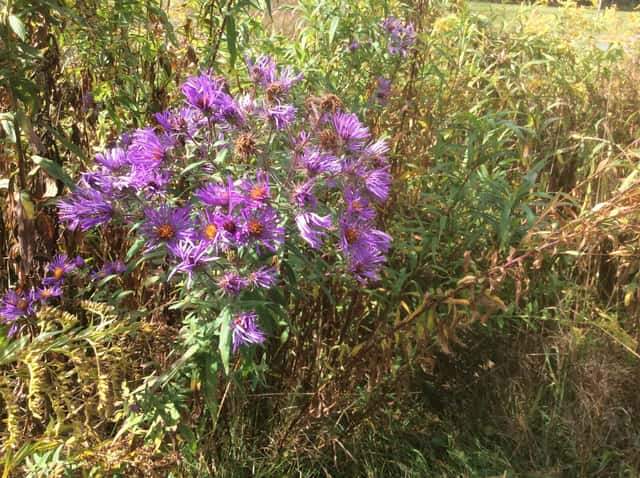
Symphyotrichum is a genus of about 100 species of annual and perennial herbs in the daisy family (Asteraceae), almost all native to North America, with a few in the Caribbean, Central and South America. They were long included in Aster and gardeners still call them asters. The flowers look like small daisies, with purple, blue, lavender, pink or white rays around a yellow centre that turns reddish with age, and they come in masses from late summer into autumn, when most of the garden has stopped flowering. The best-known garden plants are New England aster (S. novae-angliae) and New York aster or Michaelmas daisy (S. novi-belgii), along with smooth aster (S. laeve), heath aster (S. ericoides) and dwarf forms of S. dumosum. Height ranges from 20 cm to 2.4 m depending on the species, and the flowers draw many bees and butterflies.
How to Propagate American Asters (genus)?
Clump division
Divide every 2 to 3 years to keep plants vigorous; the most vigorous species may need dividing every year.
- 1 In early spring, dig up the clump
- 2 Split off rooted pieces with shoots from the outer edge
- 3 Discard the old woody centre
- 4 Replant and keep moist for 4 weeks
Materials needed:
Tip cuttings
The tips removed when pinching in early summer make good cuttings.
- 1 Take 8-10 cm soft tips in spring or early summer
- 2 Remove the lower leaves
- 3 Insert in a light, moist potting mix
- 4 Keep in bright shade until rooted
Materials needed:
Seed
Seedlings are prone to damping off: use clean mix and good ventilation. Named cultivars do not come true from seed.
- 1 Sow in a tray of light seed mix
- 2 Cover lightly
- 3 Keep moist but not wet
Materials needed:
How Big Does American Asters (genus) Grow?
TLDR: American Asters (genus) can reach up to 2.4m tall with Fast growth rate.
Max height
2.4m
Growth rate
Fast
Foliage
Deciduous
Plant Uses
Ornamental
Great for decoration
Is your plant showing symptoms?
Click on the symptom to discover possible causes:
What Diseases Commonly Affect American Asters (genus)?
TLDR: American Asters (genus) is susceptible to 4 known diseases. Monitor regularly for early detection.
Powdery Mildew
Powdery mildew is a common fungal disease caused by various fungi species including Erysiphe, Podosphaera, Oïdium, and Leveillula. It affects over 10,000 plant species worldwide. The disease thrives in warm, dry climates with high humidity and appears as a distinctive white powdery coating on plant surfaces.
Phytoplasma
Damping Off
Damping off is a soil-borne fungal disease that affects seeds and young seedlings, causing rotting of stem and root tissues at and below the soil line. It is caused by several fungi including Pythium, Rhizoctonia, Fusarium, and Phytophthora. The disease thrives in cold, wet conditions with poor air circulation.
Root Rot
Root rot is a serious fungal disease that affects the root system of plants, causing them to decay and die. It is primarily caused by overwatering, poor drainage, or soil-borne fungi such as Pythium, Phytophthora, Rhizoctonia, and Fusarium. The disease thrives in waterlogged conditions where roots are deprived of oxygen, making them susceptible to fungal infection.
Fun Facts
The name comes from Greek for joined hairs, after the hairs that crown the seeds
They bloom in autumn when little else does, making them a key food for bees and butterflies before winter
The genus was named in 1833 and largely ignored until 1994, when it was revived for the asters of the Americas
Frequently asked questions
What is the difference between Aster and Symphyotrichum?
How do I prevent powdery mildew on asters?
Why do my asters flop over?
Are asters toxic to cats and dogs?
Compare with similar plants
| Attribute | Difficulty | Light | Watering | Pet Safe |
|---|---|---|---|---|
| Field Maple | Easy | Bright indirect | 14d | ✓ |
| Iberian Houseleek | Easy | Direct sun | 14d | ✓ |
| Silver Birch | Easy | Direct sun | 14d | ✓ |
| Common Blanketflower | Easy | Direct sun | 10d | ✓ |
Choose & Compare
Sources & References
- Wikipedia — Symphyotrichum (about 106 species, split from Aster)
- National Gardening Association — How to grow asters
- White Flower Farm — Growing Aster, Symphyotrichum, Eurybia
- UF/IFAS EDIS — Aster (division, powdery mildew)
- BBC Gardeners' World — Symphyotrichum laeve 'Calliope' (no toxic effects reported)
- Plant Addicts — Are asters poisonous? (ASPCA non-toxic)





