Malvaceae
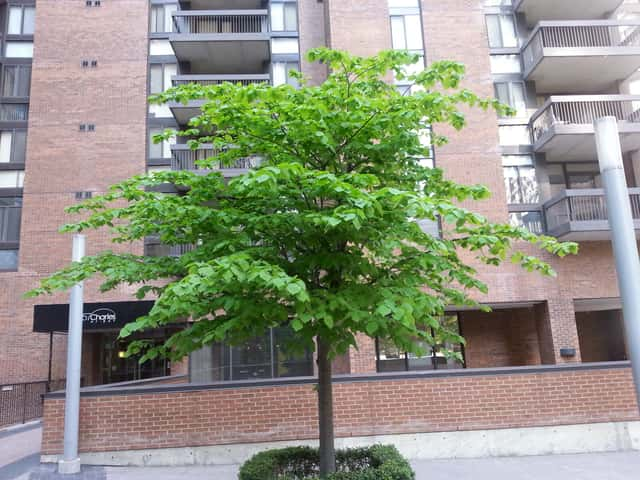
American Basswood (Tilia americana)
Tilia americana
An easy tree for temperate climates with cold winters. Plant in full sun or part shade in deep, fertile, moist but well-drained soil, and give it plenty of room. Water well for the first few years, then only in long droughts. It struggles with strong heat, compacted soil and tough urban sites.
Every 10 days
Bright indirect
° - °C
% - %
Categories
What is American basswood?
American basswood (Tilia americana) is a easy-care plant from the Malvaceae family. American basswood (Tilia americana) is a large deciduous tree of eastern and central North America, from Canada south to Florida and Texas. It reaches 18-25 m in cultivation and more than 30 m in the wild, with a broad crown and large heart-shaped leaves. In early summer it bears drooping clusters o...
American basswood grows up to 24.0m, spread of 1800cm, watering every 10 days. It is not suitable for indoor environments and safe for pets.
Unlike many tropical plants, American basswood tolerates watering mistakes. Best for beginners. Unlike many popular species, American basswood is safe to keep around pets.
How to Care for American basswood?
TLDR: American basswood needs Bright indirect, watering every 10 days, and temperatures between 15-30°C with 40-70% humidity.
How Often Should You Water American basswood?
For the first two or three years, water deeply every 7-10 days when it does not rain. Established trees only need water during long dry spells. Mulch helps keep the soil moist.
How Much Light Does American basswood Need?
Full sun to part shade. It grows and flowers best with direct sun for much of the day.
What Is the Best Soil for American basswood?
Fertile, deep, moist loam with good drainage. It tolerates clay, sand and acid or alkaline soil. Avoid compacted soil.
What Pot Should You Use for American basswood?
Not a container plant. Young seedlings can spend a year or two in a deep pot but should go in the ground early.
What Is American basswood and Where Does It Come From?
American basswood (Tilia americana) is a large deciduous tree of eastern and central North America, from Canada south to Florida and Texas. It reaches 18-25 m in cultivation and more than 30 m in the wild, with a broad crown and large heart-shaped leaves. In early summer it bears drooping clusters of small, pale yellow, very fragrant flowers hanging from a leaf-like bract. Bees work the flowers heavily, and basswood honey is prized. The wood is pale, light and soft, a favorite of woodcarvers.
How to Propagate American basswood?
Seed
The hard seed coat and low viability (about 30%) can delay germination for up to two years. Sow plenty.
- 1 Collect seeds in fall when the nutlets turn brown
- 2 Sow right away outdoors or in a deep pot
- 3 Leave them outside through winter
- 4 Keep the soil moist and wait for germination in spring or the following year
Materials needed:
How Big Does American basswood Grow?
TLDR: American basswood can reach up to 24.0m tall with Medium growth rate.
Max height
24.0m
Spread
18.0m
Growth rate
Medium
Foliage
Deciduous
Plant Uses
Ornamental
Great for decoration
Edible
Can be consumed
Medicinal
Medicinal properties
Medicinal Uses
- Tea from the dried flowers is used traditionally for colds, headaches and anxiety. Heavy use is not recommended.
Culinary Uses
- Young leaves and flowers are edible in salads.
- Bees make a prized, mildly spicy honey from the flowers.
- The sweet sap can be boiled into syrup.
Is your plant showing symptoms?
Click on the symptom to discover possible causes:
What Diseases Commonly Affect American basswood?
TLDR: American basswood is susceptible to 11 known diseases. Monitor regularly for early detection.
Aphids
Aphids are small, soft-bodied, pear-shaped insects (1/16 to 1/8 inch long) that feed by sucking nutrient-rich sap from plants. They reproduce rapidly and can quickly weaken plants, causing distorted growth and transmitting plant viruses. Aphids come in various colors including green, black, red, yellow, brown, and gray. They secrete honeydew, a sticky substance that attracts ants and encourages sooty mold growth.
Insect Chewing Damage
Damage caused by pests such as caterpillars, beetles, and grasshoppers that possess chewing mouthparts. They consume plant tissue, reducing the plant's photosynthetic capacity and creating wounds that serve as entry points for fungi and bacteria.
Spider Mites
Spider mites are tiny arachnids (less than 1/20 inch long) related to spiders and ticks that feed on plant sap. They thrive in hot, dry conditions and can cause significant damage to ornamental and vegetable plants. During severe infestations, crop losses can reach 14% or higher as these pests disrupt vital plant processes including photosynthesis, carbon dioxide absorption, and transpiration.
Eriophyid Mites
Eriophyid mites (family Eriophyidae) are extremely small, worm-shaped mites that feed by piercing plant tissue and sucking out the contents. They live on young leaves, buds, and sometimes fruit. Typical signs include tightly curled or blistered leaves, felt-like patches (erineum), small galls, bronzing or rough “russeted” fruit skin, and stunted or distorted new growth. They do not make the obvious webbing seen with spider mites, and you often need a hand lens to spot them. Many ornamentals and edibles can be affected, including roses, maples, grapes, apples, pears, birch, and viburnum. Some species can also spread certain plant viruses (for example, on roses).
Fun Facts
It is called bee tree because of the heavy nectar flow from its flowers.
Basswood is a common tonewood for solid-body electric guitars and a favorite carving wood.
The inner bark was once used to make rope, baskets and fishing nets.
Frequently asked questions
Is American basswood toxic to dogs and cats?
Does basswood grow in hot climates?
What pests attack basswood?
How big does it get?
Compare with similar plants
| Attribute | Difficulty | Light | Watering | Pet Safe |
|---|---|---|---|---|
| Field Maple | Easy | Bright indirect | 14d | ✓ |
| Iberian Houseleek | Easy | Direct sun | 14d | ✓ |
| Silver Birch | Easy | Direct sun | 14d | ✓ |
| Common Blanketflower | Easy | Direct sun | 10d | ✓ |





