Rutaceae
Aniseed Boronia: Aromatic Plant
Boronia crenulata
Aniseed Boronia performs best in full sun in cooler climates and light shade in warmer areas, where it should be shielded from harsh afternoon sun. The soil must be kept consistently moist but never waterlogged; excellent drainage is vital to prevent root rot. The plant can tolerate light frost down to approximately -5 to -6°C (21–23°F) but requires protection during extended periods of hard frost. Prune after flowering to promote bushier growth and apply fertilizer once the blooming period has ended.
Every 3 days
Bright indirect
-5° - 32°C
% - %
Categories
What is Aniseed Boronia?
Aniseed Boronia (Boronia crenulata) is a medium-care plant from the Rutaceae family. Aniseed Boronia is an evergreen Australian shrub in the citrus family (Rutaceae), native to southwestern Western Australia, where it grows in sandy and rocky heathlands and open woodlands. It typically reaches 25–120 cm (10–47 inches) in height with an open, slightly pendulous growth habit. The smal...
Aniseed Boronia grows up to 1.2m, spread of 100cm, watering every 3 days, -5°C – 32°C. It is not suitable for indoor environments and safe for pets.
Unlike many popular species, Aniseed Boronia is safe to keep around pets.
How to Care for Aniseed Boronia?
TLDR: Aniseed Boronia needs Bright indirect, watering every 3 days, and temperatures between -5-32°C with 40-70% humidity.
How Often Should You Water Aniseed Boronia?
Keep the soil consistently moist; the plant will wilt rapidly if allowed to dry out completely. Increase watering frequency during the growing and flowering seasons (spring and summer) and reduce it in winter. Ensure the soil does not become waterlogged to minimize the risk of root rot.
How Much Light Does Aniseed Boronia Need?
Prefers full sun in temperate regions but benefits from light or dappled shade in hotter climates to prevent leaf scorch from intense midday sun.
What Is the Best Soil for Aniseed Boronia?
Select a well-draining, nutrient-rich soil with a slightly acidic to neutral pH (approximately 5.5–6.5). Avoid lime-rich, alkaline, or poorly drained soils.
What Pot Should You Use for Aniseed Boronia?
Select a pot approximately 30 cm (12 inches) in diameter with ample drainage holes. Terracotta is recommended as it allows excess moisture to evaporate, preventing the roots from sitting in water.
Care Schedule
Fertilize
Every 365 days
Repot
Every 365 days
What Is Aniseed Boronia and Where Does It Come From?
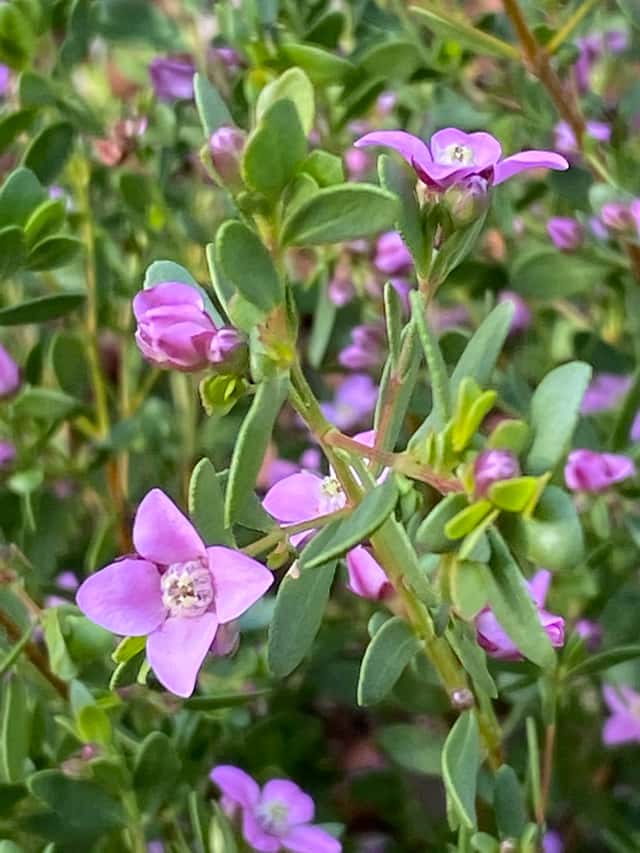
Aniseed Boronia is an evergreen Australian shrub in the citrus family (Rutaceae), native to southwestern Western Australia, where it grows in sandy and rocky heathlands and open woodlands. It typically reaches 25–120 cm (10–47 inches) in height with an open, slightly pendulous growth habit. The small, serrated (crenulate) leaves release a distinct anise-like fragrance when crushed. From late winter to autumn—peaking in spring—the plant produces numerous small, four-petaled flowers in shades of pink to reddish-purple, appearing singly or in small clusters at the tips of the branches.
How Big Does Aniseed Boronia Grow?
TLDR: Aniseed Boronia can reach up to 1.2m tall with Medium growth rate.
Max height
1.2m
Spread
1.0m
Growth rate
Medium
Foliage
Evergreen
Plant Uses
Ornamental
Great for decoration
Aromatic
Pleasant fragrance
Is your plant showing symptoms?
Click on the symptom to discover possible causes:
What Diseases Commonly Affect Aniseed Boronia?
TLDR: Aniseed Boronia is susceptible to 6 known diseases. Monitor regularly for early detection.
Root Rot
Root rot is a serious fungal disease that affects the root system of plants, causing them to decay and die. It is primarily caused by overwatering, poor drainage, or soil-borne fungi such as Pythium, Phytophthora, Rhizoctonia, and Fusarium. The disease thrives in waterlogged conditions where roots are deprived of oxygen, making them susceptible to fungal infection.
Mealybugs
Mealybugs are small, soft-bodied insects covered with a white, waxy, cottony material. They are common pests of houseplants and outdoor plants in mild climates. These sap-sucking insects feed on plant tissue, causing damage, stunted growth, and can lead to plant death if left untreated. They produce sticky honeydew which attracts sooty mold.
Spider Mites
Spider mites are tiny arachnids (less than 1/20 inch long) related to spiders and ticks that feed on plant sap. They thrive in hot, dry conditions and can cause significant damage to ornamental and vegetable plants. During severe infestations, crop losses can reach 14% or higher as these pests disrupt vital plant processes including photosynthesis, carbon dioxide absorption, and transpiration.
Aphids
Aphids are small, soft-bodied, pear-shaped insects (1/16 to 1/8 inch long) that feed by sucking nutrient-rich sap from plants. They reproduce rapidly and can quickly weaken plants, causing distorted growth and transmitting plant viruses. Aphids come in various colors including green, black, red, yellow, brown, and gray. They secrete honeydew, a sticky substance that attracts ants and encourages sooty mold growth.
Meaning & Symbolism
With its fresh anise scent and delicate pink blossoms, Aniseed Boronia is often associated with renewal and fragile beauty—a reminder that the most fragrant and vibrant things are often the most delicate.
Compare with similar plants
| Attribute | Difficulty | Light | Watering | Pet Safe |
|---|---|---|---|---|
| Dark Fieldcap | Medium | Low light | 2d | ⚠️ |
| Azalea | Medium | Partial shade | 3d | ⚠️ |
| Muriel's Bamboo | Medium | Partial shade | 3d | ✓ |
| Bougainvillea | Medium | Direct sun | 7d | ⚠️ |




