Geraniaceae
Apple Geranium (Pelargonium odoratissimum)
Pelargonium odoratissimum
An easy plant for pots, window boxes and scented borders. It likes plenty of light with shade in the hottest hours, soil that drains well and infrequent watering. It cannot take frost: in cold climates, bring it indoors for winter.
Every 7 days
Bright indirect
5° - °C
% - %
Categories
What is Apple geranium?
Apple geranium (Pelargonium odoratissimum) is a easy-care plant from the Geraniaceae family. Pelargonium odoratissimum is a small pelargonium in the family Geraniaceae, native to South Africa, where it grows in forest undergrowth and under rock ledges. It forms a low mound, rarely over 30 cm tall, with flowering stems that trail out to about 60 cm. The leaves are round, light green, soft an...
Apple geranium grows up to 30cm, spread of 60cm, watering every 7 days. It is suitable for indoor environments and not safe for pets.
Unlike many tropical plants, Apple geranium tolerates watering mistakes. Best for beginners. Without precautions, ingestion can cause irritation in pets. Keep out of reach of cats and dogs. Without adequate drainage, root rot can develop within 14 days.
How to Care for Apple geranium?
TLDR: Apple geranium needs Bright indirect, watering every 7 days, and temperatures between 5-30°C with 40-70% humidity.
How Often Should You Water Apple geranium?
Water when the top 2 to 3 cm of soil is dry, about once a week in warm weather. Water sparingly in winter. It copes with a few dry days but not with soggy soil, which rots the roots.
How Much Light Does Apple geranium Need?
Give it full sun or bright part shade. In hot climates, shield it from strong afternoon sun. Indoors, keep it by your brightest window.
What Is the Best Soil for Apple geranium?
Use a light, well-drained mix, ideally neutral to slightly alkaline, such as garden soil mixed with sand or perlite.
What Pot Should You Use for Apple geranium?
A shallow, wide terracotta pot with a drainage hole, since the plant spreads more than it grows upward.
Care Schedule
Fertilize
Every 30 days
What Is Apple geranium and Where Does It Come From?
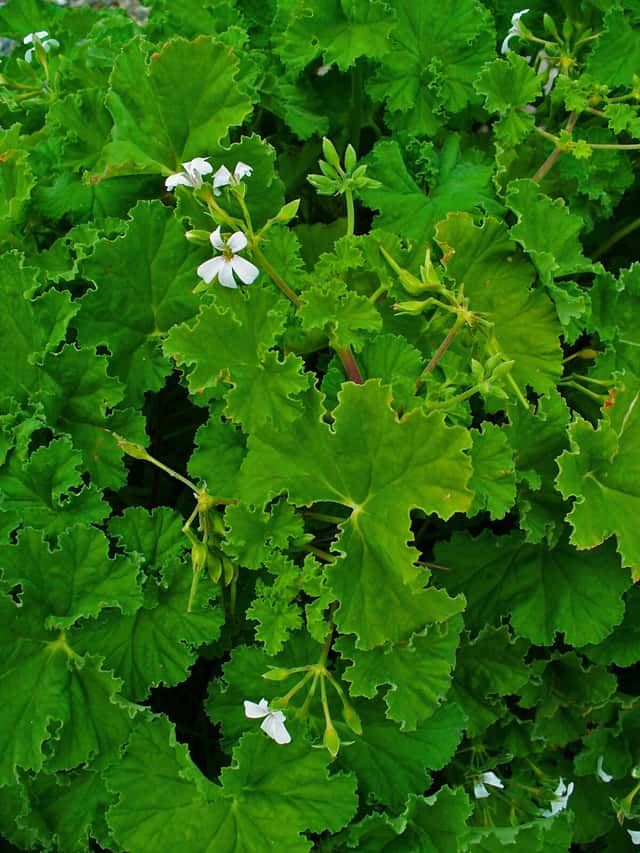
Pelargonium odoratissimum is a small pelargonium in the family Geraniaceae, native to South Africa, where it grows in forest undergrowth and under rock ledges. It forms a low mound, rarely over 30 cm tall, with flowering stems that trail out to about 60 cm. The leaves are round, light green, soft and finely hairy, and give off a strong apple scent when touched. The small flowers are white to pale pink, with red veins on the two upper petals, in clusters of 3 to 10 in spring and summer. It is a different plant from rose or lemon geranium (Pelargonium graveolens).
How to Propagate Apple geranium?
Stem cutting
Do not cover the cutting with plastic: pelargoniums rot in stagnant humidity. Cuttings keep the exact scent of the parent plant.
- 1 Cut a semi-mature shoot about 15 cm long
- 2 Strip the lower leaves
- 3 Dip the base in rooting hormone
- 4 Plant in slightly moist, well-drained mix in light shade
Materials needed:
Seed
Seedlings take longer to flower and may differ from the parent plant.
- 1 Scatter the seed over a light mix
- 2 Cover with a thin layer of sand
- 3 Keep moist and in light shade
Materials needed:
How Big Does Apple geranium Grow?
TLDR: Apple geranium can reach up to 30cm tall with Medium growth rate.
Max height
30cm
Spread
60cm
Foliage
Evergreen
Warning: Toxic Plant
This plant can be toxic if ingested. Keep out of reach of:
Plant Uses
Ornamental
Great for decoration
Aromatic
Pleasant fragrance
Medicinal
Medicinal properties
Medicinal Uses
- In South African traditional medicine, the leaves have been used for stomach and skin complaints
Culinary Uses
- In Cyprus, the leaves flavor syrups for cakes and sweets
Is your plant showing symptoms?
Click on the symptom to discover possible causes:
What Diseases Commonly Affect Apple geranium?
TLDR: Apple geranium is susceptible to 10 known diseases. Monitor regularly for early detection.
Gray Mold (Botrytis Blight)
Gray mold, caused by the fungus Botrytis cinerea, is a widespread necrotrophic pathogen affecting over 1,400 plant species. It thrives in cool, humid conditions and attacks weakened or aging plant tissues, causing soft rot and characteristic gray fuzzy growth.
Rust
Rust is a common fungal disease caused by fungi in the order Pucciniales that affects a wide variety of plants. The disease gets its name from the characteristic orange, yellow, or reddish-brown pustules that appear on leaves, resembling metal rust. This obligate fungal parasite requires living plants to survive and can cause significant economic losses in agricultural crops.
Root Rot
Root rot is a serious fungal disease that affects the root system of plants, causing them to decay and die. It is primarily caused by overwatering, poor drainage, or soil-borne fungi such as Pythium, Phytophthora, Rhizoctonia, and Fusarium. The disease thrives in waterlogged conditions where roots are deprived of oxygen, making them susceptible to fungal infection.
Overwatering
Overwatering occurs when plants receive too much water, depriving roots of oxygen and causing root rot. This environmental stress is one of the most common causes of houseplant death, as waterlogged soil prevents roots from breathing and functioning properly.
Fun Facts
The name odoratissimum means "most fragrant" in Latin.
It reached England in 1724 and was grown at the Chelsea Physic Garden.
Its seed has a spiral tail that twists and drills the seed into the soil.
Frequently asked questions
How often should I water an apple geranium?
Is apple geranium toxic to cats and dogs?
Can it handle cold?
Is it the same as rose geranium?
Compare with similar plants
| Attribute | Difficulty | Light | Watering | Pet Safe |
|---|---|---|---|---|
| Field Maple | Easy | Bright indirect | 14d | ✓ |
| Iberian Houseleek | Easy | Direct sun | 14d | ✓ |
| Silver Birch | Easy | Direct sun | 14d | ✓ |
| Common Blanketflower | Easy | Direct sun | 10d | ✓ |





