Rosaceae
Apricot — Prunus armeniaca
Prunus armeniaca
Apricot trees thrive in full sun with well-drained, fertile soil and a temperate climate. Water young trees regularly; established trees are more drought-tolerant. Fertilize in spring, prune annually in spring or summer to promote healthy growth and fruit production.
Every 10 days
Direct sun
-23° - 38°C
30% - 60%
Categories
What is Apricot?
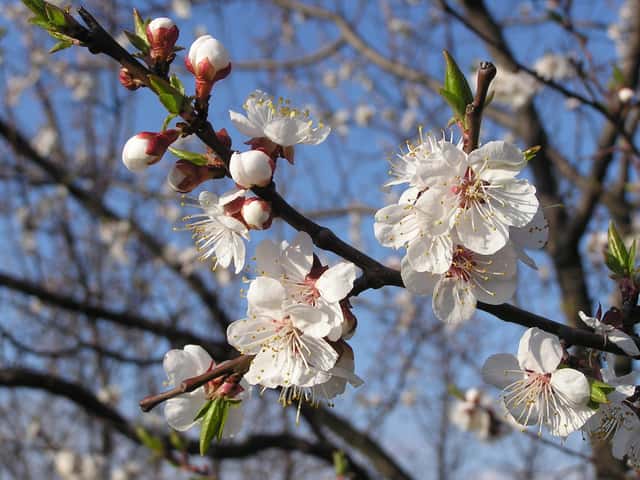
Apricot (Prunus armeniaca) is a medium-care plant from the Rosaceae family. The apricot (Prunus armeniaca) is a deciduous fruit tree in the Rosaceae family, native to Central Asia and Eastern Europe. It produces sweet, golden-orange drupes prized fresh, dried, or preserved. In early spring, before the leaves emerge, the tree bursts into delicate pink-white blossoms, making...
Apricot grows up to 10.0m, spread of 900cm, watering every 10 days, -23°C – 38°C, 30–60% humidity. It is not suitable for indoor environments and not safe for pets.
Without precautions, ingestion can cause irritation in pets. Keep out of reach of cats and dogs.
How to Care for Apricot?
TLDR: Apricot needs Direct sun, watering every 10 days, and temperatures between -23-38°C with 30-60% humidity.
How Often Should You Water Apricot?
Water young trees regularly during dry spells, especially in the first two years after planting. Established trees tolerate dry periods but benefit from irrigation during hot summers. Avoid waterlogged conditions, which cause root rot.
How Much Light Does Apricot Need?
Apricot trees demand full sun — at least 6 hours of direct sunlight daily. Planting against a south or southwest-facing wall helps maximize heat absorption and provides frost protection for early spring blossoms.
What Is the Best Soil for Apricot?
Prefers deep, fertile, well-drained soil. Amend with compost or well-rotted manure at planting time. Avoid heavy clay or poorly drained soils that promote root and crown diseases.
What Pot Should You Use for Apricot?
For container growing, choose a large pot (minimum 60 cm diameter) with drainage holes. Use rich, fertile potting mix. Water consistently during the growing season and apply liquid potassium-rich fertilizer fortnightly.
Care Schedule
Fertilize
Every 90 days
What Is Apricot and Where Does It Come From?
The apricot (Prunus armeniaca) is a deciduous fruit tree in the Rosaceae family, native to Central Asia and Eastern Europe. It produces sweet, golden-orange drupes prized fresh, dried, or preserved. In early spring, before the leaves emerge, the tree bursts into delicate pink-white blossoms, making it as ornamental as it is productive. Note: the pits contain amygdalin, a cyanogenic glycoside that can be harmful in large amounts — the fruit flesh is entirely safe to eat.
How to Propagate Apricot?
Grafting
Grafting ensures the new tree retains the exact characteristics of the parent variety. Always use sterilized tools.
- 1 Select a compatible rootstock (plum or wild peach)
- 2 Cut a scion with 2-3 buds from the desired variety
- 3 Perform cleft or budding graft
- 4 Seal with grafting tape to prevent desiccation
- 5 Keep in a sheltered spot and monitor for successful union
Materials needed:
Seed propagation
Seed-grown trees may not reproduce the parent variety faithfully. Best used for rootstock production or experimentation.
- 1 Remove pit and wash thoroughly
- 2 Cold-stratify in moist peat in refrigerator for 6-8 weeks
- 3 Sow in spring in well-draining potting mix
- 4 Keep soil evenly moist until germination
Materials needed:
How Big Does Apricot Grow?
TLDR: Apricot can reach up to 10.0m tall with Medium growth rate.
Max height
10.0m
Spread
9.0m
Growth rate
Medium
Foliage
Deciduous
Warning: Toxic Plant
This plant can be toxic if ingested. Keep out of reach of:
Plant Uses
Edible
Can be consumed
Ornamental
Great for decoration
Medicinal
Medicinal properties
Medicinal Uses
- Rich in vitamins A and C, potassium, and antioxidants
- Apricot kernel oil is used in cosmetics and traditional medicine as a moisturizer and emollient
- Traditionally used as an expectorant and to soothe coughs
Culinary Uses
- Fresh fruit eaten raw
- Dried apricots — a staple snack and ingredient in Middle Eastern and Mediterranean cuisine
- Jams, preserves, and chutneys
- Apricot liqueurs and brandies
- Kernels used in marzipan and confectionery (in small amounts)
Is your plant showing symptoms?
Click on the symptom to discover possible causes:
What Diseases Commonly Affect Apricot?
TLDR: Apricot is susceptible to 7 known diseases. Monitor regularly for early detection.
Bacterial Canker
Serious bacterial disease affecting stone fruits and tomatoes caused by Pseudomonas syringae or Clavibacter michiganensis. Creates sunken lesions that ooze sap.
Canker
Canker is a disease caused by various fungi and bacteria that create necrotic, sunken areas on bark of branches, stems, and trunks. Pathogens enter through wounds and natural openings, especially when plants are stressed. Canker can gradually weaken or kill branches by disrupting water and nutrient flow.
Bacterial Leaf Spot
Bacterial leaf spot is a plant disease caused by bacteria in the Xanthomonas and Pseudomonas genera that affects various ornamental and edible plants. The bacteria infect leaves through wounds or natural openings, causing characteristic lesions that can lead to premature leaf drop and plant weakening.
Powdery Mildew
Powdery mildew is a common fungal disease caused by various fungi species including Erysiphe, Podosphaera, Oïdium, and Leveillula. It affects over 10,000 plant species worldwide. The disease thrives in warm, dry climates with high humidity and appears as a distinctive white powdery coating on plant surfaces.
Meaning & Symbolism
The apricot blossom symbolizes hope, abundance, and the renewal of spring. In Eastern cultures it represents beauty, good luck, and longevity.
Fun Facts
Apricot is one of the oldest cultivated fruit trees, with over 4,000 years of agricultural history
Alexander the Great is said to have brought apricots from Central Asia to ancient Greece
The name armeniaca refers to Armenia, long believed to be its place of origin though it likely originated in China
Frequently asked questions
How often should I water an apricot tree?
Are apricot pits toxic?
When should I prune my apricot tree?
Can I grow an apricot tree in a container?
What are the most common apricot tree diseases?
Compare with similar plants
| Attribute | Difficulty | Light | Watering | Pet Safe |
|---|---|---|---|---|
| Dark Fieldcap | Medium | Low light | 2d | ⚠️ |
| Azalea | Medium | Partial shade | 3d | ⚠️ |
| Muriel's Bamboo | Medium | Partial shade | 3d | ✓ |
| Bougainvillea | Medium | Direct sun | 7d | ⚠️ |




