Oleaceae
Arbequina Olive: Edible Plant
Olea europaea 'Arbequina'
Grow the Arbequina Olive in a location with full sun (6 to 8 hours daily), well-drained soil, and spaced-out watering, as it is a drought-tolerant plant once established. It is more cold-hardy compared to other olive trees, tolerating down to USDA hardiness zone 8, but prefers the warm, dry climates typical of the Mediterranean.
Every 12 days
Direct sun
7° - 38°C
30% - 60%
Categories
What is Arbequina Olive?
Arbequina Olive (Olea europaea 'Arbequina') is a easy-care plant from the Oleaceae family. The Arbequina Olive (Olea europaea 'Arbequina') is a Spanish olive cultivar originating from the Arbeca region in Catalonia. It is recognized for its compact size, self-fertility, and early fruiting, characteristics that have made it one of the most popular varieties for cultivation in pots, small g...
Arbequina Olive grows up to 6.0m, spread of 450cm, watering every 12 days, 7°C – 38°C, 30–60% humidity. It is suitable for indoor environments and safe for pets.
Unlike many tropical plants, Arbequina Olive tolerates watering mistakes. Best for beginners. Unlike many popular species, Arbequina Olive is safe to keep around pets. Without adequate drainage, root rot can develop within 24 days.
How to Care for Arbequina Olive?
TLDR: Arbequina Olive needs Direct sun, watering every 12 days, and temperatures between 7-38°C with 30-60% humidity.
How Often Should You Water Arbequina Olive?
Water deeply once or twice a week during the first year to strengthen the roots; after that, space out the waterings and allow the soil to dry out thoroughly between them, as excess moisture promotes root rot.
How Much Light Does Arbequina Olive Need?
Provide full, direct sun — at least 6 hours daily. In indoor environments or during short winter days, supplement with artificial light to maintain flowering and fruiting.
What Is the Best Soil for Arbequina Olive?
Prefer sandy or loamy soil with excellent drainage and a pH between 5.5 and 8.5. Avoid waterlogged or dense clay soils, which favor root diseases.
What Pot Should You Use for Arbequina Olive?
Terracotta or unglazed ceramic pot with generous drainage holes, as the porous material helps prevent excess moisture around the roots.
Care Schedule
Fertilize
Every 60 days
Rotate
Every 14 days
Repot
Every 730 days
What Is Arbequina Olive and Where Does It Come From?
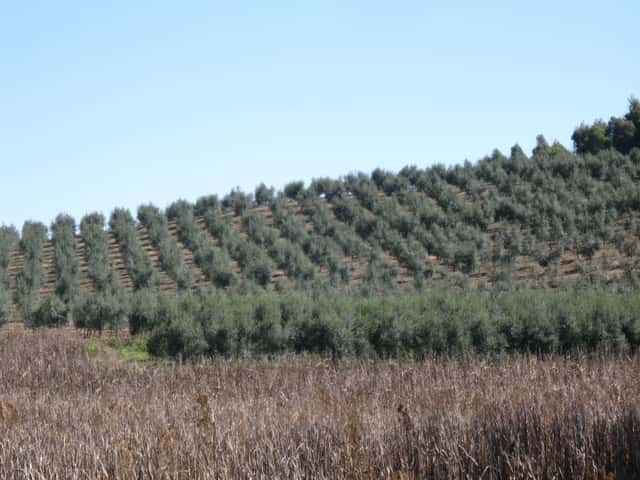
The Arbequina Olive (Olea europaea 'Arbequina') is a Spanish olive cultivar originating from the Arbeca region in Catalonia. It is recognized for its compact size, self-fertility, and early fruiting, characteristics that have made it one of the most popular varieties for cultivation in pots, small gardens, and hedges. Its leaves are evergreen, featuring a silvery underside, and the plant produces small creamy white flowers in spring, followed by green olives that ripen to a purplish hue, used for both gourmet olive oil production and table olives.
How to Propagate Arbequina Olive?
Semi-hardwood stem cuttings
Keep the substrate warm (between 70°F and 80°F) to accelerate rooting and avoid waterlogging.
- 1 Cut a 6 to 8-inch semi-hardwood branch in late spring or early summer
- 2 Remove the leaves from the bottom half of the cutting
- 3 Dip the base in rooting hormone powder
- 4 Plant in a light, well-drained substrate, keeping it slightly moist
- 5 Cover with a clear plastic bag to maintain humidity and keep in a spot with indirect light
Materials needed:
How Big Does Arbequina Olive Grow?
TLDR: Arbequina Olive can reach up to 6.0m tall with Medium growth rate.
Max height
6.0m
Spread
4.5m
Growth rate
Medium
Foliage
Evergreen
Plant Uses
Edible
Can be consumed
Ornamental
Great for decoration
Culinary Uses
- Extra virgin olive oil
- Table olives
Is your plant showing symptoms?
Click on the symptom to discover possible causes:
What Diseases Commonly Affect Arbequina Olive?
TLDR: Arbequina Olive is susceptible to 8 known diseases. Monitor regularly for early detection.
Leaf Spot
Leaf spot is a common fungal disease caused by various pathogens including Alternaria, Ascochyta, Colletotrichum, Septoria, and Venturia. It primarily affects leaves, causing discolored spots that can lead to premature leaf drop if left untreated.
Bacterial Blight
Pseudomonas is a group of bacteria that causes leaf spots, blights, cankers, and soft rots on many garden and houseplants. It thrives in cool, wet, or humid weather and spreads with splashing water, rain, handling, and contaminated tools. Look for small, water‑soaked spots that turn dark brown or black, often with a yellow halo; on tomatoes, these can appear as tiny dark specks on leaves and fruit. On woody plants such as cherry, plum, and lilac, it can cause sunken cankers, oozing, dieback, or blossoms that fail after a cool, wet spring. Succulents and fleshy tissues may develop soft, slimy rot. Commonly affected plants include tomatoes, peppers, beans, brassicas, roses, lilacs, stone fruits, and various houseplants.
Verticillium Wilt
Verticillium wilt is a soil-borne fungal disease caused primarily by the fungi Verticillium dahliae and V. albo-atrum. These pathogens infect plant roots and grow within the vascular tissues, blocking water and nutrient transport, resulting in wilting and eventual plant death. The disease affects over 350 plant species including vegetables, fruits, ornamental flowers, and trees. The fungi can survive in soil for more than 10 years as resistant structures called microsclerotia.
Scale Insects
Scale insects are small sap-sucking pests that appear as brown, shell-like bumps on plant stems and leaves. There are over 25 species, divided into armored (hard) and unarmored (soft) scales. They feed by piercing plant tissue and extracting sap, which weakens the plant and can lead to yellowing, stunted growth, and even death if left untreated. They also excrete honeydew, which attracts ants and promotes sooty mold growth.
Meaning & Symbolism
The olive branch has symbolized peace, wisdom, and abundance since antiquity in Mediterranean cultures.
Compare with similar plants
| Attribute | Difficulty | Light | Watering | Pet Safe |
|---|---|---|---|---|
| Field Maple | Easy | Bright indirect | 14d | ✓ |
| Silver Birch | Easy | Direct sun | 14d | ✓ |
| Common Blanketflower | Easy | Direct sun | 10d | ✓ |
| Cushion Bush | Easy | Direct sun | 14d | ✓ |





