Cupressaceae
Arborvitae (Thuja)
Thuja
Conifer for sun and well-drained soil that stays moist but never soggy. Likes mild to cold climates and one light trim a year.
Every 10 days
Bright indirect
-35° - 35°C
% - %
Categories
What is Arborvitae?
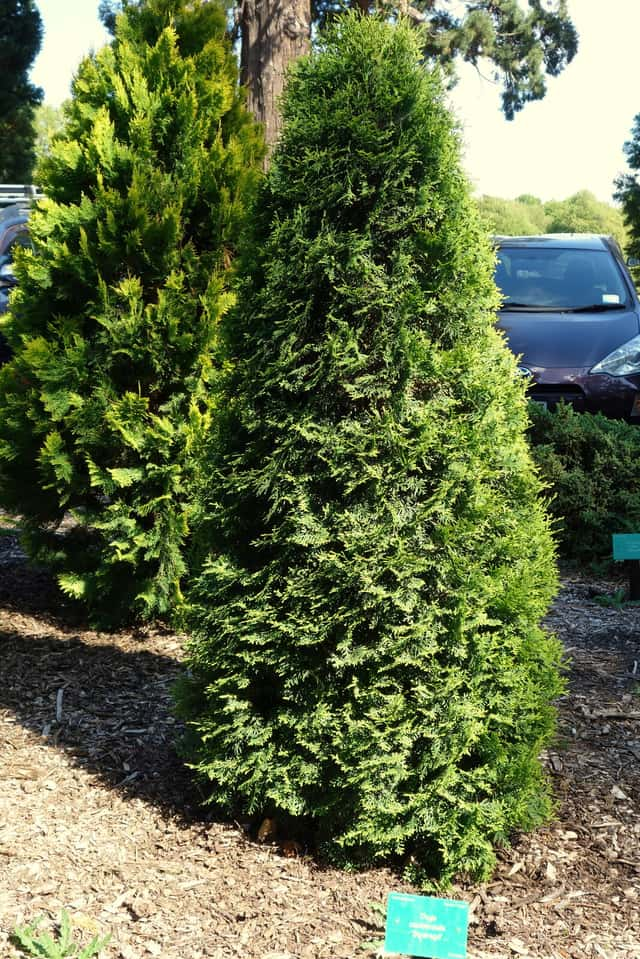
Arborvitae (Thuja) is a easy-care plant from the Cupressaceae family. Thuja is a genus of conifers in the cypress family, with five species from North America and East Asia. They are evergreen trees and shrubs with tiny scale-like leaves arranged in flat, fan-shaped sprays that smell when crushed. They do not flower: they make small cones, 1 to 2 cm long. Arborvitae a...
Arborvitae grows up to watering every 10 days, -35°C – 35°C. It is not suitable for indoor environments and not safe for pets.
Unlike many tropical plants, Arborvitae tolerates watering mistakes. Best for beginners. Without precautions, ingestion can cause irritation in pets. Keep out of reach of cats and dogs.
How to Care for Arborvitae?
TLDR: Arborvitae needs Bright indirect, watering every 10 days, and temperatures between -35-35°C with 40-70% humidity.
How Often Should You Water Arborvitae?
Water every 7 to 10 days, more often in the first year and in hot weather. Keep the soil moist, never soggy. Brown tips in late summer are usually a sign of thirst.
How Much Light Does Arborvitae Need?
Full sun to light shade. In deep shade it gets thin and loses its shape.
What Is the Best Soil for Arborvitae?
Fertile, moist, well-drained soil, slightly acidic to alkaline. Waterlogged soil rots the roots.
What Pot Should You Use for Arborvitae?
In a container, use a large deep pot of 40 liters or more with drainage and a free-draining mix. Repot every 2 to 3 years or plant out.
Care Schedule
Fertilize
Every 365 days
What Is Arborvitae and Where Does It Come From?
Thuja is a genus of conifers in the cypress family, with five species from North America and East Asia. They are evergreen trees and shrubs with tiny scale-like leaves arranged in flat, fan-shaped sprays that smell when crushed. They do not flower: they make small cones, 1 to 2 cm long. Arborvitae are among the most planted hedge and screen plants, in columns, cones or globes. Thuja orientalis, often sold as an arborvitae, is now in its own genus (Platycladus). Some species have their own page.
How to Propagate Arborvitae?
Cuttings
Cuttings taken in fall or late winter root best. Never let the mix dry out.
- 1 Take 10 to 15 cm tip cuttings with a small heel of older wood
- 2 Strip the scales from the lower part
- 3 Dip the base in rooting hormone
- 4 Insert in a sandy mix, keep moist and in light shade
- 5 Pot up once new growth appears
Materials needed:
Seed
Cultivars do not come true from seed. Use cuttings to keep the shape.
- 1 Collect ripe cones in fall
- 2 Let them dry until they open and shake out the seeds
- 3 Keep the seeds in the fridge for 1 to 2 months
- 4 Sow in spring, barely covered
Materials needed:
How Big Does Arborvitae Grow?
TLDR: Arborvitae can reach up to ?cm tall with Medium growth rate.
Growth rate
Medium
Foliage
Evergreen
Warning: Toxic Plant
This plant can be toxic if ingested. Keep out of reach of:
Plant Uses
Ornamental
Great for decoration
Is your plant showing symptoms?
Click on the symptom to discover possible causes:
What Diseases Commonly Affect Arborvitae?
TLDR: Arborvitae is susceptible to 4 known diseases. Monitor regularly for early detection.
Spider Mites
Spider mites are tiny arachnids (less than 1/20 inch long) related to spiders and ticks that feed on plant sap. They thrive in hot, dry conditions and can cause significant damage to ornamental and vegetable plants. During severe infestations, crop losses can reach 14% or higher as these pests disrupt vital plant processes including photosynthesis, carbon dioxide absorption, and transpiration.
Phytophthora Root Rot
Disease caused by fungus-like organisms (oomycetes) that live in soil and can survive for years. It affects roots, stem, and crown of plants, being especially severe in waterlogged or poorly drained soils. It is the second most common cause of root rot in trees and shrubs.
leaf miners
Larval stages of leaf-mining insects are feeding on the leaf tissue of plants, building little tunnels under the leaf surface.
Scale Insects
Scale insects are small sap-sucking pests that appear as brown, shell-like bumps on plant stems and leaves. There are over 25 species, divided into armored (hard) and unarmored (soft) scales. They feed by piercing plant tissue and extracting sap, which weakens the plant and can lead to yellowing, stunted growth, and even death if left untreated. They also excrete honeydew, which attracts ants and promotes sooty mold growth.
Fun Facts
Thuja sutchuenensis was thought extinct until it was found again in China in 1999
The name arborvitae, tree of life, comes from a 16th-century tea of its foliage used against scurvy in Canada
Thuja plicata can grow taller than 60 m
Frequently asked questions
Why is my arborvitae turning brown?
Is arborvitae toxic to dogs and cats?
When should I prune arborvitae?
How fast does arborvitae grow?
Compare with similar plants
| Attribute | Difficulty | Light | Watering | Pet Safe |
|---|---|---|---|---|
| Field Maple | Easy | Bright indirect | 14d | ✓ |
| Iberian Houseleek | Easy | Direct sun | 14d | ✓ |
| Silver Birch | Easy | Direct sun | 14d | ✓ |
| Common Blanketflower | Easy | Direct sun | 10d | ✓ |





