Araceae
Peltandra (Arrow Arum) Care Guide
Peltandra
Plant Peltandra in permanently wet or shallowly submerged soil in full sun to part shade. It needs no fertilizer in nutrient-rich muck, tolerates low-oxygen water, and is largely free of pests and disease once established at the water's edge.
Every 1 days
Bright indirect
10° - 32°C
60% - 100%
Categories
What is Arrow Arum?
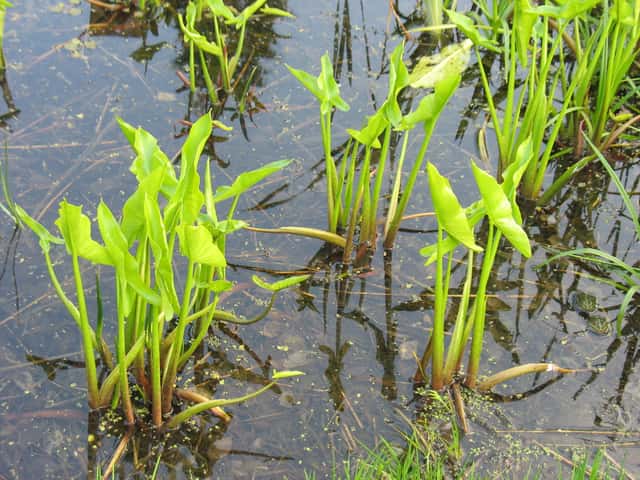
Arrow Arum (Peltandra) is a medium-care plant from the Araceae family. Peltandra is a genus of aquatic and wetland perennials in the arum family (Araceae), native to marshes, swamps, and pond edges of eastern North America. This profile covers the genus as a whole (most commonly represented by Peltandra virginica, green arrow arum) rather than a single species, since a...
Arrow Arum grows up to 1.2m, spread of 60cm, watering every 1 days, 10°C – 32°C, 60–100% humidity. It is not suitable for indoor environments and not safe for pets.
Without precautions, ingestion can cause irritation in pets. Keep out of reach of cats and dogs.
How to Care for Arrow Arum?
TLDR: Arrow Arum needs Bright indirect, watering every 1 days, and temperatures between 10-32°C with 60-100% humidity.
How Often Should You Water Arrow Arum?
Keep the crown permanently wet or submerged in up to 15-45 cm of standing water; never let the soil dry out, as this is an obligate wetland plant.
How Much Light Does Arrow Arum Need?
Provide full sun for the best flowering and densest foliage, though plants tolerate partial to full shade.
What Is the Best Soil for Arrow Arum?
Use rich, organic muck or loamy pond-edge soil with a slightly acidic pH; good aeration is not required since the plant thrives in low-oxygen, waterlogged substrate.
What Pot Should You Use for Arrow Arum?
Wide, unglazed aquatic planting basket or a container without drainage holes, set at the pond margin or in a bog garden.
What Is Arrow Arum and Where Does It Come From?
Peltandra is a genus of aquatic and wetland perennials in the arum family (Araceae), native to marshes, swamps, and pond edges of eastern North America. This profile covers the genus as a whole (most commonly represented by Peltandra virginica, green arrow arum) rather than a single species, since all members share the same emergent, bog-loving growth habit, arrow-shaped leaves, and calcium-oxalate toxicity. Grown submerged or in permanently saturated soil, Peltandra forms dense clumps of glossy, sagittate leaves topped by greenish-white spadix flowers in spring, followed by berry clusters that mature underwater.
How to Propagate Arrow Arum?
Seed
Seeds lose viability quickly if allowed to dry out, so sow fresh and keep constantly wet.
- 1 Collect ripe berries once they sink and mature underwater in late summer
- 2 Clean the pulp off the seeds and sow immediately in wet mud or shallow water
- 3 Keep seeds submerged or on saturated soil through winter for natural cold stratification
- 4 Germination occurs in spring as water warms
Materials needed:
Rhizome division
Keep divisions constantly wet and avoid letting roots dry out during transplant.
- 1 Lift or expose an established clump in early spring
- 2 Cut the rhizome into sections, each with at least one growing point and roots
- 3 Replant sections immediately in mud or shallow water at the same depth
Materials needed:
How Big Does Arrow Arum Grow?
TLDR: Arrow Arum can reach up to 1.2m tall with Medium growth rate.
Max height
1.2m
Spread
60cm
Growth rate
Medium
Foliage
Deciduous
Warning: Toxic Plant
This plant can be toxic if ingested. Keep out of reach of:
Plant Uses
Ornamental
Great for decoration
Edible
Can be consumed
Culinary Uses
- Rhizomes ("tuckahoe") were traditionally boiled, roasted, or dried by Indigenous peoples of eastern North America to break down toxic calcium oxalate crystals before eating as a starch source; the raw plant is toxic and must never be eaten uncooked.
Is your plant showing symptoms?
Click on the symptom to discover possible causes:
What Diseases Commonly Affect Arrow Arum?
TLDR: Arrow Arum is susceptible to 3 known diseases. Monitor regularly for early detection.
Spider Mites
Spider mites are tiny arachnids (less than 1/20 inch long) related to spiders and ticks that feed on plant sap. They thrive in hot, dry conditions and can cause significant damage to ornamental and vegetable plants. During severe infestations, crop losses can reach 14% or higher as these pests disrupt vital plant processes including photosynthesis, carbon dioxide absorption, and transpiration.
Mealybugs
Mealybugs are small, soft-bodied insects covered with a white, waxy, cottony material. They are common pests of houseplants and outdoor plants in mild climates. These sap-sucking insects feed on plant tissue, causing damage, stunted growth, and can lead to plant death if left untreated. They produce sticky honeydew which attracts sooty mold.
Aphids
Aphids are small, soft-bodied, pear-shaped insects (1/16 to 1/8 inch long) that feed by sucking nutrient-rich sap from plants. They reproduce rapidly and can quickly weaken plants, causing distorted growth and transmitting plant viruses. Aphids come in various colors including green, black, red, yellow, brown, and gray. They secrete honeydew, a sticky substance that attracts ants and encourages sooty mold growth.
Meaning & Symbolism
As a plant that thrives where most others drown, Peltandra symbolizes resilience, quiet strength, and the hidden richness of wetlands.
Fun Facts
The name Peltandra comes from Greek "pelte" (shield) and "andros" (male), referring to the shield-shaped stamens on the flower spike.
After pollination, the spathe curls and the fruiting spadix bends down and submerges underwater to protect and mature its berries.
Historically, Native peoples processed the toxic rhizomes into a starchy food called tuckahoe through extensive boiling, roasting, or drying.
Frequently asked questions
Does Peltandra need to grow in water?
Is Peltandra toxic?
How much light does Peltandra need?
How is Peltandra propagated?
Does Peltandra have pest or disease problems?
Compare with similar plants
| Attribute | Difficulty | Light | Watering | Pet Safe |
|---|---|---|---|---|
| Dark Fieldcap | Medium | Low light | 2d | ⚠️ |
| Azalea | Medium | Partial shade | 3d | ⚠️ |
| Muriel's Bamboo | Medium | Partial shade | 3d | ✓ |
| Bougainvillea | Medium | Direct sun | 7d | ⚠️ |




