Brassicaceae
Arugula: Aromatic Plant
Eruca sativa
Arugula prefers full sun (at least 6 hours daily), rich, well-drained soil, and frequent watering to keep the substrate uniformly moist. It is a cool-weather plant: very high temperatures accelerate bolting, making the leaves bitter. Harvest young leaves, 5 to 8 cm long, for the best flavor.
Every 3 days
Bright indirect
4° - 24°C
40% - 60%
Categories
What is Arugula?
Arugula (Eruca sativa) is a easy-care plant from the Brassicaceae family. Arugula (Eruca sativa) is an annual leafy vegetable from the Brassicaceae family, native to the Mediterranean region to Western Asia. Its green, lobed leaves with a pungent and slightly bitter taste are highly valued in cuisine, especially in salads. It is a fast-growing plant, reaching maturity in...
Arugula grows up to 90cm, spread of 35cm, watering every 3 days, 4°C – 24°C, 40–60% humidity. It is suitable for indoor environments and safe for pets.
Unlike many tropical plants, Arugula tolerates watering mistakes. Best for beginners. Unlike many popular species, Arugula is safe to keep around pets. Without adequate drainage, root rot can develop within 7 days.
How to Care for Arugula?
TLDR: Arugula needs Bright indirect, watering every 3 days, and temperatures between 4-24°C with 40-60% humidity.
How Often Should You Water Arugula?
Keep the soil consistently slightly moist, watering every 2 to 3 days in hot weather. Avoid waterlogging, as excess water promotes fungal diseases in the roots.
How Much Light Does Arugula Need?
Grow in a location with full sun, with at least 6 hours of direct light per day. In very hot climates, a little afternoon shade helps prevent premature bolting.
What Is the Best Soil for Arugula?
Use fertile soil, rich in organic matter, with good drainage and a pH between 6.0 and 7.5. Add organic compost before planting to improve fertility.
What Pot Should You Use for Arugula?
Shallow and wide pots, at least 15 to 20 cm deep with good drainage, are ideal for container cultivation, allowing adequate spacing between plants.
Care Schedule
Fertilize
Every 21 days
What Is Arugula and Where Does It Come From?
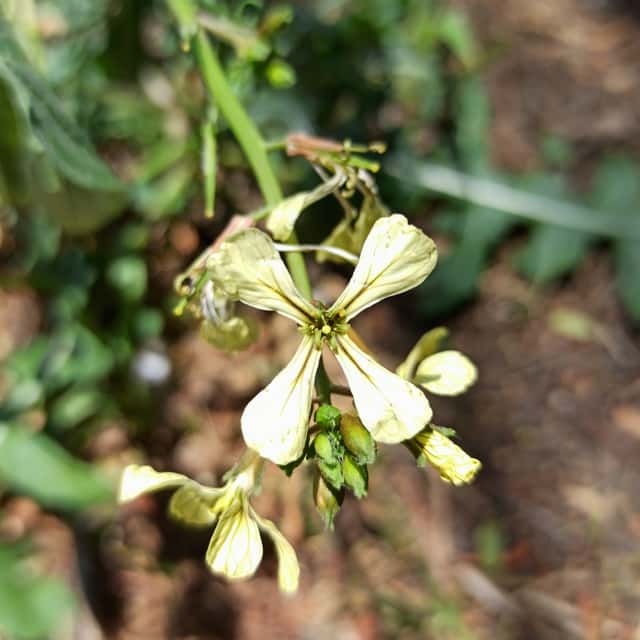
Arugula (Eruca sativa) is an annual leafy vegetable from the Brassicaceae family, native to the Mediterranean region to Western Asia. Its green, lobed leaves with a pungent and slightly bitter taste are highly valued in cuisine, especially in salads. It is a fast-growing plant, reaching maturity in 40 to 50 days, and produces small white or creamy-yellow flowers with purplish veins.
How to Propagate Arugula?
Direct sowing
Arugula seeds germinate even in cold soil (from 4°C), but germinate faster at temperatures between 10-24°C. Soaking seeds for a few hours before planting accelerates germination.
- 1 Sow directly into the soil or final pot, about 0.5 cm deep
- 2 Space seeds about 2.5 cm apart, then thin seedlings to 15 cm between plants
- 3 Keep the soil moist until germination, which occurs in about a week
- 4 Repeat sowing every 2-3 weeks for continuous harvest
Materials needed:
How Big Does Arugula Grow?
TLDR: Arugula can reach up to 90cm tall with Fast growth rate.
Max height
90cm
Spread
35cm
Growth rate
Fast
Foliage
Deciduous
Plant Uses
Edible
Can be consumed
Medicinal
Medicinal properties
Aromatic
Pleasant fragrance
Medicinal Uses
- Seed oil traditionally used in Indian medicine
- Leaves rich in vitamin C and antioxidants
- Traditional use as a digestive and mild diuretic
Culinary Uses
- Fresh leaves in salads
- Edible flowers as plate decoration
- Young pods and seeds also edible
- Used in pesto sauces and sandwiches
Is your plant showing symptoms?
Click on the symptom to discover possible causes:
What Diseases Commonly Affect Arugula?
TLDR: Arugula is susceptible to 8 known diseases. Monitor regularly for early detection.
Downy Mildew
Downy mildew is a fungal-like disease caused by oomycetes (water molds) that thrives in cool, wet conditions. It affects a wide range of plants, causing yellowing leaves with fuzzy white-gray growth underneath, leading to defoliation and reduced yields if left untreated.
Powdery Mildew
Powdery mildew is a common fungal disease caused by various fungi species including Erysiphe, Podosphaera, Oïdium, and Leveillula. It affects over 10,000 plant species worldwide. The disease thrives in warm, dry climates with high humidity and appears as a distinctive white powdery coating on plant surfaces.
Aphids
Aphids are small, soft-bodied, pear-shaped insects (1/16 to 1/8 inch long) that feed by sucking nutrient-rich sap from plants. They reproduce rapidly and can quickly weaken plants, causing distorted growth and transmitting plant viruses. Aphids come in various colors including green, black, red, yellow, brown, and gray. They secrete honeydew, a sticky substance that attracts ants and encourages sooty mold growth.
Flea beetle damage
Flea beetles are small, jumping insects that feed on the leaves of many vegetable crops. They chew numerous small, circular holes, creating a characteristic 'shothole' appearance. While established plants can often tolerate the damage, young seedlings are highly susceptible and can be stunted or killed if the infestation is severe.
Meaning & Symbolism
Historically associated with vitality and considered an aphrodisiac plant in the Mediterranean.
Compare with similar plants
| Attribute | Difficulty | Light | Watering | Pet Safe |
|---|---|---|---|---|
| Field Maple | Easy | Bright indirect | 14d | ✓ |
| Silver Birch | Easy | Direct sun | 14d | ✓ |
| Common Blanketflower | Easy | Direct sun | 10d | ✓ |
| Cushion Bush | Easy | Direct sun | 14d | ✓ |





