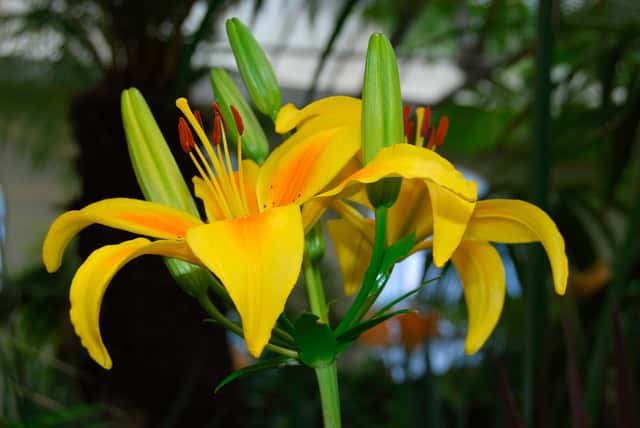
Liliaceae
Asiatic Lily — Lilium asiaticum
Lilium asiaticum
Grow in full sun to light shade, in fertile, well-drained soil that is slightly acidic to neutral. Water regularly, keeping the soil evenly moist but never waterlogged, and feed every six weeks during the growing season. Divide the bulbs every 3-4 years to keep clumps vigorous and free-flowering.
Every 7 days
Direct sun
15° - 24°C
% - %
Categories
What is Asiatic Lily?
Asiatic Lily (Lilium asiaticum) is a easy-care plant from the Liliaceae family. The Asiatic lily (Lilium asiaticum) is a group of hardy hybrid bulbs in the family Liliaceae, bred from crosses of Asian Lilium species. Unlike many other lilies, they carry little to no noticeable fragrance, but make up for it with the widest color range of any lily group and are usually the first...
Asiatic Lily grows up to 1.5m, spread of 30cm, watering every 7 days, 15°C – 24°C. It is suitable for indoor environments and not safe for pets.
Unlike many tropical plants, Asiatic Lily tolerates watering mistakes. Best for beginners. Without precautions, ingestion can cause irritation in pets. Keep out of reach of cats and dogs. Without adequate drainage, root rot can develop within 14 days.
How to Care for Asiatic Lily?
TLDR: Asiatic Lily needs Direct sun, watering every 7 days, and temperatures between 15-24°C with 40-70% humidity.
How Often Should You Water Asiatic Lily?
Give about 2.5-5 cm (1-2 in) of water per week, watering at the base of the plant rather than overhead to keep foliage and flowers dry and reduce the risk of fungal diseases like botrytis.
How Much Light Does Asiatic Lily Need?
Site the plant where it gets at least 6 hours of direct sun daily; where possible, keep the base and roots shaded with mulch to stay cool.
What Is the Best Soil for Asiatic Lily?
Use rich, well-drained soil - lily bulbs rot quickly if left in soggy ground. Asiatic lilies tolerate acidic, neutral, or slightly alkaline pH.
What Pot Should You Use for Asiatic Lily?
Use a deep pot (at least 30 cm / 12 in) with good drainage holes, sized to plant bulbs roughly 15-20 cm deep.
Care Schedule
Fertilize
Every 42 days
Repot
Every 1095 days
What Is Asiatic Lily and Where Does It Come From?
The Asiatic lily (Lilium asiaticum) is a group of hardy hybrid bulbs in the family Liliaceae, bred from crosses of Asian Lilium species. Unlike many other lilies, they carry little to no noticeable fragrance, but make up for it with the widest color range of any lily group and are usually the first lilies to bloom each year, from late spring into summer. Their upward- or outward-facing flowers span 10-15 cm across, making the plant a favorite for both garden beds and cut-flower arrangements. Asiatic lilies are easy to grow and highly cold-hardy, tolerating temperatures down to about -34°C (-30°F) while dormant (USDA hardiness zones 3-9).
How to Propagate Asiatic Lily?
Bulb clump division
Replant bulbs as quickly as possible so they do not dry out; smaller offsets may take 1-2 years to flower.
- 1 Wait until the foliage has completely died back after flowering, in fall.
- 2 Carefully dig up the bulb clump with a garden spade.
- 3 Separate the offset bulblets from the main bulb by hand.
- 4 Replant immediately about 15-20 cm deep and 10-15 cm apart.
Materials needed:
Stem bulbils
Not all cultivars produce stem bulbils; it is more common in certain varieties.
- 1 Look for small bulbils forming in the leaf axils along the stem.
- 2 Harvest them once firm, near the end of the bloom cycle.
- 3 Plant them shallowly, about 2-3 cm deep, in well-drained potting mix.
- 4 Grow on in a protected spot until they develop strong roots.
Materials needed:
How Big Does Asiatic Lily Grow?
TLDR: Asiatic Lily can reach up to 1.5m tall with Medium growth rate.
Max height
1.5m
Spread
30cm
Growth rate
Medium
Foliage
Deciduous
Warning: Toxic Plant
This plant can be toxic if ingested. Keep out of reach of:
Plant Uses
Ornamental
Great for decoration
Is your plant showing symptoms?
Click on the symptom to discover possible causes:
What Diseases Commonly Affect Asiatic Lily?
TLDR: Asiatic Lily is susceptible to 5 known diseases. Monitor regularly for early detection.
Grey Mould
Fusarium Wilt
Fusarium is a soil-borne fungus that primarily attacks the roots and vascular tissues of plants. It enters through small wounds or stressed roots, is favored by warm temperatures and waterlogging, and then obstructs the flow of sap. Symptoms include yellowing, often on only one side of the plant, wilting even with moist soil, stunted growth, and, when cutting the stem, internal brown streaks. It frequently affects tomatoes, peppers, eggplants, basil, cucumbers, and zucchini, as well as ornamentals like carnations and cyclamen. In potted plants, it can manifest as root rot with a darkened crown.
Mosaic Virus
Mosaic virus is a group of plant viruses that cause mottled, patchy patterns on leaves and can affect a wide variety of plants. The virus creates characteristic yellow, white, and green mosaic patterns, often accompanied by stunted growth and deformed plant parts. This highly contagious disease spreads rapidly through insect vectors and contaminated tools.
Aphids
Aphids are small, soft-bodied, pear-shaped insects (1/16 to 1/8 inch long) that feed by sucking nutrient-rich sap from plants. They reproduce rapidly and can quickly weaken plants, causing distorted growth and transmitting plant viruses. Aphids come in various colors including green, black, red, yellow, brown, and gray. They secrete honeydew, a sticky substance that attracts ants and encourages sooty mold growth.
Meaning & Symbolism
In Western culture the lily symbolizes purity, renewal, and passion; thanks to its broad color palette, the Asiatic lily is a popular choice for celebrations and new beginnings.
Fun Facts
Asiatic lilies are usually the first lilies of the season to bloom, opening in late spring to early summer.
Unlike many other lily types, Asiatic hybrids have little to no detectable scent.
Thousands of Asiatic lily cultivars exist, spanning nearly every color except true blue.
Frequently asked questions
Is the Asiatic lily toxic to cats?
How often should I water Asiatic lilies?
How much sun do Asiatic lilies need?
How often should I divide the bulbs?
Compare with similar plants
| Attribute | Difficulty | Light | Watering | Pet Safe |
|---|---|---|---|---|
| Field Maple | Easy | Bright indirect | 14d | ✓ |
| Silver Birch | Easy | Direct sun | 14d | ✓ |
| Common Blanketflower | Easy | Direct sun | 10d | ✓ |
| Cushion Bush | Easy | Direct sun | 14d | ✓ |





