Linaceae
Austrian flax: Ground Cover Plant
Linum austriacum
A sun-loving, drought-tolerant steppe plant that prefers well-ventilated, stony-calcareous, nutrient-poor soil. It requires little maintenance and is prone to root rot if overwatered.
Every 12 days
Direct sun
° - °C
% - %
Categories
What is Austrian flax?
Austrian flax (Linum austriacum) is a easy-care plant from the Linaceae family. Austrian flax (Linum austriacum) is a perennial herbaceous wildflower in the flax family (Linaceae), native to East-Central Europe and Western and Central Asia. It grows in dry, warm grasslands and on limestone-rich, stony slopes. Reaching 30-60 cm in height with erect, densely branched stems, its a...
Austrian flax grows up to 60cm, watering every 12 days. It is not suitable for indoor environments and safe for pets.
Unlike many tropical plants, Austrian flax tolerates watering mistakes. Best for beginners. Unlike many popular species, Austrian flax is safe to keep around pets.
How to Care for Austrian flax?
TLDR: Austrian flax needs Direct sun, watering every 12 days, and temperatures between 15-30°C with 40-70% humidity.
How Often Should You Water Austrian flax?
Water only when the soil has almost completely dried out—it requires infrequent but thorough watering. Established plants are highly drought-tolerant, whereas standing moisture can lead to root rot.
How Much Light Does Austrian flax Need?
Requires full sun, with 6-8 hours of direct sunlight daily for the best flowering results.
What Is the Best Soil for Austrian flax?
Choose well-draining, stony, or calcareous (alkaline to neutral pH) soil; it tolerates and even prefers lean, low-nutrient soils.
What Pot Should You Use for Austrian flax?
Primarily suited for gardens and rock gardens; if grown in a container, choose a deep, well-draining pot (e.g., terracotta), as its taproot does not tolerate constant moisture.
What Is Austrian flax and Where Does It Come From?
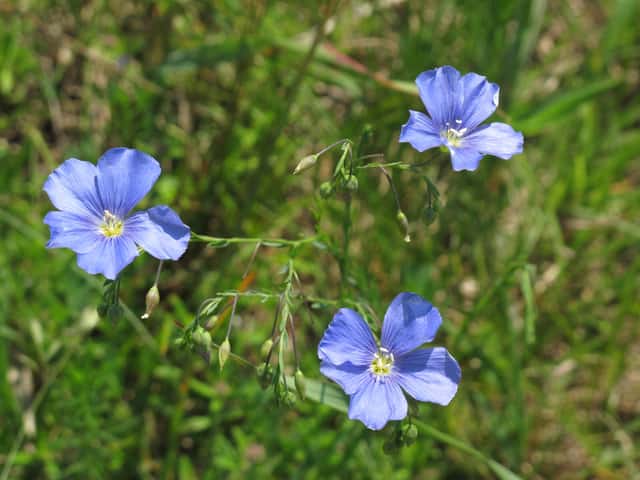
Austrian flax (Linum austriacum) is a perennial herbaceous wildflower in the flax family (Linaceae), native to East-Central Europe and Western and Central Asia. It grows in dry, warm grasslands and on limestone-rich, stony slopes. Reaching 30-60 cm in height with erect, densely branched stems, its azure blue flowers bloom between May and July—sometimes until September—typically opening only in the morning.
How to Propagate Austrian flax?
How Big Does Austrian flax Grow?
TLDR: Austrian flax can reach up to 60cm tall with Medium growth rate.
Max height
60cm
Growth rate
Medium
Foliage
Deciduous
Plant Uses
Ornamental
Great for decoration
Ground Cover
Soil coverage
Is your plant showing symptoms?
Click on the symptom to discover possible causes:
What Diseases Commonly Affect Austrian flax?
TLDR: Austrian flax is susceptible to 7 known diseases. Monitor regularly for early detection.
Powdery Mildew
Powdery mildew is a common fungal disease caused by various fungi species including Erysiphe, Podosphaera, Oïdium, and Leveillula. It affects over 10,000 plant species worldwide. The disease thrives in warm, dry climates with high humidity and appears as a distinctive white powdery coating on plant surfaces.
Root Rot
Root rot is a serious fungal disease that affects the root system of plants, causing them to decay and die. It is primarily caused by overwatering, poor drainage, or soil-borne fungi such as Pythium, Phytophthora, Rhizoctonia, and Fusarium. The disease thrives in waterlogged conditions where roots are deprived of oxygen, making them susceptible to fungal infection.
Rust
Rust is a common fungal disease caused by fungi in the order Pucciniales that affects a wide variety of plants. The disease gets its name from the characteristic orange, yellow, or reddish-brown pustules that appear on leaves, resembling metal rust. This obligate fungal parasite requires living plants to survive and can cause significant economic losses in agricultural crops.
Scale Insects
Scale insects are small sap-sucking pests that appear as brown, shell-like bumps on plant stems and leaves. There are over 25 species, divided into armored (hard) and unarmored (soft) scales. They feed by piercing plant tissue and extracting sap, which weakens the plant and can lead to yellowing, stunted growth, and even death if left untreated. They also excrete honeydew, which attracts ants and promotes sooty mold growth.
Meaning & Symbolism
The blue flax flower is a symbol of wisdom, freedom, dedication, and spiritual purity; in both European and Native American traditions, it represents perseverance and homemaking.
Compare with similar plants
| Attribute | Difficulty | Light | Watering | Pet Safe |
|---|---|---|---|---|
| Field Maple | Easy | Bright indirect | 14d | ✓ |
| Silver Birch | Easy | Direct sun | 14d | ✓ |
| Common Blanketflower | Easy | Direct sun | 10d | ✓ |
| Cushion Bush | Easy | Direct sun | 14d | ✓ |





