Dryopteridaceae
Autumn Fern (Dryopteris erythrosora)
Dryopteris erythrosora
An easy fern for shade. Plant in part to full shade, with at most an hour or two of gentle sun. Keep the soil evenly moist but not soggy, in acidic, humus-rich ground. In pots, feed monthly at half strength in the growing season; in the ground, a compost mulch in spring is enough. Cut old fronds in early spring before new growth. Indoors it needs humid air.
Every 3 days
Low light
° - °C
% - %
Categories
What is Autumn Fern?
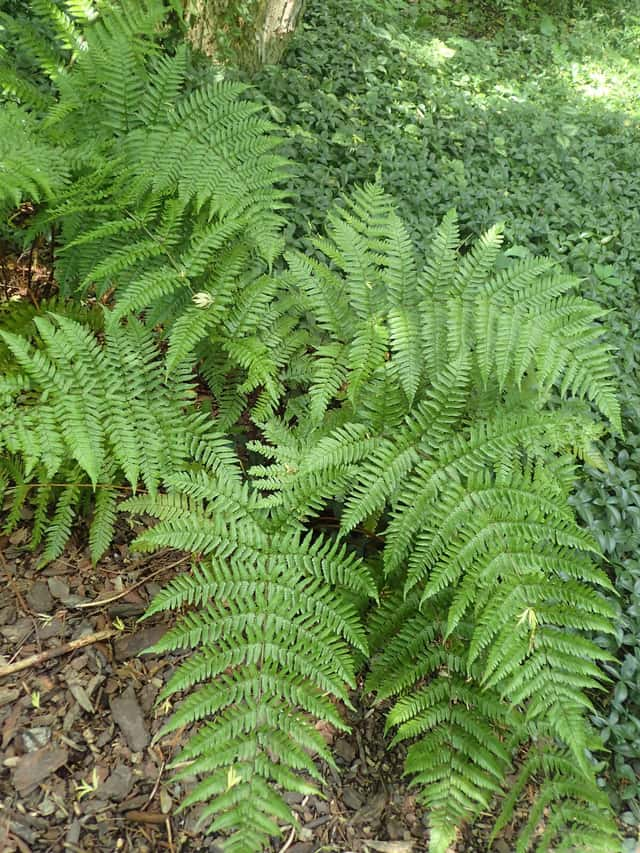
Autumn Fern (Dryopteris erythrosora) is a easy-care plant from the Dryopteridaceae family. Dryopteris erythrosora is a fern in the wood fern family (Dryopteridaceae), native to China, Japan, Korea and Taiwan. It forms a vase-shaped clump 45 to 75 cm tall and up to 90 cm wide. New fronds unfurl coppery to brick pink and age to glossy dark green, so the plant shows several colors at once. U...
Autumn Fern grows up to 75cm, spread of 90cm, watering every 3 days. It is suitable for indoor environments and safe for pets.
Unlike many tropical plants, Autumn Fern tolerates watering mistakes. Best for beginners. Unlike many popular species, Autumn Fern is safe to keep around pets. Without adequate drainage, root rot can develop within 7 days.
How to Care for Autumn Fern?
TLDR: Autumn Fern needs Low light, watering every 3 days, and temperatures between 15-30°C with 40-70% humidity.
How Often Should You Water Autumn Fern?
Keep the soil evenly moist, watering when the surface starts to dry. Pots need water more often. Yellow fronds point to standing water; brown fronds to soil that dried out.
How Much Light Does Autumn Fern Need?
Part to full shade. It handles an hour or two of gentle sun; strong sun bleaches and scorches the fronds. Indoors, a north- or east-facing window out of afternoon sun.
What Is the Best Soil for Autumn Fern?
Humus-rich, woodland-type soil that stays moist but drains well, on the acidic side. A mulch of leaves or compost helps hold moisture.
What Pot Should You Use for Autumn Fern?
Clay or terracotta pot with large drainage holes, wide enough for the clump, with rich, free-draining mix.
Care Schedule
Fertilize
Every 30 days
What Is Autumn Fern and Where Does It Come From?
Dryopteris erythrosora is a fern in the wood fern family (Dryopteridaceae), native to China, Japan, Korea and Taiwan. It forms a vase-shaped clump 45 to 75 cm tall and up to 90 cm wide. New fronds unfurl coppery to brick pink and age to glossy dark green, so the plant shows several colors at once. Under young fronds, the spore clusters have bright red covers. It is semi-evergreen: green all year in mild climates, while in cold winters the fronds may die back.
How to Propagate Autumn Fern?
Division
Divide every 4 or 5 years, when the clump gets crowded.
- 1 Lift the clump gently in early spring
- 2 Split it into pieces, each with rhizome, roots and a few fronds
- 3 Replant at the same depth in rich, moist soil
- 4 Water well and keep moist until established
Materials needed:
Spores
Slow and fiddly; division is much faster.
- 1 Collect a frond with ripe sori and let it dry on paper
- 2 Scatter the spores on sterile, moist mix
- 3 Cover with clear plastic and keep in bright light, out of sun
- 4 Pot up the young plants once the first fronds appear
Materials needed:
How Big Does Autumn Fern Grow?
TLDR: Autumn Fern can reach up to 75cm tall with Slow growth rate.
Max height
75cm
Spread
90cm
Growth rate
Slow
Foliage
Semi-evergreen
Plant Uses
Ornamental
Great for decoration
Ground Cover
Soil coverage
Is your plant showing symptoms?
Click on the symptom to discover possible causes:
What Diseases Commonly Affect Autumn Fern?
TLDR: Autumn Fern is susceptible to 6 known diseases. Monitor regularly for early detection.
Slugs and Snails
Slugs and snails are mollusks that feed on plant tissue, causing irregular holes in leaves and damage to young seedlings. They are most active at night and in moist conditions, leaving characteristic silvery slime trails. These pests can quickly devastate gardens, especially during wet seasons.
Mealybugs
Mealybugs are small, soft-bodied insects covered with a white, waxy, cottony material. They are common pests of houseplants and outdoor plants in mild climates. These sap-sucking insects feed on plant tissue, causing damage, stunted growth, and can lead to plant death if left untreated. They produce sticky honeydew which attracts sooty mold.
Scale Insects
Scale insects are small sap-sucking pests that appear as brown, shell-like bumps on plant stems and leaves. There are over 25 species, divided into armored (hard) and unarmored (soft) scales. They feed by piercing plant tissue and extracting sap, which weakens the plant and can lead to yellowing, stunted growth, and even death if left untreated. They also excrete honeydew, which attracts ants and promotes sooty mold growth.
Aphids
Aphids are small, soft-bodied, pear-shaped insects (1/16 to 1/8 inch long) that feed by sucking nutrient-rich sap from plants. They reproduce rapidly and can quickly weaken plants, causing distorted growth and transmitting plant viruses. Aphids come in various colors including green, black, red, yellow, brown, and gray. They secrete honeydew, a sticky substance that attracts ants and encourages sooty mold growth.
Fun Facts
New fronds come up copper and turn green later, which is where the name autumn fern comes from.
Erythrosora means red sori: the covers over the young spore clusters are red.
Deer and rabbits seldom eat this fern.
Frequently asked questions
Why are my autumn fern fronds turning brown?
What if the fronds turn yellow?
Does autumn fern lose its leaves in winter?
Can I grow it indoors?
Compare with similar plants
| Attribute | Difficulty | Light | Watering | Pet Safe |
|---|---|---|---|---|
| Field Maple | Easy | Bright indirect | 14d | ✓ |
| Iberian Houseleek | Easy | Direct sun | 14d | ✓ |
| Silver Birch | Easy | Direct sun | 14d | ✓ |
| Common Blanketflower | Easy | Direct sun | 10d | ✓ |





