Aspleniaceae
Balearic Spleenwort (Asplenium balearicum): Complete Care Guide
Asplenium balearicum
Keep the soil consistently and lightly moist, never waterlogged. Prefers soft indirect light and high humidity (60–90%). Avoid cold drafts and direct sunlight. Fertilize monthly during spring and summer with a diluted liquid fertilizer.
Every 4 days
Low light
10° - 27°C
60% - 90%
Categories
What is Balearic Spleenwort?
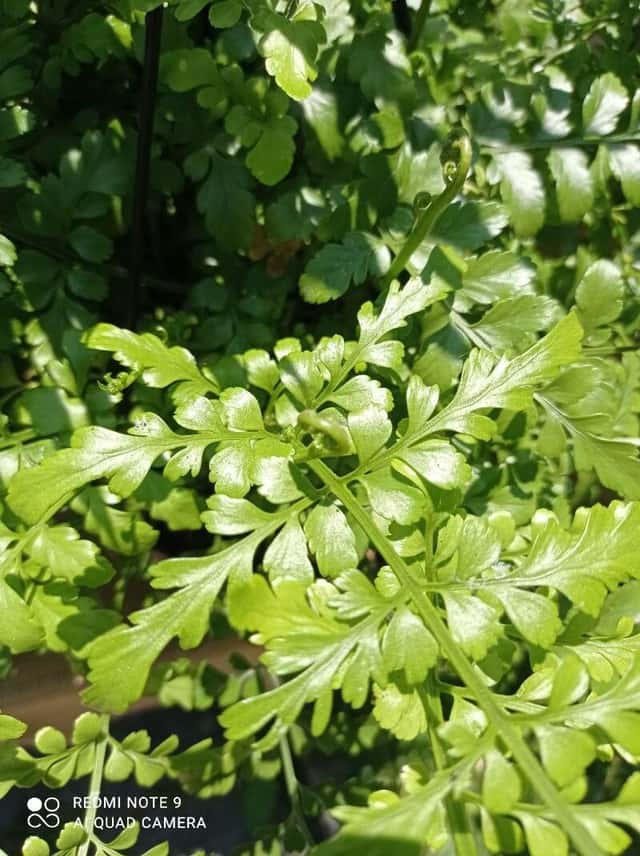
Balearic Spleenwort (Asplenium balearicum) is a medium-care plant from the Aspleniaceae family. Asplenium balearicum, commonly known as the Balearic Spleenwort, is a small and elegant fern endemic to the Balearic Islands and the Western Mediterranean. It grows naturally in limestone rock crevices and shaded slopes, forming dense clumps of dark green fronds. Well-suited to indoor environments w...
Balearic Spleenwort grows up to 30cm, spread of 25cm, watering every 4 days, 10°C – 27°C, 60–90% humidity. It is suitable for indoor environments and safe for pets.
Unlike many popular species, Balearic Spleenwort is safe to keep around pets. Without adequate drainage, root rot can develop within 8 days.
How to Care for Balearic Spleenwort?
TLDR: Balearic Spleenwort needs Low light, watering every 4 days, and temperatures between 10-27°C with 60-90% humidity.
How Often Should You Water Balearic Spleenwort?
Water every 4 days, keeping the substrate slightly moist. Use room-temperature water and avoid letting water sit in the saucer. In hot weather, check the soil more frequently.
How Much Light Does Balearic Spleenwort Need?
Place in soft indirect light, away from direct sun exposure. Tolerates lower light conditions but thrives near a filtered window. Avoid direct sunlight, which can scorch the delicate fronds.
What Is the Best Soil for Balearic Spleenwort?
Use a light, well-draining mix rich in organic matter. A fern-specific mix with perlite works well to ensure good drainage. Ideal pH is between 5.5 and 7.0.
What Pot Should You Use for Balearic Spleenwort?
Ceramic or terracotta pots with drainage holes are ideal. Avoid oversized pots — the Balearic Spleenwort prefers slightly snug roots. Humidity trays with pebbles and water help maintain moisture levels.
Care Schedule
Fertilize
Every 30 days
Misting
Every 3 days
Repot
Every 730 days
What Is Balearic Spleenwort and Where Does It Come From?
Asplenium balearicum, commonly known as the Balearic Spleenwort, is a small and elegant fern endemic to the Balearic Islands and the Western Mediterranean. It grows naturally in limestone rock crevices and shaded slopes, forming dense clumps of dark green fronds. Well-suited to indoor environments with good humidity, it is an adaptable plant that brings a Mediterranean touch to any space.
How to Propagate Balearic Spleenwort?
Clump Division
Divide in early spring for best recovery. Maintain high humidity after repotting.
- 1 Carefully remove the plant from its pot
- 2 Divide the clump by hand or with a sterilized knife, ensuring roots on each section
- 3 Plant each division in an individual pot with fresh moist substrate
- 4 Keep in a shaded, humid location until recovered
Materials needed:
Spore Propagation
A slow and delicate process. Keep the environment sterile to prevent fungal issues.
- 1 Collect mature spores from fronds (dark brown appearance)
- 2 Sow on moist peaty substrate in a closed container
- 3 Maintain in a warm location (18–22°C) with high humidity
- 4 Wait for prothalli development and then young plantlets to emerge
Materials needed:
How Big Does Balearic Spleenwort Grow?
TLDR: Balearic Spleenwort can reach up to 30cm tall with Slow growth rate.
Max height
30cm
Spread
25cm
Growth rate
Slow
Foliage
Evergreen
Plant Uses
Ornamental
Great for decoration
Air Purifying
Improves air quality
Is your plant showing symptoms?
Click on the symptom to discover possible causes:
What Diseases Commonly Affect Balearic Spleenwort?
TLDR: Balearic Spleenwort is susceptible to 8 known diseases. Monitor regularly for early detection.
Root Rot
Root rot is a serious fungal disease that affects the root system of plants, causing them to decay and die. It is primarily caused by overwatering, poor drainage, or soil-borne fungi such as Pythium, Phytophthora, Rhizoctonia, and Fusarium. The disease thrives in waterlogged conditions where roots are deprived of oxygen, making them susceptible to fungal infection.
Overwatering
Overwatering occurs when plants receive too much water, depriving roots of oxygen and causing root rot. This environmental stress is one of the most common causes of houseplant death, as waterlogged soil prevents roots from breathing and functioning properly.
Low Humidity Stress
Low humidity stress occurs when indoor air becomes too dry, causing plants to lose moisture faster than they can absorb it through their roots. This is especially common during winter heating periods, near radiators and heating vents, or in air-conditioned spaces. Tropical plants are particularly susceptible to low humidity damage.
Spider Mites
Spider mites are tiny arachnids (less than 1/20 inch long) related to spiders and ticks that feed on plant sap. They thrive in hot, dry conditions and can cause significant damage to ornamental and vegetable plants. During severe infestations, crop losses can reach 14% or higher as these pests disrupt vital plant processes including photosynthesis, carbon dioxide absorption, and transpiration.
Meaning & Symbolism
A symbol of Mediterranean resilience — this fern thrives on the rocky slopes of the Balearic Islands, representing adaptation, serenity, and endurance in challenging environments.
Fun Facts
A rare fern endemic to the Balearic Islands, found naturally in limestone rock crevices.
Despite its arid native habitat, this fern requires high indoor humidity to thrive.
It does not produce flowers — it reproduces via spores located on the underside of its fronds.
It is one of the smallest ferns in the Asplenium genus, rarely exceeding 30 cm in height.
Frequently asked questions
How often should I water Balearic Spleenwort?
Is Balearic Spleenwort toxic to pets?
What light does Balearic Spleenwort need?
Why are my Balearic Spleenwort fronds turning yellow?
Does Balearic Spleenwort need fertilizer?
Compare with similar plants
| Attribute | Difficulty | Light | Watering | Pet Safe |
|---|---|---|---|---|
| Dark Fieldcap | Medium | Low light | 2d | ⚠️ |
| Azalea | Medium | Partial shade | 3d | ⚠️ |
| Muriel's Bamboo | Medium | Partial shade | 3d | ✓ |
| Bougainvillea | Medium | Direct sun | 7d | ⚠️ |




