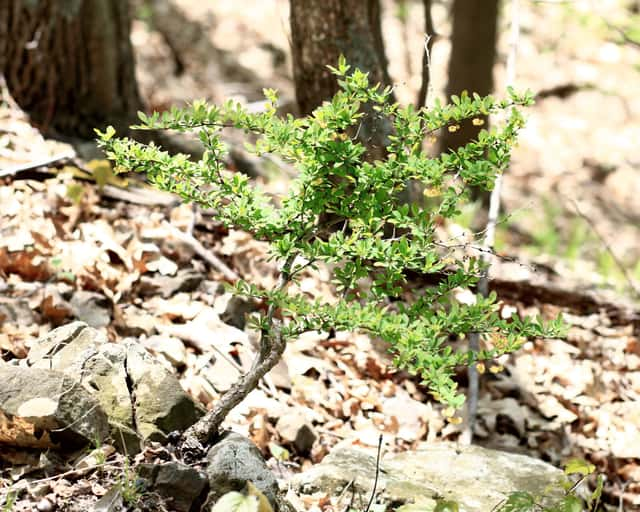
Berberidaceae
Barberry (Genus Berberis)
Berberis
A tough shrub: full sun, well-drained soil and little water once established. It rarely needs feeding; prune once a year for shape, wearing thick gloves.
Every 10 days
Bright indirect
° - °C
% - %
Categories
What is Barberry?
Barberry (Berberis) is a easy-care plant from the Berberidaceae family. Berberis, the barberries, is a large genus of more than 450 spiny shrubs from temperate and subtropical regions worldwide, most diverse in South America and Asia. Some species are evergreen and others drop their leaves in winter. They grow 1 to 5 m tall, with spiny stems and small yellow or orange f...
Barberry grows up to 5.0m, watering every 10 days. It is not suitable for indoor environments and safe for pets.
Unlike many tropical plants, Barberry tolerates watering mistakes. Best for beginners. Unlike many popular species, Barberry is safe to keep around pets.
How to Care for Barberry?
TLDR: Barberry needs Bright indirect, watering every 10 days, and temperatures between 15-30°C with 40-70% humidity.
How Often Should You Water Barberry?
Water regularly in the first growing season until it settles in. After that, water only in long dry spells. Never leave the soil soggy.
How Much Light Does Barberry Need?
Full sun, at least 6 hours a day. It tolerates part shade, but red-leaved forms turn greenish in shade.
What Is the Best Soil for Barberry?
Any well-drained soil, even poor soil. Lean soil gives stronger leaf colour. Avoid heavy clay and standing water.
What Pot Should You Use for Barberry?
Best in the ground. In a pot, use a large container with drainage holes.
What Is Barberry and Where Does It Come From?
Berberis, the barberries, is a large genus of more than 450 spiny shrubs from temperate and subtropical regions worldwide, most diverse in South America and Asia. Some species are evergreen and others drop their leaves in winter. They grow 1 to 5 m tall, with spiny stems and small yellow or orange flowers in spring, followed by red, black or purple berries. The berries of common barberry (B. vulgaris) and the Patagonian calafate are edible but very sour. Red-, gold- and purple-leaved forms are popular for hedges.
How to Propagate Barberry?
Semi-ripe cutting
Wear thick gloves because of the spines and keep the mix moist but not wet.
- 1 In summer, cut 10-15 cm tips from this year's shoots
- 2 Strip the leaves from the lower half
- 3 Dip the base in rooting hormone
- 4 Insert in moist, sandy mix in bright shade
- 5 Pot on or plant out the following spring
Materials needed:
Seed
Seeds need a cold period before they will germinate.
- 1 Collect ripe berries and clean out the seeds
- 2 Sow in autumn in a pot left outdoors to get the winter cold
- 3 Keep the mix moist
- 4 Pot on seedlings when they have 3-4 leaves
Materials needed:
How Big Does Barberry Grow?
TLDR: Barberry can reach up to 5.0m tall with Medium growth rate.
Max height
5.0m
Growth rate
Medium
Warning: Toxic Plant
This plant can be toxic if ingested. Keep out of reach of:
Plant Uses
Ornamental
Great for decoration
Edible
Can be consumed
Medicinal
Medicinal properties
Culinary Uses
- Dried barberries (B. vulgaris) flavour rice dishes in Iranian cooking.
- Patagonian calafate berries are made into jam and infusions.
Is your plant showing symptoms?
Click on the symptom to discover possible causes:
What Diseases Commonly Affect Barberry?
TLDR: Barberry is susceptible to 14 known diseases. Monitor regularly for early detection.
Aphids
Aphids are small, soft-bodied, pear-shaped insects (1/16 to 1/8 inch long) that feed by sucking nutrient-rich sap from plants. They reproduce rapidly and can quickly weaken plants, causing distorted growth and transmitting plant viruses. Aphids come in various colors including green, black, red, yellow, brown, and gray. They secrete honeydew, a sticky substance that attracts ants and encourages sooty mold growth.
Scale Insects
Scale insects are small sap-sucking pests that appear as brown, shell-like bumps on plant stems and leaves. There are over 25 species, divided into armored (hard) and unarmored (soft) scales. They feed by piercing plant tissue and extracting sap, which weakens the plant and can lead to yellowing, stunted growth, and even death if left untreated. They also excrete honeydew, which attracts ants and promotes sooty mold growth.
Spider Mites
Spider mites are tiny arachnids (less than 1/20 inch long) related to spiders and ticks that feed on plant sap. They thrive in hot, dry conditions and can cause significant damage to ornamental and vegetable plants. During severe infestations, crop losses can reach 14% or higher as these pests disrupt vital plant processes including photosynthesis, carbon dioxide absorption, and transpiration.
Whiteflies
Whiteflies are small, soft-bodied, winged insects closely related to aphids and mealybugs. They are moth-like in appearance, about 1/16 inch long, triangular in shape, and gray-white in color. These sap-sucking pests feed on plant tissue, causing yellowing, stunted growth, and wilting. They also excrete honeydew, which attracts ants and promotes sooty mold growth. Whiteflies can transmit serious plant viruses.
Fun Facts
Common barberry hosts wheat stem rust, so growing it is banned in many areas.
Japanese barberry is considered invasive in 32 US states.
Oregon grape (B. aquifolium) is the state flower of Oregon.
Frequently asked questions
Is barberry poisonous?
When should I prune barberry?
Why did my red barberry turn green?
Does it need fertilizer?
Compare with similar plants
| Attribute | Difficulty | Light | Watering | Pet Safe |
|---|---|---|---|---|
| Field Maple | Easy | Bright indirect | 14d | ✓ |
| Iberian Houseleek | Easy | Direct sun | 14d | ✓ |
| Silver Birch | Easy | Direct sun | 14d | ✓ |
| Common Blanketflower | Easy | Direct sun | 10d | ✓ |





