Ericaceae
Bearberry: Ground Cover Plant
Arctostaphylos uva-ursi
Bearberry is a hardy and low-maintenance groundcover. It prefers full sun to partial shade and thrives in sandy or rocky, well-drained, slightly acidic soil (pH 4.5–5.5). Once established, it is extremely drought-tolerant and requires almost no watering or regular maintenance. It is crucial to avoid heavy, wet soils, as they promote root rot.
Every 21 days
Direct sun
-20° - 25°C
30% - 60%
Categories
What is Bearberry?
Bearberry (Arctostaphylos uva-ursi) is a easy-care plant from the Ericaceae family. Bearberry (Arctostaphylos uva-ursi) is an evergreen, mat-forming groundcover shrub belonging to the Ericaceae family. Native to circumpolar regions and temperate mountains across the Northern Hemisphere, it forms a dense carpet of creeping woody stems with leathery, glossy leaves that turn bronze in...
Bearberry grows up to 30cm, spread of 150cm, watering every 21 days, -20°C – 25°C, 30–60% humidity. It is not suitable for indoor environments and safe for pets.
Unlike many tropical plants, Bearberry tolerates watering mistakes. Best for beginners. Unlike many popular species, Bearberry is safe to keep around pets.
How to Care for Bearberry?
TLDR: Bearberry needs Direct sun, watering every 21 days, and temperatures between -20-25°C with 30-60% humidity.
How Often Should You Water Bearberry?
Water thoroughly during the first year to encourage root establishment. Once the plant is well-established (typically by the second year), it is very drought-resistant and only needs watering about every 3 weeks during periods of intense heat. Avoid overwatering: waterlogged soils quickly lead to root rot.
How Much Light Does Bearberry Need?
Bearberry thrives in full sun, which promotes abundant flowering and generous fruit production. It tolerates partial shade, but growth will be slower and flowering less dense. Avoid locations that remain shaded throughout the day.
What Is the Best Soil for Bearberry?
Plant in light, sandy, or rocky soil that is well-drained and slightly acidic (pH 4.5 to 5.5). This plant naturally grows in nutrient-poor soils and cannot tolerate heavy, clayey, or waterlogged conditions. Do not fertilize, or do so very rarely (at most once a year), as an excess of nutrients can hinder flowering.
What Pot Should You Use for Bearberry?
Bearberry is primarily an outdoor plant designed to cover large areas. If you wish to grow it in a pot, choose a large, shallow but very wide container made of stoneware or unglazed terracotta with plenty of drainage holes. Use a very well-draining substrate: a mix of coarse sand, gravel, and acidic heather soil.
Care Schedule
Fertilize
Every 365 days
What Is Bearberry and Where Does It Come From?
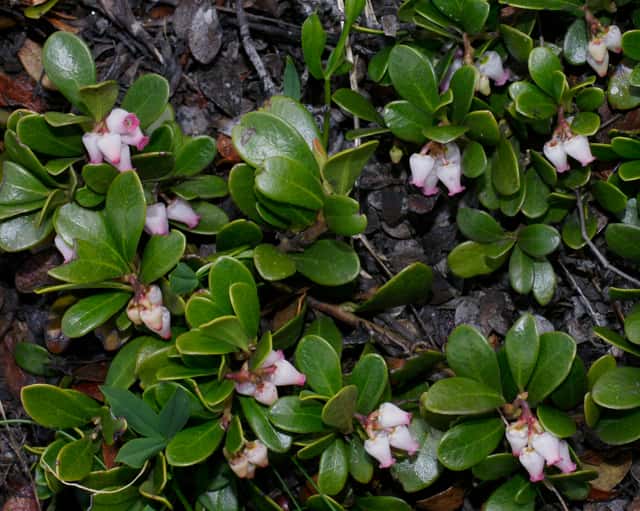
Bearberry (Arctostaphylos uva-ursi) is an evergreen, mat-forming groundcover shrub belonging to the Ericaceae family. Native to circumpolar regions and temperate mountains across the Northern Hemisphere, it forms a dense carpet of creeping woody stems with leathery, glossy leaves that turn bronze in the fall. In spring, it is covered with delicate pale pink to white bell-shaped flowers, followed in autumn by bright red berries that are highly favored by bears and birds. A very hardy plant, it tolerates extreme cold down to -20°C (-4°F) and thrives in poor, dry soils.
How to Propagate Bearberry?
How Big Does Bearberry Grow?
TLDR: Bearberry can reach up to 30cm tall with Slow growth rate.
Max height
30cm
Spread
1.5m
Growth rate
Slow
Foliage
Evergreen
Warning: Toxic Plant
This plant can be toxic if ingested. Keep out of reach of:
Plant Uses
Ornamental
Great for decoration
Medicinal
Medicinal properties
Ground Cover
Soil coverage
Edible
Can be consumed
Medicinal Uses
- Natural urinary antiseptic, traditionally used for cystitis, urethritis, and urinary tract infections due to its arbutin content
- Skin astringent used in cosmetics to help fade melanin spots and hyperpigmentation
- Mild diuretic promoting renal elimination
- Anti-inflammatory properties used in traditional Native American medicine
Culinary Uses
- Edible berries, traditionally consumed by Indigenous peoples dried or cooked
- Fruits lack a strong flavor when raw but become slightly more palatable after cooking or freezing
- Dried leaves used in traditional smoking mixtures (kinnikinnick)
Is your plant showing symptoms?
Click on the symptom to discover possible causes:
What Diseases Commonly Affect Bearberry?
TLDR: Bearberry is susceptible to 6 known diseases. Monitor regularly for early detection.
Root Rot
Root rot is a serious fungal disease that affects the root system of plants, causing them to decay and die. It is primarily caused by overwatering, poor drainage, or soil-borne fungi such as Pythium, Phytophthora, Rhizoctonia, and Fusarium. The disease thrives in waterlogged conditions where roots are deprived of oxygen, making them susceptible to fungal infection.
Phytophthora Root Rot
Disease caused by fungus-like organisms (oomycetes) that live in soil and can survive for years. It affects roots, stem, and crown of plants, being especially severe in waterlogged or poorly drained soils. It is the second most common cause of root rot in trees and shrubs.
Aphids
Aphids are small, soft-bodied, pear-shaped insects (1/16 to 1/8 inch long) that feed by sucking nutrient-rich sap from plants. They reproduce rapidly and can quickly weaken plants, causing distorted growth and transmitting plant viruses. Aphids come in various colors including green, black, red, yellow, brown, and gray. They secrete honeydew, a sticky substance that attracts ants and encourages sooty mold growth.
Leaf Spot
Leaf spot is a common fungal disease caused by various pathogens including Alternaria, Ascochyta, Colletotrichum, Septoria, and Venturia. It primarily affects leaves, causing discolored spots that can lead to premature leaf drop if left untreated.
Meaning & Symbolism
Bearberry symbolizes resilience and endurance in the traditions of North American Indigenous peoples, who have used it as a medicinal and ritual plant for millennia. Its Latin name 'uva-ursi' (bear grape) reflects the ancient connection between this plant and wildlife.
Compare with similar plants
| Attribute | Difficulty | Light | Watering | Pet Safe |
|---|---|---|---|---|
| Azalea | Medium | Partial shade | 3d | ⚠️ |
| Field Maple | Easy | Bright indirect | 14d | ✓ |
| Silver Birch | Easy | Direct sun | 14d | ✓ |
| Common Blanketflower | Easy | Direct sun | 10d | ✓ |





