Bloom Download App
Bird of Paradise
Air purifying 🏠 Indoor

Strelitziaceae

Bird of Paradise: Complete Care Guide

Strelitzia reginae

Medium ☀ïļ Bright indirect ⚠ïļ Toxic to pets

Bird of Paradise thrives in bright, indirect to direct light and prefers weekly watering during growing season, allowing the top 2 inches of soil to dry between waterings. It enjoys humidity levels of 60-70% and temperatures between 18-24°C. This slow-growing plant may take 3-5 years to mature and produce flowers.

💧 Watering

Every 7 days

☀ïļ Light

Bright indirect

ðŸŒĄïļ Temperature

13° - 32°C

ðŸ’Ļ Humidity

60% - 70%

About Bird of Paradise

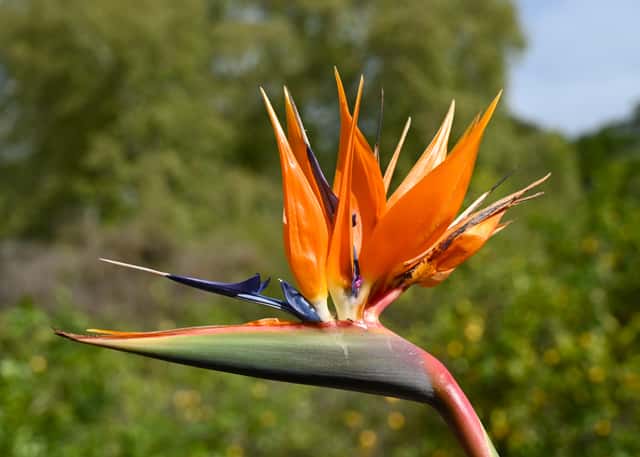
Strelitzia reginae, commonly known as Bird of Paradise or Crane Flower, is a striking tropical plant native to South Africa. Famous for its spectacular orange and blue flowers that resemble an exotic bird in flight, it has become the official flower of the City of Los Angeles. This evergreen perennial forms clumps of banana-like grey-green leaves and produces long-lasting cut flowers that can survive up to 2 weeks in a vase.

Care Guide

💧

How to Water

Water once a week during spring and summer, reducing to every two weeks in winter. Allow the top 2 inches of soil to dry between waterings. Ensure proper drainage to prevent root rot as this plant has fleshy roots prone to rot in excess moisture.

☀ïļ

Lighting

Provide bright, indirect light with some direct morning or evening sun. Avoid harsh afternoon sun which can burn the large leaves. At least 3-4 hours of sunlight daily is ideal for flowering.

ðŸŠī

Ideal Soil

Use well-draining, fertile loamy soil rich in organic matter. Sandy or loamy soils work best. Maintain a slightly acidic to neutral pH (6.0-7.0).

🏚

Recommended Pot

Use a heavy pot to prevent tipping as the plant becomes top-heavy. Terracotta or ceramic pots with drainage holes work well. The plant flowers best when slightly root-bound.

Care Schedule

ðŸŒą

Fertilize

Every 14 days

ðŸ’Ķ

Misting

Every 7 days

🔄

Rotate

Every 14 days

ðŸŠī

Repot

Every 730 days

How to Propagate

ðŸŒą

Division

Best done in spring. Each division should have at least 3 fans of leaves.

  1. 1
    Wait until the plant is at least 3 years old
  2. 2
    Carefully remove the plant from its pot
  3. 3
    Divide the rhizome ensuring each section has roots and leaves
  4. 4
    Plant divisions in fresh, well-draining soil
  5. 5
    Keep soil moist but not waterlogged until established

Materials needed:

Sharp, clean knifeFresh potting mixNew pots with drainage holes
⏱ïļ Time: 1-2 weeks 📊 Success rate: high 🗓ïļ Best season: Spring
ðŸŒą

Seeds

Seeds have low germination rates. Plants grown from seed take 5-7 years to flower.

  1. 1
    Soak seeds in warm water for 24-48 hours
  2. 2
    Scarify the hard seed coat with sandpaper
  3. 3
    Plant 1 inch deep in moist seed-starting mix
  4. 4
    Keep warm (25-30°C) and maintain humidity
  5. 5
    Germination takes 1-3 months

Materials needed:

Fresh seedsSeed-starting mixHeat matHumidity dome
⏱ïļ Time: 7-21 days 📊 Success rate: high 🗓ïļ Best season: Spring

Characteristics

📏

Max height

1.8m

↔ïļ

Spread

1.2m

📈

Growth rate

Slow

🍃

Foliage

Evergreen

⚠ïļ

Warning: Toxic Plant

This plant can be toxic if ingested. Keep out of reach of:

ðŸą Cats ðŸķ Dogs ðŸ‘ķ Children

Plant Uses

🌚

Ornamental

Great for decoration

ðŸ’Ļ

Air Purifying

Improves air quality

Is your plant showing symptoms?

Click on the symptom to discover possible causes:

Common Problems

Scale Insects

Medium

Scale insects are small sap-sucking pests that appear as brown, shell-like bumps on plant stems and leaves. There are over 25 species, divided into armored (hard) and unarmored (soft) scales. They feed by piercing plant tissue and extracting sap, which weakens the plant and can lead to yellowing, stunted growth, and even death if left untreated. They also excrete honeydew, which attracts ants and promotes sooty mold growth.

View solution

Mealybugs

High

Mealybugs are small, soft-bodied insects covered with a white, waxy, cottony material. They are common pests of houseplants and outdoor plants in mild climates. These sap-sucking insects feed on plant tissue, causing damage, stunted growth, and can lead to plant death if left untreated. They produce sticky honeydew which attracts sooty mold.

View solution

Spider Mites

High

Spider mites are tiny arachnids (less than 1/20 inch long) related to spiders and ticks that feed on plant sap. They thrive in hot, dry conditions and can cause significant damage to ornamental and vegetable plants. During severe infestations, crop losses can reach 14% or higher as these pests disrupt vital plant processes including photosynthesis, carbon dioxide absorption, and transpiration.

View solution

Aphids

Medium

Aphids are small, soft-bodied, pear-shaped insects (1/16 to 1/8 inch long) that feed by sucking nutrient-rich sap from plants. They reproduce rapidly and can quickly weaken plants, causing distorted growth and transmitting plant viruses. Aphids come in various colors including green, black, red, yellow, brown, and gray. They secrete honeydew, a sticky substance that attracts ants and encourages sooty mold growth.

View solution

Thrips

Medium

Thrips are tiny cigar-shaped insects (1/25-inch long) that damage plants by sucking plant juices and scraping at fruits, flowers, and leaves. With over 6,000 species and rapid reproduction (lifecycle as short as 14 days), they can quickly infest plants and transmit viruses like tomato spotted wilt virus.

View solution

Root Rot

High

Root rot is a serious fungal disease that affects the root system of plants, causing them to decay and die. It is primarily caused by overwatering, poor drainage, or soil-borne fungi such as Pythium, Phytophthora, Rhizoctonia, and Fusarium. The disease thrives in waterlogged conditions where roots are deprived of oxygen, making them susceptible to fungal infection.

View solution

Phytophthora Root Rot

High

Disease caused by fungus-like organisms (oomycetes) that live in soil and can survive for years. It affects roots, stem, and crown of plants, being especially severe in waterlogged or poorly drained soils. It is the second most common cause of root rot in trees and shrubs.

View solution

Leaf Spot

Medium

Leaf spot is a common fungal disease caused by various pathogens including Alternaria, Ascochyta, Colletotrichum, Septoria, and Venturia. It primarily affects leaves, causing discolored spots that can lead to premature leaf drop if left untreated.

View solution

Gray Mold (Botrytis Blight)

High

Gray mold, caused by the fungus Botrytis cinerea, is a widespread necrotrophic pathogen affecting over 1,400 plant species. It thrives in cool, humid conditions and attacks weakened or aging plant tissues, causing soft rot and characteristic gray fuzzy growth.

View solution

Crown Rot

High

Crown rot is a serious fungal disease that attacks the crown (base) of the plant where the stem meets the soil. It is caused by various fungal pathogens including Phytophthora, Fusarium, and Rhizoctonia. The disease thrives in waterlogged conditions and can quickly spread to kill the entire plant if not addressed promptly.

View solution

Bacterial Leaf Spot

Medium

Bacterial leaf spot is a plant disease caused by bacteria in the Xanthomonas and Pseudomonas genera that affects various ornamental and edible plants. The bacteria infect leaves through wounds or natural openings, causing characteristic lesions that can lead to premature leaf drop and plant weakening.

View solution

Bacterial Soft Rot

High

Bacterial soft rot is a destructive plant disease caused primarily by bacteria from the genera Pectobacterium (formerly Erwinia) and Dickeya. These bacteria produce enzymes that break down plant cell walls, causing rapid and foul-smelling tissue decomposition. It mainly affects succulent tissues such as tubers, fruits, stems, and bulbs, being especially problematic in warm and humid conditions.

View solution

Overwatering

Medium

Overwatering occurs when plants receive too much water, depriving roots of oxygen and causing root rot. This environmental stress is one of the most common causes of houseplant death, as waterlogged soil prevents roots from breathing and functioning properly.

View solution

Underwatering

High

Underwatering or drought stress is a physiological disorder that occurs when the amount of water a plant loses through transpiration exceeds the amount its roots can absorb from the soil. This leads to cellular dehydration and various visible symptoms that can compromise plant health and productivity.

View solution

Low Light Stress

Medium

Low light stress, also known as etiolation, occurs when plants do not receive adequate light for proper growth and development. This leads to abnormal growth patterns characterized by elongated stems, pale leaves, and weakened overall structure as the plant attempts to reach toward available light sources.

View solution

Leaf Tip Necrosis

Medium

Leaf tip necrosis, also known as tip burn, is a non-infectious environmental condition where the tips and edges of leaves turn brown, dry, and crispy. This occurs due to various stress factors affecting the plant's ability to maintain healthy tissue at the leaf extremities.

View solution

Sunburn (Sun Scorch)

Medium

Sunburn or sun scorch is an environmental condition that occurs when plants are exposed to intense, direct sunlight beyond their tolerance level. This causes the breakdown of chlorophyll in the leaves, resulting in bleached, dried, and damaged foliage. The damage can happen rapidly, sometimes within just a few hours of exposure.

View solution

Low Humidity Stress

Medium

Low humidity stress occurs when indoor air becomes too dry, causing plants to lose moisture faster than they can absorb it through their roots. This is especially common during winter heating periods, near radiators and heating vents, or in air-conditioned spaces. Tropical plants are particularly susceptible to low humidity damage.

View solution

Root-Bound

Medium

Root-bound, also called pot-bound, is a common environmental condition that occurs when a plant's roots have outgrown their container. The roots become so densely packed that they circle around the root ball and cannot expand properly. This restricts the plant's ability to absorb water and nutrients, leading to stunted growth and declining health. Unlike diseases, being root-bound is not contagious and is entirely preventable through proper container management and regular repotting.

View solution

Transplant Shock

Medium

Transplant shock is a stress response that occurs when plants are abruptly moved from one environment to another. This environmental condition affects plants during repotting, moving between indoor/outdoor locations, or transplanting from nursery pots to gardens. Root damage during the move is the primary cause, making it nearly impossible to completely avoid some degree of stress.

View solution

Salt Buildup

Medium

Salt buildup (also called salt accumulation or fertilizer salt deposits) is an environmental condition where mineral salts accumulate in the soil over time, creating a toxic environment for plant roots. The most visible sign is a white or yellowish crusty layer on the soil surface or around pot edges.

View solution

Iron Deficiency

Medium

Iron deficiency, commonly known as iron chlorosis, is a nutrient deficiency disorder where plants cannot access sufficient iron from the soil. While iron is typically abundant in soil, various soil conditions can limit plant uptake, resulting in characteristic yellowing of leaves while veins remain green.

View solution

Nitrogen Deficiency

Medium

Nitrogen deficiency occurs when plants lack sufficient nitrogen, an essential macronutrient needed for chlorophyll production and overall growth. This deficiency typically manifests as yellowing leaves, starting with older foliage and progressing to newer growth if left untreated.

View solution

Magnesium Deficiency

Medium

Magnesium deficiency is a nutrient disorder characterized by interveinal chlorosis, where leaf tissue between veins turns yellow while the veins remain green. This deficiency affects older leaves first as magnesium is a mobile nutrient that plants relocate to support new growth. Magnesium is essential for chlorophyll production and photosynthesis, making this deficiency critical for plant health.

View solution

Potassium Deficiency

Medium

Potassium deficiency is a nutritional disorder that affects a plant's ability to regulate stomatal opening and closing, resulting in characteristic leaf edge burn. Potassium is a mobile nutrient, so symptoms first appear on older, lower leaves.

View solution
âœĻ

Meaning & Symbolism

Symbolizes freedom, beauty, paradise, and joy. It is the official flower of Los Angeles and appears on the South African 50-cent coin.




