Cyperaceae
Bird's-foot Sedge: Ground Cover Plant
Carex ornithopoda
A tough, low-maintenance sedge that grows in full sun to partial shade and tolerates a range of soils as long as they drain well. Keep the soil evenly moist without letting it become waterlogged, as this sedge is prone to root rot in soggy conditions.
Every 7 days
Partial shade
° - °C
% - %
Categories
What is Bird's-foot Sedge?
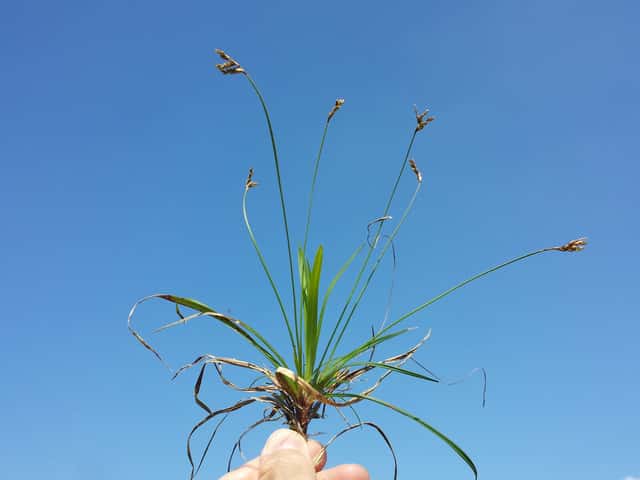
Bird's-foot Sedge (Carex ornithopoda) is a easy-care plant from the Cyperaceae family. Carex ornithopoda, commonly called bird's-foot sedge, is a small, slow-growing, evergreen perennial sedge native to Europe and Anatolia. It forms neat, compact tufts of narrow leaves and produces brownish flower spikes resembling a bird's claw in mid-to-late spring. Popular as a low-maintenance edgi...
Bird's-foot Sedge grows up to 20cm, spread of 20cm, watering every 7 days. It is not suitable for indoor environments and safe for pets.
Unlike many tropical plants, Bird's-foot Sedge tolerates watering mistakes. Best for beginners. Unlike many popular species, Bird's-foot Sedge is safe to keep around pets.
How to Care for Bird's-foot Sedge?
TLDR: Bird's-foot Sedge needs Partial shade, watering every 7 days, and temperatures between 15-30°C with 40-70% humidity.
How Often Should You Water Bird's-foot Sedge?
Water regularly to keep the soil lightly moist; allow the surface to dry slightly between waterings and avoid waterlogging, which can lead to root rot.
How Much Light Does Bird's-foot Sedge Need?
Thrives in full sun to partial shade; in hot climates, some afternoon shade helps prevent stress during the peak of summer.
What Is the Best Soil for Bird's-foot Sedge?
Prefers fertile, well-draining soil enriched with organic matter; tolerates sandy, loamy, clay, or chalky soils with a pH between 5 and 8.
What Pot Should You Use for Bird's-foot Sedge?
When grown in containers, choose a wide, shallow pot with ample drainage holes and a moisture-retentive, organically rich potting mix.
What Is Bird's-foot Sedge and Where Does It Come From?
Carex ornithopoda, commonly called bird's-foot sedge, is a small, slow-growing, evergreen perennial sedge native to Europe and Anatolia. It forms neat, compact tufts of narrow leaves and produces brownish flower spikes resembling a bird's claw in mid-to-late spring. Popular as a low-maintenance edging, ground cover, or rock garden plant.
How to Propagate Bird's-foot Sedge?
Clump division
Divide every 3-4 years to keep the clump vigorous. Use clean, sharp tools.
- 1 Lift the clump from the ground or pot in early spring
- 2 Divide the rhizome into sections, each with healthy roots and leaves, using a clean knife
- 3 Replant each section immediately in well-draining soil
- 4 Keep the soil moist until the divisions establish
Materials needed:
Seed sowing
Germination can be slow and uneven; be patient.
- 1 Sow seeds in trays with light potting mix in early spring
- 2 Keep lightly moist in a spot with indirect light
- 3 Transplant seedlings once they have a few true leaves
Materials needed:
How Big Does Bird's-foot Sedge Grow?
TLDR: Bird's-foot Sedge can reach up to 20cm tall with Slow growth rate.
Max height
20cm
Spread
20cm
Growth rate
Slow
Foliage
Evergreen
Plant Uses
Ornamental
Great for decoration
Ground Cover
Soil coverage
Is your plant showing symptoms?
Click on the symptom to discover possible causes:
What Diseases Commonly Affect Bird's-foot Sedge?
TLDR: Bird's-foot Sedge is susceptible to 5 known diseases. Monitor regularly for early detection.
Root Rot
Root rot is a serious fungal disease that affects the root system of plants, causing them to decay and die. It is primarily caused by overwatering, poor drainage, or soil-borne fungi such as Pythium, Phytophthora, Rhizoctonia, and Fusarium. The disease thrives in waterlogged conditions where roots are deprived of oxygen, making them susceptible to fungal infection.
Leaf Spot
Leaf spot is a common fungal disease caused by various pathogens including Alternaria, Ascochyta, Colletotrichum, Septoria, and Venturia. It primarily affects leaves, causing discolored spots that can lead to premature leaf drop if left untreated.
Grey Mould
Powdery Mildew
Powdery mildew is a common fungal disease caused by various fungi species including Erysiphe, Podosphaera, Oïdium, and Leveillula. It affects over 10,000 plant species worldwide. The disease thrives in warm, dry climates with high humidity and appears as a distinctive white powdery coating on plant surfaces.
Meaning & Symbolism
As a hardy, understated plant, bird's-foot sedge symbolizes resilience, simplicity, and a connection to natural, wild landscapes.
Compare with similar plants
| Attribute | Difficulty | Light | Watering | Pet Safe |
|---|---|---|---|---|
| Field Maple | Easy | Bright indirect | 14d | ✓ |
| Silver Birch | Easy | Direct sun | 14d | ✓ |
| Common Blanketflower | Easy | Direct sun | 10d | ✓ |
| Cushion Bush | Easy | Direct sun | 14d | ✓ |





