Lamiaceae
Black horehound: Aromatic Plant
Ballota nigra
Black horehound is an extremely undemanding, low-maintenance plant. It prefers sunny or semi-shaded locations and tolerates poor, even nutrient-deficient soils as long as they are well-draining. It only requires watering during prolonged droughts and survives winter frosts well thanks to its underground rhizomes. It is generally resistant to pests and diseases, though powdery mildew and aphids may appear in watered, shaded, or overcrowded conditions.
Every 7 days
Partial shade
10° - 28°C
40% - 60%
Categories
What is Black horehound?
Black horehound (Ballota nigra) is a easy-care plant from the Lamiaceae family. Black horehound (Ballota nigra) is a perennial herb in the mint family (Lamiaceae), originally native to the Mediterranean region and now widespread across Europe in roadside and wasteland plant communities. Its square, hairy stems and wrinkled, scalloped-toothed leaves emit a characteristic, unplea...
Black horehound grows up to 90cm, spread of 80cm, watering every 7 days, 10°C – 28°C, 40–60% humidity. It is not suitable for indoor environments and safe for pets.
Unlike many tropical plants, Black horehound tolerates watering mistakes. Best for beginners. Unlike many popular species, Black horehound is safe to keep around pets.
How to Care for Black horehound?
TLDR: Black horehound needs Partial shade, watering every 7 days, and temperatures between 10-28°C with 40-60% humidity.
How Often Should You Water Black horehound?
Only water when the top layer of soil has completely dried out — black horehound is drought-tolerant but handles stagnant moisture poorly, as it can lead to root rot.
How Much Light Does Black horehound Need?
It grows best in sunny or semi-shaded spots, but can survive in deeper shade, though it will produce fewer flowers.
What Is the Best Soil for Black horehound?
It is not picky about soil: it thrives in sandy, loamy, or even clay soils, provided they are well-draining — it does not tolerate permanently wet, compacted soil.
What Pot Should You Use for Black horehound?
Primarily suitable for open ground, roadside, or wild garden planting; if potted, choose a wide, shallow container with ample drainage holes, as its spreading rhizomes tend to grow laterally.
What Is Black horehound and Where Does It Come From?
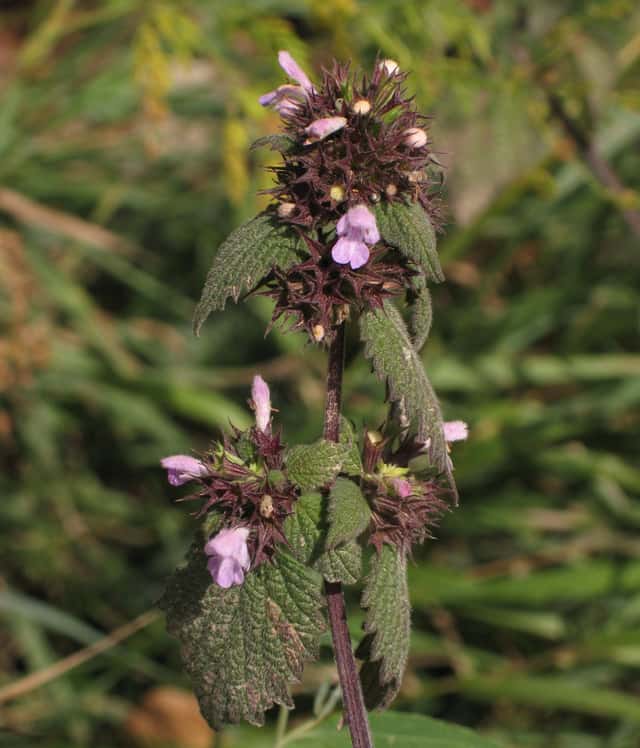
Black horehound (Ballota nigra) is a perennial herb in the mint family (Lamiaceae), originally native to the Mediterranean region and now widespread across Europe in roadside and wasteland plant communities. Its square, hairy stems and wrinkled, scalloped-toothed leaves emit a characteristic, unpleasant, musty odor when crushed — hence its genus name, which in Ancient Greek means 'repulsive' or 'rejected'. In summer and early autumn, pink-purple labiate flowers bloom in dense verticillasters, which fade to almost white after the first frosts. It often spreads in patches covering several square meters via underground rhizomes and overwinters well.
How to Propagate Black horehound?
Sowing seeds
Germination can be delayed for 3-6 weeks; be patient and keep young seedlings in the shade and consistently moist.
- 1 Sow seeds in spring or autumn in a cold frame or covered seed tray, scattered on the surface or only shallowly covered.
- 2 Keep the soil consistently moist at approximately 15°C until germination.
- 3 When seedlings are large enough to handle, prick them out into individual small pots.
- 4 Plant them out in their permanent positions in late summer or the following autumn.
Materials needed:
Division
Water the new clumps thoroughly after planting to help them establish in the soil.
- 1 Dig up the rhizome of the mother plant in spring.
- 2 Divide into several rooted sections using a sharp, clean knife or spade.
- 3 Plant larger divisions directly into their permanent positions.
- 4 Grow smaller pieces in pots in a cool, sheltered spot until they are well-established.
Materials needed:
How Big Does Black horehound Grow?
TLDR: Black horehound can reach up to 90cm tall with Medium growth rate.
Max height
90cm
Spread
80cm
Growth rate
Medium
Foliage
Deciduous
Warning: Toxic Plant
This plant can be toxic if ingested. Keep out of reach of:
Plant Uses
Medicinal
Medicinal properties
Aromatic
Pleasant fragrance
Medicinal Uses
- Traditionally used as a sedative and antispasmodic herb to relieve nervousness and sleep disorders.
- Used as an antiemetic against motion sickness and morning sickness during pregnancy.
- It has featured in folk medicine as a cough suppressant and for relieving respiratory complaints.
- Current scientific evidence is limited, so expert advice should be sought before any medicinal use.
Is your plant showing symptoms?
Click on the symptom to discover possible causes:
What Diseases Commonly Affect Black horehound?
TLDR: Black horehound is susceptible to 5 known diseases. Monitor regularly for early detection.
Aphids
Aphids are small, soft-bodied, pear-shaped insects (1/16 to 1/8 inch long) that feed by sucking nutrient-rich sap from plants. They reproduce rapidly and can quickly weaken plants, causing distorted growth and transmitting plant viruses. Aphids come in various colors including green, black, red, yellow, brown, and gray. They secrete honeydew, a sticky substance that attracts ants and encourages sooty mold growth.
Spider Mites
Spider mites are tiny arachnids (less than 1/20 inch long) related to spiders and ticks that feed on plant sap. They thrive in hot, dry conditions and can cause significant damage to ornamental and vegetable plants. During severe infestations, crop losses can reach 14% or higher as these pests disrupt vital plant processes including photosynthesis, carbon dioxide absorption, and transpiration.
Powdery Mildew
Powdery mildew is a common fungal disease caused by various fungi species including Erysiphe, Podosphaera, Oïdium, and Leveillula. It affects over 10,000 plant species worldwide. The disease thrives in warm, dry climates with high humidity and appears as a distinctive white powdery coating on plant surfaces.
Downy Mildew
Downy mildew is a fungal-like disease caused by oomycetes (water molds) that thrives in cool, wet conditions. It affects a wide range of plants, causing yellowing leaves with fuzzy white-gray growth underneath, leading to defoliation and reduced yields if left untreated.
Meaning & Symbolism
In folk tradition, black horehound is a symbol of tenacity and perseverance: it establishes itself even in unfavorable, disturbed soils and persists in dense patches for years where other plants would struggle to survive.
Compare with similar plants
| Attribute | Difficulty | Light | Watering | Pet Safe |
|---|---|---|---|---|
| Field Maple | Easy | Bright indirect | 14d | ✓ |
| Silver Birch | Easy | Direct sun | 14d | ✓ |
| Common Blanketflower | Easy | Direct sun | 10d | ✓ |
| Cushion Bush | Easy | Direct sun | 14d | ✓ |





