Rosaceae
Blackthorn: Edible Plant
Prunus spinosa
Undemanding once established, blackthorn thrives in full sun to light shade and tolerates poor, chalky or clay soils as long as drainage is reasonable. Water young plants regularly until roots are established; mature shrubs are largely self-sufficient. Prune after flowering to control size and encourage fruiting wood.
Every 7 days
Direct sun
° - °C
% - %
Categories
What is Blackthorn?
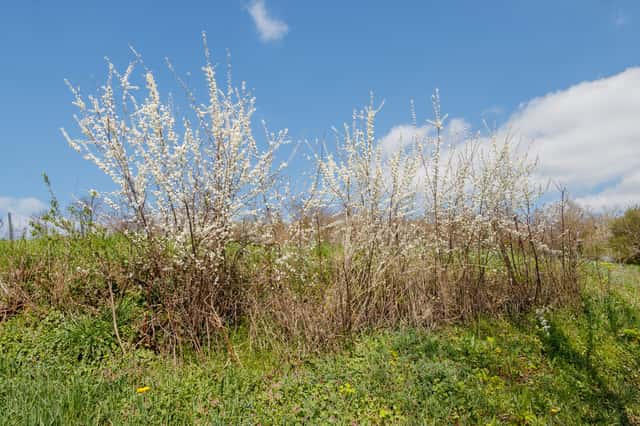
Blackthorn (Prunus spinosa) is a easy-care plant from the Rosaceae family. Blackthorn (Prunus spinosa) is a dense, thorny deciduous shrub native to Europe, western Asia and northwest Africa. Valued for its clouds of small white blossoms that appear on bare branches in early spring, ahead of the leaves, it later produces the tart, dark blue-black sloe berries prized for slo...
Blackthorn grows up to 4.0m, spread of 400cm, watering every 7 days. It is not suitable for indoor environments and not safe for pets.
Unlike many tropical plants, Blackthorn tolerates watering mistakes. Best for beginners. Without precautions, ingestion can cause irritation in pets. Keep out of reach of cats and dogs.
How to Care for Blackthorn?
TLDR: Blackthorn needs Direct sun, watering every 7 days, and temperatures between 15-30°C with 40-70% humidity.
How Often Should You Water Blackthorn?
Water new plants weekly during the first growing season, letting the top few centimetres of soil dry between waterings. Established blackthorn tolerates dry spells well and rarely needs supplemental watering except in prolonged drought.
How Much Light Does Blackthorn Need?
Give blackthorn full sun for the heaviest crops of flowers and sloes; it will also grow, though flower and fruit less freely, in semi-shade.
What Is the Best Soil for Blackthorn?
Blackthorn is adaptable to sandy, loamy or clay soils and a wide pH range from mildly acidic to alkaline, but performs best in moist, well-drained ground.
What Pot Should You Use for Blackthorn?
Best planted directly in the ground as a hedge or specimen shrub; if grown in a container while young, choose a large, sturdy pot with excellent drainage holes to accommodate its vigorous root system.
What Is Blackthorn and Where Does It Come From?
Blackthorn (Prunus spinosa) is a dense, thorny deciduous shrub native to Europe, western Asia and northwest Africa. Valued for its clouds of small white blossoms that appear on bare branches in early spring, ahead of the leaves, it later produces the tart, dark blue-black sloe berries prized for sloe gin. Its thorny, suckering growth makes it a traditional choice for hedgerows and wildlife gardens.
How to Propagate Blackthorn?
Seed sowing (cold stratified)
Sloe seed has a hard, dormant coat and germinates erratically, so sow more than you need and do not discard pots after one season.
- 1 Collect ripe sloes in autumn and remove the pulp to extract the stones
- 2 Stratify the cleaned seed in moist sand or compost in a cold spot for 2-3 months
- 3 Sow in pots of free-draining compost and leave outdoors, protected from rodents
- 4 Be patient: germination is slow and uneven, sometimes taking up to 18 months
Materials needed:
Semi-hardwood cuttings
Use a sharp, clean blade to avoid crushing the stem, and keep cuttings out of direct sun while they root.
- 1 Take semi-ripe, half-hardened cuttings about 10-15cm long in mid to late summer
- 2 Remove the lower leaves and dip the cut end in rooting hormone
- 3 Insert into a free-draining mix of compost and perlite or sand
- 4 Keep humid and lightly shaded until roots form, then pot on individually
Materials needed:
How Big Does Blackthorn Grow?
TLDR: Blackthorn can reach up to 4.0m tall with Medium growth rate.
Max height
4.0m
Spread
4.0m
Growth rate
Medium
Foliage
Deciduous
Warning: Toxic Plant
This plant can be toxic if ingested. Keep out of reach of:
Plant Uses
Ornamental
Great for decoration
Edible
Can be consumed
Medicinal
Medicinal properties
Medicinal Uses
- Traditional astringent infusions from flowers and bark for digestive complaints
- Fruit and flower preparations used historically as a mild laxative and diuretic
Culinary Uses
- Sloe berries for sloe gin and liqueurs
- Sloe jelly, syrup and preserves
- Crystallised blossom as a decorative confection
- Dried leaves as a tea substitute
Is your plant showing symptoms?
Click on the symptom to discover possible causes:
What Diseases Commonly Affect Blackthorn?
TLDR: Blackthorn is susceptible to 3 known diseases. Monitor regularly for early detection.
Plum Pockets
Taphrina pruni is a fungal pathogen that causes 'pocket plum' or 'plum pockets' in Prunus species, including plums, damsons, and blackthorn. It infects flowers and young fruit during cool, wet spring weather. The primary symptom is the development of distorted, enlarged, hollow fruit without a stone; these appear pale or yellowish, feel spongy, and may later develop a whitish, powdery fungal coating. Affected fruit typically drop prematurely. While leaves and shoots are usually less affected, severe infections can significantly reduce the season's crop yield.
Bacterial Canker
Serious bacterial disease affecting stone fruits and tomatoes caused by Pseudomonas syringae or Clavibacter michiganensis. Creates sunken lesions that ooze sap.
Aphids
Aphids are small, soft-bodied, pear-shaped insects (1/16 to 1/8 inch long) that feed by sucking nutrient-rich sap from plants. They reproduce rapidly and can quickly weaken plants, causing distorted growth and transmitting plant viruses. Aphids come in various colors including green, black, red, yellow, brown, and gray. They secrete honeydew, a sticky substance that attracts ants and encourages sooty mold growth.
Meaning & Symbolism
In Celtic tradition blackthorn is the tree of the crone goddess and of winter's hard edge, its Ogham name Straif linked to the word 'strife'. Its thorns were seen as protective wards, while the white blossom breaking out on bare black wood came to symbolise hope and renewal breaking through hardship.
Compare with similar plants
| Attribute | Difficulty | Light | Watering | Pet Safe |
|---|---|---|---|---|
| Field Maple | Easy | Bright indirect | 14d | ✓ |
| Silver Birch | Easy | Direct sun | 14d | ✓ |
| Common Blanketflower | Easy | Direct sun | 10d | ✓ |
| Cushion Bush | Easy | Direct sun | 14d | ✓ |





