Caryophyllaceae
Bladder Campion (Silene vulgaris)
Silene vulgaris
A tough, easy plant: full sun, well-drained neutral to alkaline soil, little watering once established. Its deep taproot copes well with drought. It self-seeds freely, so deadhead if you don't want it to spread.
Every 10 days
Bright indirect
-35° - °C
% - %
Categories
What is Bladder Campion?
Bladder Campion (Silene vulgaris) is a easy-care plant from the Caryophyllaceae family. Silene vulgaris is a herbaceous perennial in the family Caryophyllaceae, native to Europe, temperate Asia and North Africa and naturalised across much of North America. It forms clumps 50 cm to 1 m tall with grey-green leaves and a slightly woody base. From spring to late summer it opens white flowe...
Bladder Campion grows up to 80cm, spread of 50cm, watering every 10 days. It is not suitable for indoor environments and safe for pets.
Unlike many tropical plants, Bladder Campion tolerates watering mistakes. Best for beginners. Unlike many popular species, Bladder Campion is safe to keep around pets.
How to Care for Bladder Campion?
TLDR: Bladder Campion needs Bright indirect, watering every 10 days, and temperatures between -35-30°C with 40-70% humidity.
How Often Should You Water Bladder Campion?
Water roughly every 10 days in the first year and during long dry spells. Once established, rainfall is usually enough. What it can't take is waterlogged soil, which rots the root.
How Much Light Does Bladder Campion Need?
Prefers full sun; it tolerates light part shade but flowers less. Not a houseplant.
What Is the Best Soil for Bladder Campion?
Well-drained sandy, chalky or loamy soil, mildly acid to alkaline. It does well in poor, stony ground; on heavy soil, mix in grit or coarse sand.
What Pot Should You Use for Bladder Campion?
Best in the ground, but it grows in a deep pot (at least 30 cm, for the taproot) with drainage holes and a gritty mix.
What Is Bladder Campion and Where Does It Come From?
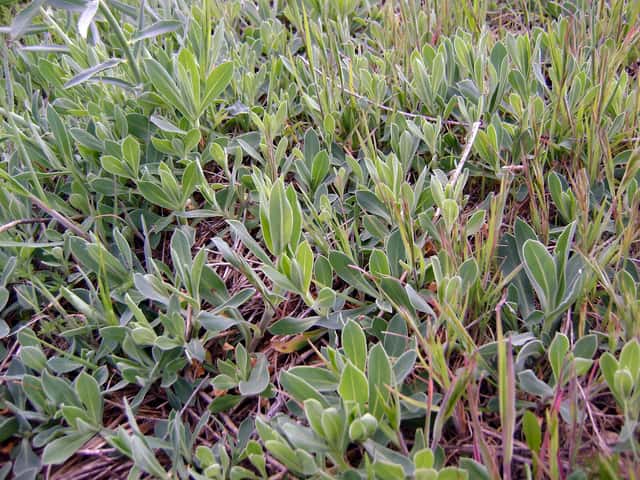
Silene vulgaris is a herbaceous perennial in the family Caryophyllaceae, native to Europe, temperate Asia and North Africa and naturalised across much of North America. It forms clumps 50 cm to 1 m tall with grey-green leaves and a slightly woody base. From spring to late summer it opens white flowers with deeply notched petals, each sitting on an inflated, veined calyx that looks like a small bladder. In the wild it grows on roadsides, dry meadows and stony slopes.
How to Propagate Bladder Campion?
Seeds
It self-seeds readily: often you only need to let a few flowers set capsules.
- 1 Sow in early spring or autumn in trays of free-draining mix
- 2 Cover the seeds with a thin layer of mix
- 3 Keep in a cool, bright spot with the mix lightly moist
- 4 Plant the seedlings out in summer once they are sturdy
Materials needed:
Clump division
The taproot runs deep, so dig wide to avoid breaking it.
- 1 Lift the clump in early spring
- 2 Split it into pieces, each with roots and shoots
- 3 Replant straight away in well-drained soil
- 4 Water well until new leaves appear
Materials needed:
How Big Does Bladder Campion Grow?
TLDR: Bladder Campion can reach up to 80cm tall with Medium growth rate.
Max height
80cm
Spread
50cm
Growth rate
Medium
Foliage
Semi-evergreen
Plant Uses
Ornamental
Great for decoration
Edible
Can be consumed
Culinary Uses
- Young shoots and leaves raw in salads, before flowering
- Older leaves sautéed with garlic, in omelettes, risotto and stews
Is your plant showing symptoms?
Click on the symptom to discover possible causes:
What Diseases Commonly Affect Bladder Campion?
TLDR: Bladder Campion is susceptible to 4 known diseases. Monitor regularly for early detection.
Slugs and Snails
Slugs and snails are mollusks that feed on plant tissue, causing irregular holes in leaves and damage to young seedlings. They are most active at night and in moist conditions, leaving characteristic silvery slime trails. These pests can quickly devastate gardens, especially during wet seasons.
Aphids
Aphids are small, soft-bodied, pear-shaped insects (1/16 to 1/8 inch long) that feed by sucking nutrient-rich sap from plants. They reproduce rapidly and can quickly weaken plants, causing distorted growth and transmitting plant viruses. Aphids come in various colors including green, black, red, yellow, brown, and gray. They secrete honeydew, a sticky substance that attracts ants and encourages sooty mold growth.
Root Rot
Root rot is a serious fungal disease that affects the root system of plants, causing them to decay and die. It is primarily caused by overwatering, poor drainage, or soil-borne fungi such as Pythium, Phytophthora, Rhizoctonia, and Fusarium. The disease thrives in waterlogged conditions where roots are deprived of oxygen, making them susceptible to fungal infection.
Powdery Mildew
Powdery mildew is a common fungal disease caused by various fungi species including Erysiphe, Podosphaera, Oïdium, and Leveillula. It affects over 10,000 plant species worldwide. The disease thrives in warm, dry climates with high humidity and appears as a distinctive white powdery coating on plant surfaces.
Fun Facts
The swollen calyx behind each flower looks like a little bladder, which gave the plant its name
In La Mancha, Spain, the leaves, called collejas, go into a dish called gazpacho viudo
Its saponins make grazing animals tend to leave it alone
Frequently asked questions
Are bladder campion leaves edible?
How often should I water bladder campion?
Does bladder campion spread?
Can I grow it indoors?
Compare with similar plants
| Attribute | Difficulty | Light | Watering | Pet Safe |
|---|---|---|---|---|
| Field Maple | Easy | Bright indirect | 14d | ✓ |
| Iberian Houseleek | Easy | Direct sun | 14d | ✓ |
| Silver Birch | Easy | Direct sun | 14d | ✓ |
| Common Blanketflower | Easy | Direct sun | 10d | ✓ |
Choose & Compare
Sources & References
- RHS - Silene vulgaris
- Plants For A Future - Silene vulgaris
- Silene vulgaris - Wikipedia
- Illinois Wildflowers - Bladder Campion
- Garden.org - Silene vulgaris subsp. vulgaris
- Naturblick (Museum fuer Naturkunde Berlin) - Silene vulgaris
- Fryd - Taubenkropf-Leimkraut (Silene vulgaris)
- Flora Digital de Portugal (UTAD) - Silene vulgaris subsp. vulgaris
- POWO - Silene vulgaris (Moench) Garcke (accepted)
- GBIF Backbone - Silene vulgaris (accepted)





