Amaranthaceae
Bloodleaf (Iresine Genus)
Iresine
An easy tropical foliage plant. Outside warm climates (USDA zones 10 to 12) it lives indoors in a pot or is used as a summer annual. The more light it gets, the deeper the red. Keep the soil lightly moist but never soggy, and pinch the shoot tips from an early age so it grows bushy. It does not like temperatures below 10 °C (50 °F).
Every 7 days
Bright indirect
10° - °C
40% - 70%
Categories
What is Bloodleaf?
Bloodleaf (Iresine) is a easy-care plant from the Amaranthaceae family. Iresine is a genus in the amaranth family (Amaranthaceae) with about 20 to 35 species native to the tropical Americas. The cultivated ones, such as Iresine herbstii and Iresine diffusa, are short-lived perennials or subshrubs grown for their leaves. The leaves are oval or pointed, often notched at t...
Bloodleaf grows up to 1.5m, spread of 90cm, watering every 7 days, 40–70% humidity. It is suitable for indoor environments and safe for pets.
Unlike many tropical plants, Bloodleaf tolerates watering mistakes. Best for beginners. Unlike many popular species, Bloodleaf is safe to keep around pets. Without adequate drainage, root rot can develop within 14 days.
How to Care for Bloodleaf?
TLDR: Bloodleaf needs Bright indirect, watering every 7 days, and temperatures between 10-30°C with 40-70% humidity.
How Often Should You Water Bloodleaf?
Water when the top of the soil feels dry, usually once a week. Empty the saucer after 20 minutes. Water less in winter, but do not let the soil dry out completely.
How Much Light Does Bloodleaf Need?
Full sun or a bright window with a few hours of direct sun. In low light the stems stretch and the leaves fade. In strong heat, some afternoon shade prevents scorched leaves.
What Is the Best Soil for Bloodleaf?
Soil rich in organic matter that drains freely. In pots, a standard potting mix with some compost works well.
What Pot Should You Use for Bloodleaf?
A pot with drainage holes, plastic or ceramic, 15-25 cm wide. Move it up a size when roots fill half the pot.
Care Schedule
Fertilize
Every 14 days
Repot
Every 365 days
What Is Bloodleaf and Where Does It Come From?
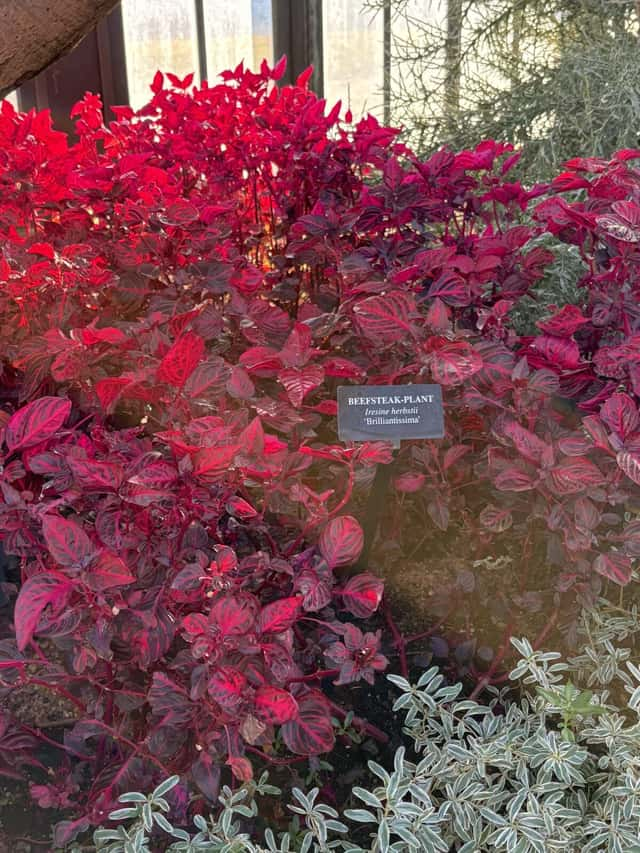
Iresine is a genus in the amaranth family (Amaranthaceae) with about 20 to 35 species native to the tropical Americas. The cultivated ones, such as Iresine herbstii and Iresine diffusa, are short-lived perennials or subshrubs grown for their leaves. The leaves are oval or pointed, often notched at the tip, in blood red or purple with pink veins, or green with yellow veins. The stems are reddish too. The flowers are small and whitish, and most people never notice them. In the wild the plants can pass 1 m; in pots or beds they usually stay at 30 to 50 cm.
How to Propagate Bloodleaf?
Tip cutting
It roots very easily. Take cuttings in late summer to keep the plant indoors over winter.
- 1 Cut shoot tips 8-10 cm long, just below a pair of leaves
- 2 Remove the lower leaves
- 3 Place in a glass of water or in moist potting mix
- 4 Keep in a warm, bright spot out of strong sun until rooted
- 5 Pot up and pinch the tip so it branches
Materials needed:
Division
Best for large, well-rooted plants.
- 1 Take the plant out of its pot
- 2 Split the clump into pieces with roots and shoots
- 3 Plant each piece in its own pot
- 4 Water and keep in part shade for a few days
Materials needed:
How Big Does Bloodleaf Grow?
TLDR: Bloodleaf can reach up to 1.5m tall with Medium growth rate.
Max height
1.5m
Spread
90cm
Growth rate
Medium
Foliage
Evergreen
Plant Uses
Ornamental
Great for decoration
Is your plant showing symptoms?
Click on the symptom to discover possible causes:
What Diseases Commonly Affect Bloodleaf?
TLDR: Bloodleaf is susceptible to 6 known diseases. Monitor regularly for early detection.
Powdery Mildew
Powdery mildew is a common fungal disease caused by various fungi species including Erysiphe, Podosphaera, Oïdium, and Leveillula. It affects over 10,000 plant species worldwide. The disease thrives in warm, dry climates with high humidity and appears as a distinctive white powdery coating on plant surfaces.
Aphids
Aphids are small, soft-bodied, pear-shaped insects (1/16 to 1/8 inch long) that feed by sucking nutrient-rich sap from plants. They reproduce rapidly and can quickly weaken plants, causing distorted growth and transmitting plant viruses. Aphids come in various colors including green, black, red, yellow, brown, and gray. They secrete honeydew, a sticky substance that attracts ants and encourages sooty mold growth.
Spider Mites
Spider mites are tiny arachnids (less than 1/20 inch long) related to spiders and ticks that feed on plant sap. They thrive in hot, dry conditions and can cause significant damage to ornamental and vegetable plants. During severe infestations, crop losses can reach 14% or higher as these pests disrupt vital plant processes including photosynthesis, carbon dioxide absorption, and transpiration.
Mealybugs
Mealybugs are small, soft-bodied insects covered with a white, waxy, cottony material. They are common pests of houseplants and outdoor plants in mild climates. These sap-sucking insects feed on plant tissue, causing damage, stunted growth, and can lead to plant death if left untreated. They produce sticky honeydew which attracts sooty mold.
Fun Facts
The name Iresine comes from the Greek for "woolly", after the hairy flowers.
Some species in the genus are added to versions of the Amazonian drink ayahuasca.
A shoot tip placed in a glass of water often grows roots within days.
Frequently asked questions
Why is my bloodleaf losing its red color?
Why is it tall and sparse?
Is bloodleaf toxic to cats and dogs?
Should I remove the flowers?
Compare with similar plants
| Attribute | Difficulty | Light | Watering | Pet Safe |
|---|---|---|---|---|
| Field Maple | Easy | Bright indirect | 14d | ✓ |
| Iberian Houseleek | Easy | Direct sun | 14d | ✓ |
| Silver Birch | Easy | Direct sun | 14d | ✓ |
| Common Blanketflower | Easy | Direct sun | 10d | ✓ |





