Asparagaceae
Blue Agave Care Guide
Agave tequilana
Give Blue Agave full sun, sandy well-draining soil, and infrequent deep watering. It thrives with minimal care once established and is highly drought-tolerant, making it ideal for xeriscapes and warm, dry climates.
Every 21 days
Direct sun
5° - 35°C
20% - 40%
Categories
What is Blue Agave?
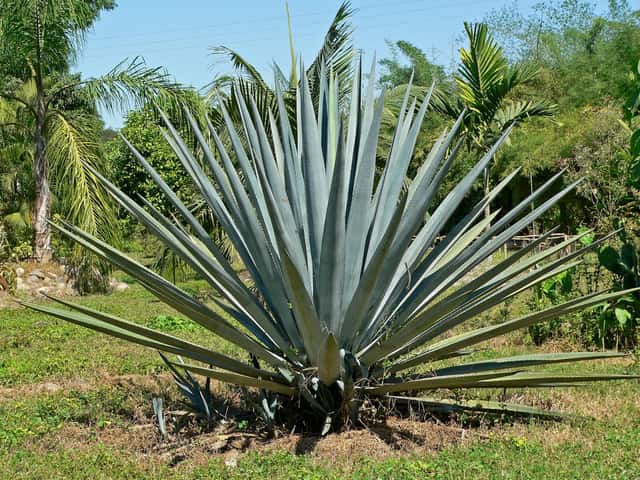
Blue Agave (Agave tequilana) is a easy-care plant from the Asparagaceae family. Agave tequilana, commonly known as Blue Agave, is a striking succulent native to the highlands of Jalisco, Mexico. Its thick, blue-gray leaves form a dramatic rosette that can reach up to 2.4 m across, tipped with sharp spines along the margins and tip. Best known as the sole legal source of tequila...
Blue Agave grows up to 2.4m, spread of 240cm, watering every 21 days, 5°C – 35°C, 20–40% humidity. It is suitable for indoor environments and not safe for pets.
Unlike many tropical plants, Blue Agave tolerates watering mistakes. Best for beginners. Without precautions, ingestion can cause irritation in pets. Keep out of reach of cats and dogs. Without adequate drainage, root rot can develop within 42 days.
How to Care for Blue Agave?
TLDR: Blue Agave needs Direct sun, watering every 21 days, and temperatures between 5-35°C with 20-40% humidity.
How Often Should You Water Blue Agave?
Water deeply but infrequently, letting the soil dry out completely between waterings. Reduce watering further in winter and always avoid soggy soil, which quickly leads to root rot.
How Much Light Does Blue Agave Need?
Provide at least 6 hours of direct, bright sunlight daily. Indoors, place near a south-facing window; insufficient light causes stretched, weak growth.
What Is the Best Soil for Blue Agave?
Use a fast-draining sandy or gravelly mix, such as a cactus or succulent blend. Good drainage is essential, since this species does not tolerate wet feet.
What Pot Should You Use for Blue Agave?
A wide, heavy terracotta or unglazed clay pot with multiple drainage holes; the weight helps offset the top-heavy rosette.
What Is Blue Agave and Where Does It Come From?
Agave tequilana, commonly known as Blue Agave, is a striking succulent native to the highlands of Jalisco, Mexico. Its thick, blue-gray leaves form a dramatic rosette that can reach up to 2.4 m across, tipped with sharp spines along the margins and tip. Best known as the sole legal source of tequila, this drought-tolerant succulent grows slowly for years before sending up a towering flower stalk once in its lifetime, then setting offsets (pups) at its base to continue the cycle.
How to Propagate Blue Agave?
Offset (Pup) Division
Wear thick gloves to protect against the sharp leaf spines. Avoid watering immediately after planting to reduce rot risk while the wound heals.
- 1 Locate a pup at least 10-15 cm tall growing from the base of the mother plant
- 2 Use a clean, sharp knife or spade to sever the pup, keeping some roots attached if possible
- 3 Let the cut surface callus over for 2-3 days in a dry, shaded spot
- 4 Plant the pup in well-draining sandy soil and keep lightly moist until new growth appears
Materials needed:
Seed Propagation
Seeds are only available after the rare flowering event and germination rates can be inconsistent.
- 1 Sow fresh seed on the surface of a sandy seed-starting mix
- 2 Keep soil lightly moist and in bright, indirect light until germination
- 3 Transplant seedlings once they have several true leaves and a developed root system
Materials needed:
How Big Does Blue Agave Grow?
TLDR: Blue Agave can reach up to 2.4m tall with Slow growth rate.
Max height
2.4m
Spread
2.4m
Growth rate
Slow
Foliage
Evergreen
Warning: Toxic Plant
This plant can be toxic if ingested. Keep out of reach of:
Plant Uses
Ornamental
Great for decoration
Edible
Can be consumed
Culinary Uses
- Fermented and distilled into tequila
- Sap boiled down into agave nectar/syrup
- Used to produce traditional pulque-style beverages
Is your plant showing symptoms?
Click on the symptom to discover possible causes:
What Diseases Commonly Affect Blue Agave?
TLDR: Blue Agave is susceptible to 9 known diseases. Monitor regularly for early detection.
Root Rot
Root rot is a serious fungal disease that affects the root system of plants, causing them to decay and die. It is primarily caused by overwatering, poor drainage, or soil-borne fungi such as Pythium, Phytophthora, Rhizoctonia, and Fusarium. The disease thrives in waterlogged conditions where roots are deprived of oxygen, making them susceptible to fungal infection.
Fusarium Wilt
Fusarium wilt is a serious fungal disease caused by the soil-borne fungus Fusarium oxysporum. The fungus invades roots and blocks the water-conducting vessels (xylem) of the plant, causing progressive wilting and eventual death. Host-specific forms of the pathogen exist that attack different plant species.
Anthracnose
Anthracnose is a fungal disease caused by fungi in the genus Colletotrichum that affects many plants, including vegetables, fruits, and trees. The disease thrives in cool, wet conditions, causing dark, sunken lesions on leaves, stems, flowers, and fruits.
Leaf Spot
Leaf spot is a common fungal disease caused by various pathogens including Alternaria, Ascochyta, Colletotrichum, Septoria, and Venturia. It primarily affects leaves, causing discolored spots that can lead to premature leaf drop if left untreated.
Meaning & Symbolism
In Mexican culture, Blue Agave represents resilience, patience, and abundance, a plant that spends years quietly gathering strength before yielding its prized sweet heart.
Fun Facts
A single mature Blue Agave can take five to ten years or more to flower, blooming only once before dying.
Blue Agave is the only variety legally permitted for producing authentic tequila in Mexico.
Its sharp leaf-tip spine was traditionally used by indigenous peoples as a natural needle, with the attached fiber serving as thread.
Frequently asked questions
How often should I water Blue Agave?
Is Blue Agave toxic to pets?
Why does my Blue Agave never flower?
Can I grow Blue Agave indoors?
Compare with similar plants
| Attribute | Difficulty | Light | Watering | Pet Safe |
|---|---|---|---|---|
| Field Maple | Easy | Bright indirect | 14d | ✓ |
| Silver Birch | Easy | Direct sun | 14d | ✓ |
| Common Blanketflower | Easy | Direct sun | 10d | ✓ |
| Cushion Bush | Easy | Direct sun | 14d | ✓ |
Choose & Compare
Sources & References
- Blue Agave Plant Care: Learn Tips On Growing Agave Tequilana
- Agave tequilana (Blue Agave) - Gardenia.net
- Common diseases and insect pests of Agave
- Agave Wilt Susceptibility by Reduction of Free Hexoses in Root Tissue of Agave tequilana
- Academia Patron - Agave Growth and Harvest
- Blue Agave Plant Care & Growing Basics - PlantIn





