Araceae
Bowmann Dumb Cane: care guide
Dieffenbachia bowmannii
Place in bright indirect light, water when the top 2 cm of soil dry out, and maintain high humidity (60–80%). Avoid cold drafts and temperatures below 18°C. Fertilise every two weeks during spring and summer.
Every 7 days
Partial shade
18° - 30°C
60% - 80%
Categories
What is Bowmann Dumb Cane?
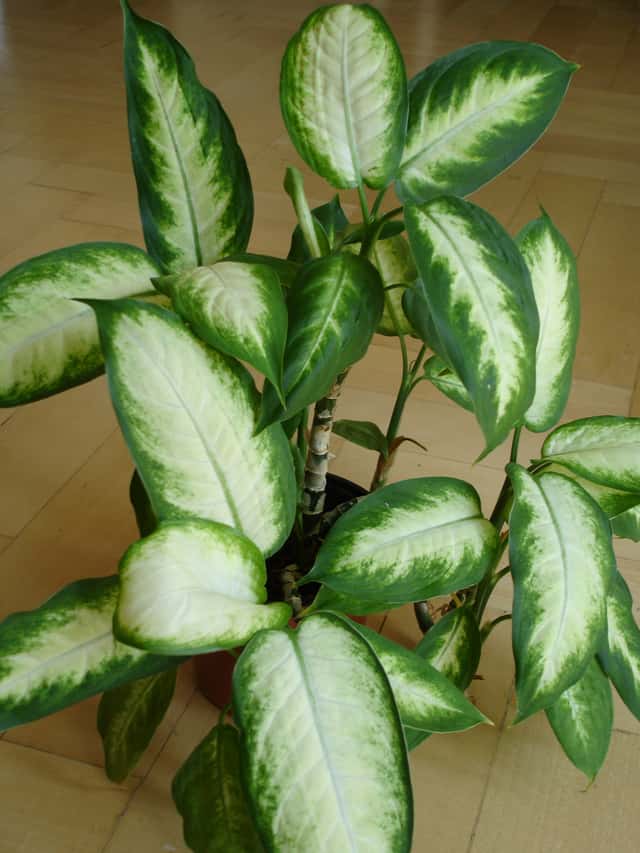
Bowmann Dumb Cane (Dieffenbachia bowmannii) is a medium-care plant from the Araceae family. Dieffenbachia bowmannii is one of the largest species in the genus, native to tropical regions of Central and South America. Its impressive leaves can reach up to 60 cm in length, displaying unique patterns of dark green with pale green to cream-white markings, making it a stunning centrepiece for i...
Bowmann Dumb Cane grows up to 1.8m, spread of 90cm, watering every 7 days, 18°C – 30°C, 60–80% humidity. It is suitable for indoor environments and not safe for pets.
Without precautions, ingestion can cause irritation in pets. Keep out of reach of cats and dogs. Without adequate drainage, root rot can develop within 14 days.
How to Care for Bowmann Dumb Cane?
TLDR: Bowmann Dumb Cane needs Partial shade, watering every 7 days, and temperatures between 18-30°C with 60-80% humidity.
How Often Should You Water Bowmann Dumb Cane?
Water when the top 2 cm of the potting mix feel dry. Always ensure the pot has drainage holes to prevent root rot. Do not allow the plant to sit in standing water.
How Much Light Does Bowmann Dumb Cane Need?
Thrives in bright, indirect light. Too little light causes leaf patterns to fade; direct sun scorches the leaves. A spot 1–2 metres from an east- or west-facing window is ideal.
What Is the Best Soil for Bowmann Dumb Cane?
Use a rich, well-draining potting mix with a pH between 6.0 and 7.0. Adding perlite or coarse sand improves root aeration and prevents waterlogging.
What Pot Should You Use for Bowmann Dumb Cane?
Ceramic or terracotta pot with drainage holes. The weight helps stabilise the large plant.
Care Schedule
Fertilize
Every 14 days
Misting
Every 3 days
Rotate
Every 7 days
Repot
Every 730 days
What Is Bowmann Dumb Cane and Where Does It Come From?
Dieffenbachia bowmannii is one of the largest species in the genus, native to tropical regions of Central and South America. Its impressive leaves can reach up to 60 cm in length, displaying unique patterns of dark green with pale green to cream-white markings, making it a stunning centrepiece for indoor spaces.
How Big Does Bowmann Dumb Cane Grow?
TLDR: Bowmann Dumb Cane can reach up to 1.8m tall with Medium growth rate.
Max height
1.8m
Spread
90cm
Growth rate
Medium
Foliage
Evergreen
Warning: Toxic Plant
This plant can be toxic if ingested. Keep out of reach of:
Plant Uses
Ornamental
Great for decoration
Air Purifying
Improves air quality
Is your plant showing symptoms?
Click on the symptom to discover possible causes:
What Diseases Commonly Affect Bowmann Dumb Cane?
TLDR: Bowmann Dumb Cane is susceptible to 12 known diseases. Monitor regularly for early detection.
Root Rot
Root rot is a serious fungal disease that affects the root system of plants, causing them to decay and die. It is primarily caused by overwatering, poor drainage, or soil-borne fungi such as Pythium, Phytophthora, Rhizoctonia, and Fusarium. The disease thrives in waterlogged conditions where roots are deprived of oxygen, making them susceptible to fungal infection.
Bacterial Leaf Spot
Bacterial leaf spot is a plant disease caused by bacteria in the Xanthomonas and Pseudomonas genera that affects various ornamental and edible plants. The bacteria infect leaves through wounds or natural openings, causing characteristic lesions that can lead to premature leaf drop and plant weakening.
Bacterial Blight
Bacterial blight is a serious plant disease caused by pathogenic bacteria that enters plants through wounds or natural openings. It spreads rapidly in warm, wet conditions and can cause significant damage to leaves, stems, and flowers. The bacteria are transmitted by water splash, contaminated tools, and insects.
Leaf Spot
Leaf spot is a common fungal disease caused by various pathogens including Alternaria, Ascochyta, Colletotrichum, Septoria, and Venturia. It primarily affects leaves, causing discolored spots that can lead to premature leaf drop if left untreated.
Fun Facts
The leaves of Dieffenbachia bowmannii can grow up to 60 cm long — larger than most other species in the genus.
The common name "Dumb Cane" refers to the plant's toxicity: its sap causes intense irritation to the mouth and throat, which can temporarily render a person unable to speak.
It is one of the few Dieffenbachias regularly found in botanical gardens due to its impressive size.
Despite being toxic to humans and pets, it is an excellent indoor air purifier.
Frequently asked questions
Is Dieffenbachia bowmannii toxic to cats and dogs?
How often should I water Dieffenbachia bowmannii?
Why are the leaves turning yellow?
Compare with similar plants
| Attribute | Difficulty | Light | Watering | Pet Safe |
|---|---|---|---|---|
| Dark Fieldcap | Medium | Low light | 2d | ⚠️ |
| Azalea | Medium | Partial shade | 3d | ⚠️ |
| Muriel's Bamboo | Medium | Partial shade | 3d | ✓ |
| Bougainvillea | Medium | Direct sun | 7d | ⚠️ |




