Fabaceae
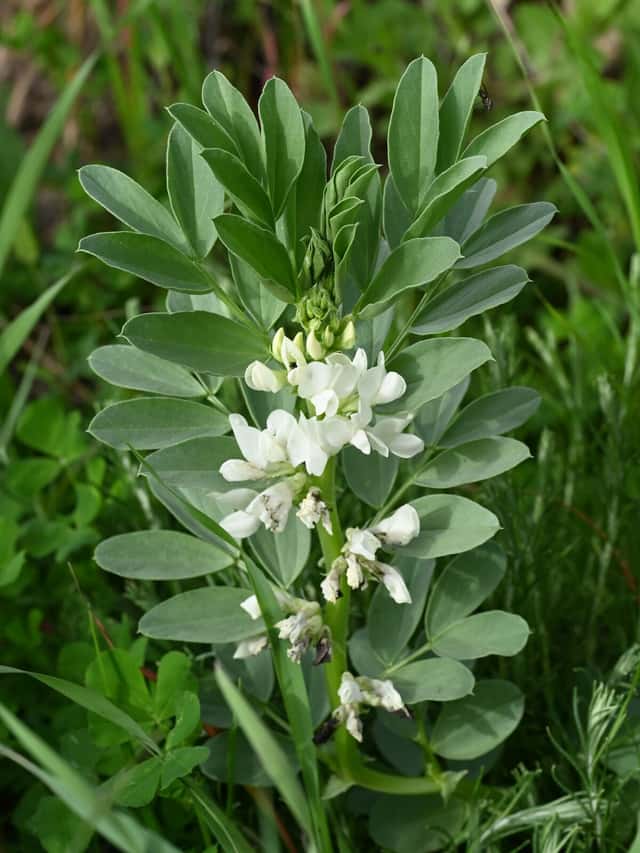
Broad Bean (Vicia faba)
Vicia faba
A cool-season crop grown in full sun in well-drained, humus-rich loam. It prefers pH 6.0 to 7.5 and temperatures of 15 to 18 °C, and tolerates light frost. It fixes nitrogen in the soil.
Every 7 days
Bright indirect
4° - 24°C
% - %
Categories
What is Broad Bean?
Broad Bean (Vicia faba) is a easy-care plant from the Fabaceae family. The broad bean (Vicia faba) is an annual legume in the Fabaceae family, featuring erect stems with a square cross-section that reach 1.5 to 6 feet in height. Its white flowers with black spots are fragrant and attract bees. It has been cultivated since antiquity in the Mediterranean region for its e...
Broad Bean grows up to 1.8m, spread of 25cm, watering every 7 days, 4°C – 24°C. It is not suitable for indoor environments and safe for pets.
Unlike many tropical plants, Broad Bean tolerates watering mistakes. Best for beginners. Unlike many popular species, Broad Bean is safe to keep around pets.
How to Care for Broad Bean?
TLDR: Broad Bean needs Bright indirect, watering every 7 days, and temperatures between 4-24°C with 40-70% humidity.
How Often Should You Water Broad Bean?
Water just before the soil dries out but do not overwater. Keep the soil moist during flowering and pod development.
How Much Light Does Broad Bean Need?
Grow in full sun.
What Is the Best Soil for Broad Bean?
Prefers rich, well-drained loam but also tolerates clay and even saline soils.
Care Schedule
Fertilize
Every 14 days
Misting
Every 3 days
Rotate
Every 7 days
Repot
Every 365 days
What Is Broad Bean and Where Does It Come From?
The broad bean (Vicia faba) is an annual legume in the Fabaceae family, featuring erect stems with a square cross-section that reach 1.5 to 6 feet in height. Its white flowers with black spots are fragrant and attract bees. It has been cultivated since antiquity in the Mediterranean region for its edible seeds.
How to Propagate Broad Bean?
Sowing
In regions with mild winters, sowing can also be done in the fall.
- 1 Sow directly in place at a depth of about 1 inch
- 2 Maintain seeds at 50-70 °F for good germination
- 3 Thin seedlings to a spacing of 8-10 inches apart
Materials needed:
How Big Does Broad Bean Grow?
TLDR: Broad Bean can reach up to 1.8m tall with Fast growth rate.
Max height
1.8m
Spread
25cm
Growth rate
Fast
Warning: Toxic Plant
This plant can be toxic if ingested. Keep out of reach of:
Plant Uses
Edible
Can be consumed
Culinary Uses
- Immature and mature seeds, young pods, and young leaves are edible. Always cook the seeds, as they can be toxic when raw.
Is your plant showing symptoms?
Click on the symptom to discover possible causes:
What Diseases Commonly Affect Broad Bean?
TLDR: Broad Bean is susceptible to 7 known diseases. Monitor regularly for early detection.
Grey Mould
Rust
Rust is a common fungal disease caused by fungi in the order Pucciniales that affects a wide variety of plants. The disease gets its name from the characteristic orange, yellow, or reddish-brown pustules that appear on leaves, resembling metal rust. This obligate fungal parasite requires living plants to survive and can cause significant economic losses in agricultural crops.
Aphids
Aphids are small, soft-bodied, pear-shaped insects (1/16 to 1/8 inch long) that feed by sucking nutrient-rich sap from plants. They reproduce rapidly and can quickly weaken plants, causing distorted growth and transmitting plant viruses. Aphids come in various colors including green, black, red, yellow, brown, and gray. They secrete honeydew, a sticky substance that attracts ants and encourages sooty mold growth.
Powdery Mildew
Powdery mildew is a common fungal disease caused by various fungi species including Erysiphe, Podosphaera, Oïdium, and Leveillula. It affects over 10,000 plant species worldwide. The disease thrives in warm, dry climates with high humidity and appears as a distinctive white powdery coating on plant surfaces.
Compare with similar plants
| Attribute | Difficulty | Light | Watering | Pet Safe |
|---|---|---|---|---|
| Field Maple | Easy | Bright indirect | 14d | ✓ |
| Silver Birch | Easy | Direct sun | 14d | ✓ |
| Common Blanketflower | Easy | Direct sun | 10d | ✓ |
| Cushion Bush | Easy | Direct sun | 14d | ✓ |





