Polygonaceae
Broad-leaved Dock (Rumex obtusifolius)
Rumex obtusifolius
Few people plant it: it turns up on its own in pastures and gardens. If you want to keep it, sun and fertile soil are enough. To remove it, dig out the top of the root before the plant sets seed.
Every 7 days
Bright indirect
° - °C
% - %
Categories
What is Broad-leaved Dock?
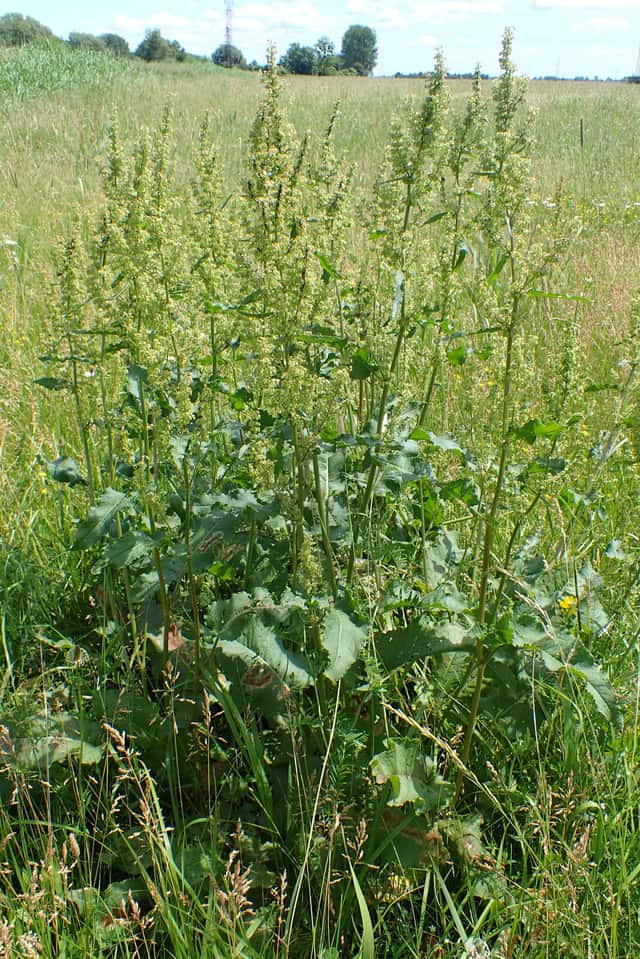
Broad-leaved Dock (Rumex obtusifolius) is a easy-care plant from the Polygonaceae family. Broad-leaved dock is a perennial herb in the buckwheat family, native to Europe and now found on every temperate continent. It forms a rosette of big oval leaves, up to 30 or 40 cm long, with heart-shaped bases and sometimes red stalks. In summer a flower spike rises to 1.5 m, packed with small gree...
Broad-leaved Dock grows up to 1.5m, watering every 7 days. It is not suitable for indoor environments and safe for pets.
Unlike many tropical plants, Broad-leaved Dock tolerates watering mistakes. Best for beginners. Unlike many popular species, Broad-leaved Dock is safe to keep around pets.
How to Care for Broad-leaved Dock?
TLDR: Broad-leaved Dock needs Bright indirect, watering every 7 days, and temperatures between 15-30°C with 40-70% humidity.
How Often Should You Water Broad-leaved Dock?
It rarely needs watering outdoors. Rain is enough and the deep root helps it through drought. It grows even larger in moist soil.
How Much Light Does Broad-leaved Dock Need?
It grows in sun or part shade, from open fields to woodland edges.
What Is the Best Soil for Broad-leaved Dock?
It likes fertile soil, especially loam and clay. It tolerates most soils except the most acidic, and it is more common where nitrogen is high.
What Pot Should You Use for Broad-leaved Dock?
Not a plant for pots, since the taproot is thick and deep.
What Is Broad-leaved Dock and Where Does It Come From?
Broad-leaved dock is a perennial herb in the buckwheat family, native to Europe and now found on every temperate continent. It forms a rosette of big oval leaves, up to 30 or 40 cm long, with heart-shaped bases and sometimes red stalks. In summer a flower spike rises to 1.5 m, packed with small green flowers that turn red. The taproot is thick and deep. Most people know it as a weed of pastures and roadsides, and a large plant can shed up to 60,000 seeds a year.
How to Propagate Broad-leaved Dock?
Seed
Seeds can last for decades in the soil. Think twice before letting a plant go to seed in your garden.
- 1 Sow directly in place in spring
- 2 Cover lightly with soil
- 3 Keep moist until seedlings appear
Materials needed:
Root division
Only the section just above the root collar regrows. That is why removal usually means taking at least the top 9 cm of root.
- 1 Dig up the plant in spring
- 2 Split the top of the root, where the shoots form
- 3 Replant each piece
Materials needed:
How Big Does Broad-leaved Dock Grow?
TLDR: Broad-leaved Dock can reach up to 1.5m tall with Medium growth rate.
Max height
1.5m
Foliage
Deciduous
Warning: Toxic Plant
This plant can be toxic if ingested. Keep out of reach of:
Plant Uses
Edible
Can be consumed
Medicinal
Medicinal properties
Medicinal Uses
- In folk medicine, the leaves have been applied to blisters and burns
- In folk medicine, a root tea has been used for boils
Culinary Uses
- Very young leaves are sometimes eaten cooked, changing the water to reduce bitterness
- It contains oxalates, so avoid large amounts and confirm the identification before eating it
Is your plant showing symptoms?
Click on the symptom to discover possible causes:
What Diseases Commonly Affect Broad-leaved Dock?
TLDR: Broad-leaved Dock is susceptible to 5 known diseases. Monitor regularly for early detection.
Rust
Rust is a common fungal disease caused by fungi in the order Pucciniales that affects a wide variety of plants. The disease gets its name from the characteristic orange, yellow, or reddish-brown pustules that appear on leaves, resembling metal rust. This obligate fungal parasite requires living plants to survive and can cause significant economic losses in agricultural crops.
Ramularia Leaf Spot
Ramularia is a fungal disease (leaf spot) that affects foliage. It begins as small, sharply defined spots, often light green or yellow, which turn brown or gray and may develop a pale border. A fine, grayish-white powdery layer of spores can be seen on the underside of the leaves. Leaves yellow and wither more rapidly during severe infestations. The disease thrives in cool, damp weather and spreads via water splashes, dense plant growth, and infected cuttings or seeds. In home gardens, it is particularly common on geraniums (Pelargonium) and beets/chard; in agriculture, it is well-known for affecting barley.
Leaf chewing damage
Leaf chewing damage is caused by various pests like caterpillars, beetles, and slugs that eat plant tissue. This physical damage reduces the plant ability to make food through photosynthesis and can leave the plant open to infections. If left alone, these pests can strip a plant of its leaves very quickly.
Curculionidae
Curculionidae (weevils) are small beetles that feed on plants. Adults chew leaf margins, leaving crescent-shaped notches, primarily at night. The larvae live in the substrate and consume roots, causing decline, yellowing, and wilting even when the substrate is moist, and in severe cases, plant death. They frequently affect ornamentals and garden plants such as strawberries, citrus, roses, hydrangeas, azaleas, blueberries, begonias, and many potted plants.
Fun Facts
Some seeds can still germinate after 80 years buried
A large plant can produce up to 60,000 seeds a year
The name butter dock comes from wrapping butter in the leaves for market
Frequently asked questions
How do I get rid of broad-leaved dock?
Is broad-leaved dock toxic?
Can you eat broad-leaved dock?
Do dock leaves help with nettle stings?
Compare with similar plants
| Attribute | Difficulty | Light | Watering | Pet Safe |
|---|---|---|---|---|
| Field Maple | Easy | Bright indirect | 14d | ✓ |
| Iberian Houseleek | Easy | Direct sun | 14d | ✓ |
| Silver Birch | Easy | Direct sun | 14d | ✓ |
| Common Blanketflower | Easy | Direct sun | 10d | ✓ |





