Alismataceae
Broadleaf Arrowhead (Sagittaria latifolia)
Sagittaria latifolia
An easy, vigorous aquatic for pond margins and bog gardens. Give it full sun or part shade and permanently wet soil or shallow water up to 30 cm over the crown. Very cold hardy (dies back in winter and regrows). It spreads by rhizomes and seed and can take over a pond; it is regulated as invasive in some countries, so grow it in a basket and never release it into the wild.
Every 2 days
Bright indirect
-20° - °C
% - %
Categories
What is Broadleaf arrowhead?
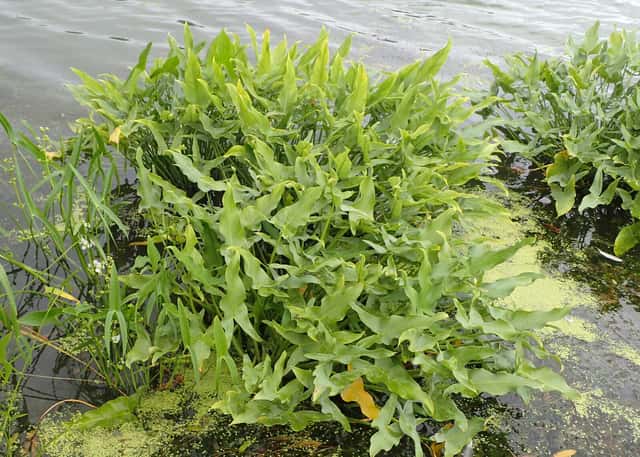
Broadleaf arrowhead (Sagittaria latifolia) is a easy-care plant from the Alismataceae family. Sagittaria latifolia is an aquatic perennial in the family Alismataceae, native to the Americas from southern Canada to western South America, where it forms colonies in marshes, swamps, pond margins and ditches. The long-stalked emergent leaves are shaped like arrowheads and reach 30 cm; the sap is...
Broadleaf arrowhead grows up to 1.2m, spread of 90cm, watering every 2 days. It is not suitable for indoor environments and safe for pets.
Unlike many tropical plants, Broadleaf arrowhead tolerates watering mistakes. Best for beginners. Unlike many popular species, Broadleaf arrowhead is safe to keep around pets.
How to Care for Broadleaf arrowhead?
TLDR: Broadleaf arrowhead needs Bright indirect, watering every 2 days, and temperatures between -20-30°C with 40-70% humidity.
How Often Should You Water Broadleaf arrowhead?
Never let it dry out: plant in the mud at the edge or submerged in 15-30 cm of water. In a container, stand the pot in water or keep the mix flooded. Do not plant in water deeper than 30 cm.
How Much Light Does Broadleaf arrowhead Need?
Flowers best in full sun; tolerates part shade.
What Is the Best Soil for Broadleaf arrowhead?
Mud or clay, loam or sandy soil that stays saturated. In an aquatic basket, use heavy garden soil or aquatic compost, without loose organic fertilizer that clouds the water.
What Pot Should You Use for Broadleaf arrowhead?
A wide aquatic planting basket or pot set in 15-30 cm of water; the basket also helps contain the spreading rhizomes.
What Is Broadleaf arrowhead and Where Does It Come From?
Sagittaria latifolia is an aquatic perennial in the family Alismataceae, native to the Americas from southern Canada to western South America, where it forms colonies in marshes, swamps, pond margins and ditches. The long-stalked emergent leaves are shaped like arrowheads and reach 30 cm; the sap is milky. In summer, July to September in the northern hemisphere, it raises stalks with whorls of white, three-petalled flowers about 4 cm across. Plants grow 0.5-1.2 m tall. The rhizomes form starchy tubers, the "duck potato" or wapato, that Indigenous peoples of North America ate cooked; ducks, beavers and muskrats feed on them too.
How to Propagate Broadleaf arrowhead?
Division
This is the preferred method. Divide every few years to keep its spread in check.
- 1 In spring, lift the clump from its basket or the mud
- 2 Cut it into pieces with leaves and rhizome using a clean knife
- 3 Replant each piece in an aquatic basket with heavy soil
- 4 Return it to the shallow water at the pond edge
Materials needed:
Planting tubers
Tubers break free and float when the mud is stirred, which makes them easy to collect.
- 1 In fall or early spring, collect the tubers at the rhizome tips
- 2 Bury them a few centimetres deep in the mud at the edge or in a submerged basket
- 3 Keep them under water until they sprout
Materials needed:
Seeds
The plant also self-seeds.
- 1 Sow on waterlogged mix in a tray standing in shallow water
- 2 Keep somewhere bright and warm
- 3 Move seedlings to the margin once they have a few leaves
Materials needed:
How Big Does Broadleaf arrowhead Grow?
TLDR: Broadleaf arrowhead can reach up to 1.2m tall with Fast growth rate.
Max height
1.2m
Spread
90cm
Growth rate
Fast
Foliage
Deciduous
Plant Uses
Ornamental
Great for decoration
Edible
Can be consumed
Culinary Uses
- Tubers (duck potatoes) boiled, roasted or fried, tasting like potato or chestnut; raw they are bitter
- Flower buds and young fruit can be cooked
Is your plant showing symptoms?
Click on the symptom to discover possible causes:
What Diseases Commonly Affect Broadleaf arrowhead?
TLDR: Broadleaf arrowhead is susceptible to 2 known diseases. Monitor regularly for early detection.
Aphids
Aphids are small, soft-bodied, pear-shaped insects (1/16 to 1/8 inch long) that feed by sucking nutrient-rich sap from plants. They reproduce rapidly and can quickly weaken plants, causing distorted growth and transmitting plant viruses. Aphids come in various colors including green, black, red, yellow, brown, and gray. They secrete honeydew, a sticky substance that attracts ants and encourages sooty mold growth.
Spider Mites
Spider mites are tiny arachnids (less than 1/20 inch long) related to spiders and ticks that feed on plant sap. They thrive in hot, dry conditions and can cause significant damage to ornamental and vegetable plants. During severe infestations, crop losses can reach 14% or higher as these pests disrupt vital plant processes including photosynthesis, carbon dioxide absorption, and transpiration.
Fun Facts
Wapato is a Native American name for the plant and its tubers
Indigenous people opened muskrat lodges to collect the tubers the animals had stored
At least fifteen species of ducks eat the tubers
Frequently asked questions
How deep should Sagittaria latifolia be planted?
Are duck potatoes edible?
Is broadleaf arrowhead cold hardy?
Is Sagittaria latifolia invasive?
Compare with similar plants
| Attribute | Difficulty | Light | Watering | Pet Safe |
|---|---|---|---|---|
| Field Maple | Easy | Bright indirect | 14d | ✓ |
| Iberian Houseleek | Easy | Direct sun | 14d | ✓ |
| Silver Birch | Easy | Direct sun | 14d | ✓ |
| Common Blanketflower | Easy | Direct sun | 10d | ✓ |
Choose & Compare
Sources & References
- NC State Extension Plant Toolbox - Sagittaria latifolia (broad-leaved arrowhead)
- Lady Bird Johnson Wildflower Center - Sagittaria latifolia (Broadleaf Arrowhead)
- RHS - Sagittaria latifolia (wapato)
- Mississippi State University Extension - Arrowhead (Sagittaria spp.)
- Florida Native Plant Society - Sagittaria latifolia





