Euphorbiaceae
Buddha Belly Plant — Jatropha podagrica: Care Guide
Jatropha podagrica
A low-maintenance succulent that thrives with bright light, infrequent watering, and excellent drainage. Reduce watering significantly in winter during dormancy. Overwatering is the primary cause of failure.
Every 14 days
Bright indirect
12° - 38°C
30% - 60%
Categories
What is Buddha belly plant?
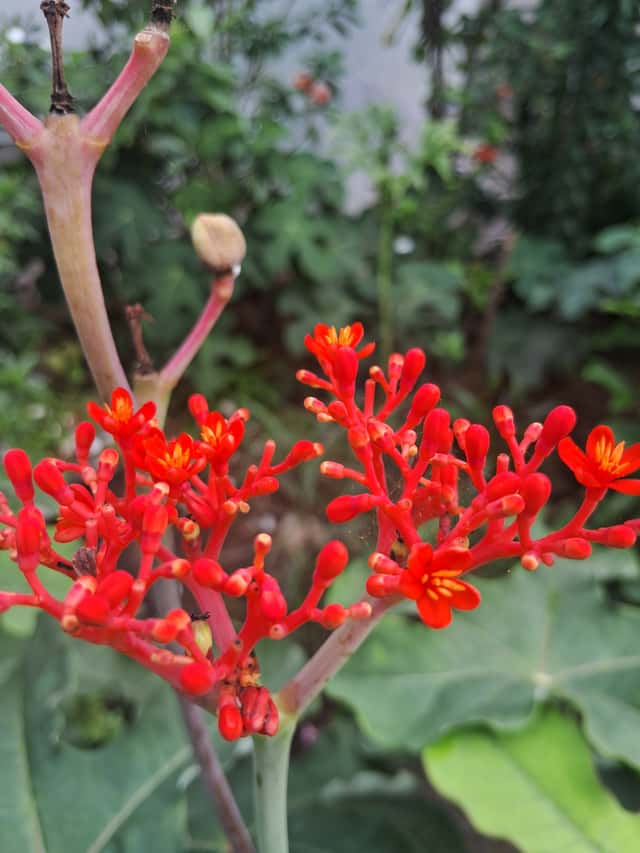
Buddha belly plant (Jatropha podagrica) is a medium-care plant from the Euphorbiaceae family. Jatropha podagrica is a striking caudex-forming succulent native to Central America and southern Mexico. Its characteristic swollen, bottle-like stem stores water and nutrients, granting exceptional drought tolerance. It produces vivid orange-red flowers in dense clusters on long peduncles almost ye...
Buddha belly plant grows up to 80cm, spread of 45cm, watering every 14 days, 12°C – 38°C, 30–60% humidity. It is suitable for indoor environments and not safe for pets.
Without precautions, ingestion can cause irritation in pets. Keep out of reach of cats and dogs. Without adequate drainage, root rot can develop within 28 days.
How to Care for Buddha belly plant?
TLDR: Buddha belly plant needs Bright indirect, watering every 14 days, and temperatures between 12-38°C with 30-60% humidity.
How Often Should You Water Buddha belly plant?
Water only when the top third of the soil is dry — approximately every 10–14 days in summer, once a month or less in winter. Never allow the pot to sit in standing water as this causes root rot rapidly.
How Much Light Does Buddha belly plant Need?
Requires bright indirect to full direct light. Outdoors, provide full sun. Indoors, place in a south- or west-facing window. Avoid deep shade, which causes etiolation and increases rot risk.
What Is the Best Soil for Buddha belly plant?
Use a well-draining cactus/succulent mix. Add extra perlite or coarse grit (20–30%) to improve drainage. Always use a pot with drainage holes — terracotta is ideal.
What Pot Should You Use for Buddha belly plant?
Terracotta pot with drainage holes. Porous walls help wick away excess moisture and prevent root rot.
Care Schedule
Fertilize
Every 30 days
What Is Buddha belly plant and Where Does It Come From?
Jatropha podagrica is a striking caudex-forming succulent native to Central America and southern Mexico. Its characteristic swollen, bottle-like stem stores water and nutrients, granting exceptional drought tolerance. It produces vivid orange-red flowers in dense clusters on long peduncles almost year-round, creating a striking contrast with its large, deeply lobed leaves. WARNING: all parts of the plant are highly toxic to humans, cats, and dogs.
How Big Does Buddha belly plant Grow?
TLDR: Buddha belly plant can reach up to 80cm tall with Slow growth rate.
Max height
80cm
Spread
45cm
Growth rate
Slow
Foliage
Deciduous
Warning: Toxic Plant
This plant can be toxic if ingested. Keep out of reach of:
Plant Uses
Ornamental
Great for decoration
Medicinal
Medicinal properties
Medicinal Uses
- Historically used in some cultures as a topical remedy for skin conditions; NOT safe for internal use due to severe toxicity.
Is your plant showing symptoms?
Click on the symptom to discover possible causes:
What Diseases Commonly Affect Buddha belly plant?
TLDR: Buddha belly plant is susceptible to 12 known diseases. Monitor regularly for early detection.
Root Rot
Root rot is a serious fungal disease that affects the root system of plants, causing them to decay and die. It is primarily caused by overwatering, poor drainage, or soil-borne fungi such as Pythium, Phytophthora, Rhizoctonia, and Fusarium. The disease thrives in waterlogged conditions where roots are deprived of oxygen, making them susceptible to fungal infection.
Overwatering
Overwatering occurs when plants receive too much water, depriving roots of oxygen and causing root rot. This environmental stress is one of the most common causes of houseplant death, as waterlogged soil prevents roots from breathing and functioning properly.
Mealybugs
Mealybugs are small, soft-bodied insects covered with a white, waxy, cottony material. They are common pests of houseplants and outdoor plants in mild climates. These sap-sucking insects feed on plant tissue, causing damage, stunted growth, and can lead to plant death if left untreated. They produce sticky honeydew which attracts sooty mold.
Spider Mites
Spider mites are tiny arachnids (less than 1/20 inch long) related to spiders and ticks that feed on plant sap. They thrive in hot, dry conditions and can cause significant damage to ornamental and vegetable plants. During severe infestations, crop losses can reach 14% or higher as these pests disrupt vital plant processes including photosynthesis, carbon dioxide absorption, and transpiration.
Meaning & Symbolism
Resilience and transformation; the swollen caudex represents stored vitality, patience, and the ability to thrive under adversity.
Fun Facts
The swollen caudex stem can store enough water to survive months of drought — a remarkable adaptation to seasonal dry periods in its native habitat.
Despite its small indoor size (up to 80 cm), wild specimens in Central America can reach 2 meters tall.
Jatropha podagrica blooms almost continuously year-round, even through winter, making it one of the longest-blooming succulents.
The toxic compound curcin in its seeds is so potent that just 2–3 seeds can be fatal to a child.
Frequently asked questions
Is the Buddha belly plant toxic to cats and dogs?
Why is my Buddha belly plant dropping its leaves?
How often should I water the Buddha belly plant?
Can I grow a Buddha belly plant indoors?
Compare with similar plants
| Attribute | Difficulty | Light | Watering | Pet Safe |
|---|---|---|---|---|
| Dark Fieldcap | Medium | Low light | 2d | ⚠️ |
| Azalea | Medium | Partial shade | 3d | ⚠️ |
| Muriel's Bamboo | Medium | Partial shade | 3d | ✓ |
| Bougainvillea | Medium | Direct sun | 7d | ⚠️ |




