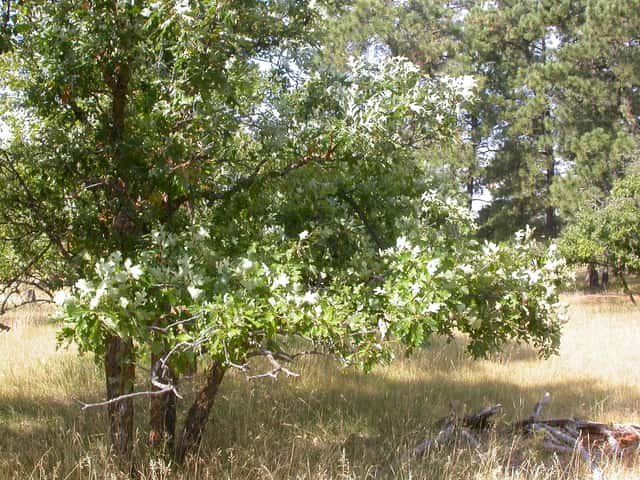
Fagaceae
Bur Oak (Quercus macrocarpa)
Quercus macrocarpa
Once settled it needs little from you. Give it full sun and space, and avoid moving it: the taproot runs deep early on.
Every 14 days
Direct sun
° - °C
% - %
Categories
What is Bur Oak?
Bur Oak (Quercus macrocarpa) is a easy-care plant from the Fagaceae family. A large deciduous white oak from central and eastern North America. It reaches about 100 feet (30 m) and commonly lives 200 to 300 years, sometimes 400. Its acorns are the largest of any North American oak, up to 2 inches long, with a fringed cup that wraps much of the nut. Thick bark helps older tr...
Bur Oak grows up to 30.0m, spread of 2400cm, watering every 14 days. It is not suitable for indoor environments and safe for pets.
Unlike many tropical plants, Bur Oak tolerates watering mistakes. Best for beginners. Unlike many popular species, Bur Oak is safe to keep around pets.
How to Care for Bur Oak?
TLDR: Bur Oak needs Direct sun, watering every 14 days, and temperatures between 15-30°C with 40-70% humidity.
How Often Should You Water Bur Oak?
Water a young tree during its first years whenever the soil dries out. Once established, the deep taproot handles drought on its own.
How Much Light Does Bur Oak Need?
Plant it where it gets 6 or more hours of direct sun. Young trees can take partial shade.
What Is the Best Soil for Bur Oak?
It takes clay, sand or rocky ground as long as water drains, and it handles alkaline soil better than most oaks.
What Pot Should You Use for Bur Oak?
Not a tree for containers. If you buy a young one, get it into its final spot early.
What Is Bur Oak and Where Does It Come From?
A large deciduous white oak from central and eastern North America. It reaches about 100 feet (30 m) and commonly lives 200 to 300 years, sometimes 400. Its acorns are the largest of any North American oak, up to 2 inches long, with a fringed cup that wraps much of the nut. Thick bark helps older trees survive fire. It needs room, so it suits a park or a big lot far better than a small yard. Hardy in USDA zones 3 to 8.
How to Propagate Bur Oak?
Sowing acorns
The taproot can grow more than 3 feet down in the first season, so moving the seedling later is hard.
- 1 Collect ripe acorns in fall and sow right away, or store them cool and moist at 34-39 °F until spring.
- 2 Bury them 1/2 to 1 inch deep, in groups of 2 or 3.
- 3 Sow in the final spot, spacing groups about 6 feet apart.
Materials needed:
How Big Does Bur Oak Grow?
TLDR: Bur Oak can reach up to 30.0m tall with Slow growth rate.
Max height
30.0m
Spread
24.0m
Growth rate
Slow
Foliage
Deciduous
Warning: Toxic Plant
This plant can be toxic if ingested. Keep out of reach of:
Plant Uses
Ornamental
Great for decoration
Edible
Can be consumed
Medicinal
Medicinal properties
Medicinal Uses
- Native Americans used an astringent bark tea for diarrhea, wounds and insect bites (traditional use)
Culinary Uses
- Acorns eaten boiled after leaching the tannins (traditional use; check before eating)
Is your plant showing symptoms?
Click on the symptom to discover possible causes:
What Diseases Commonly Affect Bur Oak?
TLDR: Bur Oak is susceptible to 8 known diseases. Monitor regularly for early detection.
Anthracnose
Anthracnose is a fungal disease caused by fungi in the genus Colletotrichum that affects many plants, including vegetables, fruits, and trees. The disease thrives in cool, wet conditions, causing dark, sunken lesions on leaves, stems, flowers, and fruits.
Leaf Spot
Leaf spot is a common fungal disease caused by various pathogens including Alternaria, Ascochyta, Colletotrichum, Septoria, and Venturia. It primarily affects leaves, causing discolored spots that can lead to premature leaf drop if left untreated.
Powdery Mildew
Powdery mildew is a common fungal disease caused by various fungi species including Erysiphe, Podosphaera, Oïdium, and Leveillula. It affects over 10,000 plant species worldwide. The disease thrives in warm, dry climates with high humidity and appears as a distinctive white powdery coating on plant surfaces.
Canker
Canker is a disease caused by various fungi and bacteria that create necrotic, sunken areas on bark of branches, stems, and trunks. Pathogens enter through wounds and natural openings, especially when plants are stressed. Canker can gradually weaken or kill branches by disrupting water and nutrient flow.
Fun Facts
Macrocarpa comes from the Greek for "large fruit".
Heavy acorn crops come only every 2 or 3 years, which leaves seed behind after animals have had their fill.
A one-year-old seedling can already have a taproot about 4 and a half feet deep.
Frequently asked questions
Is a bur oak OK for a small yard?
Do I need to water a bur oak?
Are bur oak acorns poisonous?
What diseases hit bur oak?
Compare with similar plants
| Attribute | Difficulty | Light | Watering | Pet Safe |
|---|---|---|---|---|
| Field Maple | Easy | Bright indirect | 14d | ✓ |
| Iberian Houseleek | Easy | Direct sun | 14d | ✓ |
| Silver Birch | Easy | Direct sun | 14d | ✓ |
| Common Blanketflower | Easy | Direct sun | 10d | ✓ |





