Asparagaceae
Butcher's Broom (Ruscus aculeatus)
Ruscus aculeatus
Very easy and tough. Part to full shade, any soil that drains, little water once established. Cut dead stems at the base in spring.
Every 10 days
Low light
° - °C
% - %
Categories
What is Butcher's Broom?
Butcher's Broom (Ruscus aculeatus) is a easy-care plant from the Asparagaceae family. Butcher's broom (Ruscus aculeatus) is a low evergreen shrub in the asparagus family (Asparagaceae), native to Europe, North Africa and western Asia, where it grows in woodland and shady places. It forms clumps 50-90 cm tall of stiff green stems. What look like leaves are flattened shoots (cladodes),...
Butcher's Broom grows up to 90cm, spread of 100cm, watering every 10 days. It is not suitable for indoor environments and not safe for pets.
Unlike many tropical plants, Butcher's Broom tolerates watering mistakes. Best for beginners. Without precautions, ingestion can cause irritation in pets. Keep out of reach of cats and dogs.
How to Care for Butcher's Broom?
TLDR: Butcher's Broom needs Low light, watering every 10 days, and temperatures between 15-30°C with 40-70% humidity.
How Often Should You Water Butcher's Broom?
Water regularly in the first year. Once established it is drought tolerant and only needs water in long dry spells. It dislikes wet roots.
How Much Light Does Butcher's Broom Need?
Part shade to deep shade, even under trees. Strong sun can yellow the stems.
What Is the Best Soil for Butcher's Broom?
Grows in almost any soil, clay to sand, acid or chalky, as long as it drains.
What Pot Should You Use for Butcher's Broom?
A large, deep pot with a drainage hole so the clump can spread; it does best in the ground.
What Is Butcher's Broom and Where Does It Come From?
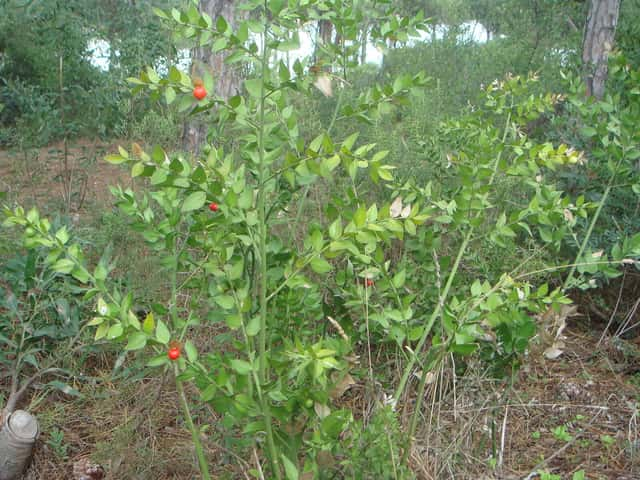
Butcher's broom (Ruscus aculeatus) is a low evergreen shrub in the asparagus family (Asparagaceae), native to Europe, North Africa and western Asia, where it grows in woodland and shady places. It forms clumps 50-90 cm tall of stiff green stems. What look like leaves are flattened shoots (cladodes), oval and tipped with a spine; the true leaves are tiny. In winter and spring small whitish flowers appear in the middle of these 'leaves'. Female plants with a male nearby carry glossy red berries from late summer into winter.
How to Propagate Butcher's Broom?
Division
Wear gloves: the stem tips are prickly.
- 1 In early spring, lift the clump
- 2 Split off pieces with roots and a few stems
- 3 Replant large divisions straight into place
- 4 Pot small ones and keep in shade until established
Materials needed:
Seed
Germination is slow and erratic, so be patient.
- 1 Sow in early spring in a cool, shaded spot
- 2 A cold period helps germination
- 3 Protect seedlings from slugs
- 4 Grow on in pots for 2 years before planting out
Materials needed:
How Big Does Butcher's Broom Grow?
TLDR: Butcher's Broom can reach up to 90cm tall with Slow growth rate.
Max height
90cm
Spread
1.0m
Growth rate
Slow
Foliage
Evergreen
Warning: Toxic Plant
This plant can be toxic if ingested. Keep out of reach of:
Plant Uses
Ornamental
Great for decoration
Ground Cover
Soil coverage
Medicinal
Medicinal properties
Edible
Can be consumed
Medicinal Uses
- Root used in herbal medicine for varicose veins and haemorrhoids (only with professional advice; not for people with high blood pressure)
Culinary Uses
- Young shoots eaten cooked like asparagus
- Roasted seeds once used as a coffee substitute
Is your plant showing symptoms?
Click on the symptom to discover possible causes:
What Diseases Commonly Affect Butcher's Broom?
TLDR: Butcher's Broom is susceptible to 1 known diseases. Monitor regularly for early detection.
Fun Facts
The 'leaves' are flattened stems, and the flowers grow right in the middle of them.
Bundles of the stiff stems were used to scrub butchers' blocks, which gave the plant its name.
The young shoots were once eaten like asparagus.
Frequently asked questions
Are butcher's broom berries poisonous?
Why doesn't my plant have berries?
Can it take full shade?
Does it need pruning?
Compare with similar plants
| Attribute | Difficulty | Light | Watering | Pet Safe |
|---|---|---|---|---|
| Field Maple | Easy | Bright indirect | 14d | ✓ |
| Iberian Houseleek | Easy | Direct sun | 14d | ✓ |
| Silver Birch | Easy | Direct sun | 14d | ✓ |
| Common Blanketflower | Easy | Direct sun | 10d | ✓ |





