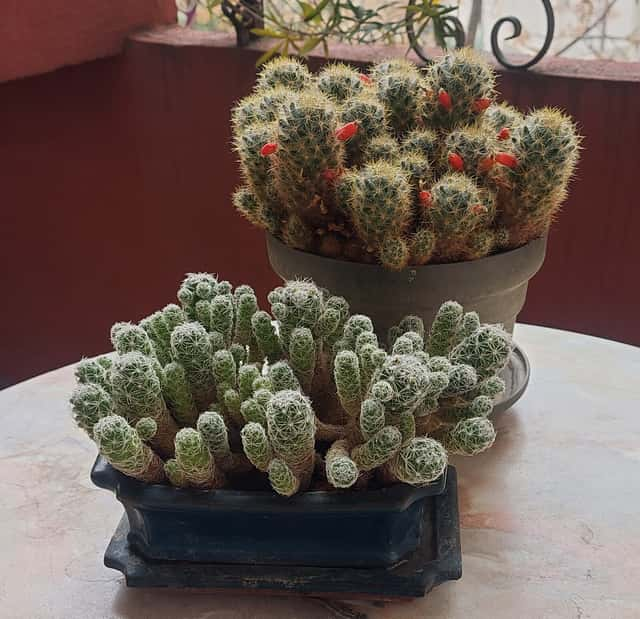
Cactaceae
Cactus: Full Sun Plant
Cactaceae
Easy-care plant: plenty of light (at least 4–6 hours of direct sun), infrequent and abundant watering only when the substrate has completely dried out, special cactus substrate with very good drainage. Fertilize with diluted fertilizer about once a month in spring and summer; in winter, allow a resting period at 7–10 °C, with almost no water and no fertilizer. Rotate the pot occasionally and repot every 2–4 years in spring.
Every 14 days
Direct sun
7° - 30°C
20% - 40%
Categories
What is Cactus?
Cactus (Cactaceae) is a easy-care plant from the Cactaceae family. “Cactus” is the common name for plants in the Cactaceae family, succulents native to the Americas that store water in thick stems and have spines grouped in areoles instead of leaves. Small to medium-sized species from the Mammillaria, Echinopsis, Opuntia, and Cereus genera are mostly grown indoors...
Cactus grows up to watering every 14 days, 7°C – 30°C, 20–40% humidity. It is suitable for indoor environments and safe for pets.
Unlike many tropical plants, Cactus tolerates watering mistakes. Best for beginners. Unlike many popular species, Cactus is safe to keep around pets. Without adequate drainage, root rot can develop within 28 days.
How to Care for Cactus?
TLDR: Cactus needs Direct sun, watering every 14 days, and temperatures between 7-30°C with 20-40% humidity.
How Often Should You Water Cactus?
Water abundantly only when the substrate is completely dry, then allow excess water to drain; never leave water in the saucer. From March to September, this usually means once every 1–2 weeks; from October, gradually reduce, and in winter, in a cool environment, water at most once a month, sparingly, just enough to prevent the plant from shriveling. Overwatering is the main cause of cactus death (root rot).
How Much Light Does Cactus Need?
Place it in the brightest window of the house, ideally south or west-facing, with at least 4–6 hours of direct sun per day. In low light, it will stretch and deform (etiolation). In spring, when moving it to a balcony, gradually acclimate it to the sun to prevent sunburn.
What Is the Best Soil for Cactus?
Use substrate for cacti and succulents or a mixture of potting soil with coarse sand, perlite, or pumice (approximately half mineral material). The substrate must dry quickly and not remain wet; avoid heavy soil that retains water.
What Pot Should You Use for Cactus?
Unglazed terracotta pot with a drainage hole, only slightly larger than the plant; terracotta breathes and helps the substrate dry out. Avoid large pots and those without drainage.
Care Schedule
Fertilize
Every 30 days
Rotate
Every 30 days
Repot
Every 1095 days
What Is Cactus and Where Does It Come From?
“Cactus” is the common name for plants in the Cactaceae family, succulents native to the Americas that store water in thick stems and have spines grouped in areoles instead of leaves. Small to medium-sized species from the Mammillaria, Echinopsis, Opuntia, and Cereus genera are mostly grown indoors and on balconies. They grow slowly, live for many years, and after a cool, dry winter, many of them bloom in spring or summer with red, yellow, pink, white, or orange flowers. Common potted cacti are not considered toxic to humans or animals, but their spines and glochids (fine hairs of Opuntia) can injure skin, mouth, and eyes; a few species (peyote, San Pedro) contain alkaloids and should not be consumed.
How to Propagate Cactus?
Separating offsets (pups)
Wear thick gloves or use folded paper to hold the plant. Do not water until the wound has dried, otherwise, it will rot.
- 1 Carefully detach a pup formed at the base of the mother plant using tweezers or a clean knife.
- 2 Leave it in the shade and air for 2-5 days until the wound dries and calluses.
- 3 Place it on dry cactus substrate, without burying it deeply.
- 4 Start watering lightly only after 1-2 weeks, when roots appear.
Materials needed:
Stem cuttings
Suitable method for columnar cacti (Cereus) and Opuntia. The cut must be well-dried before planting.
- 1 Cut a healthy stem segment (for Opuntia, an entire 'pad') with a clean knife.
- 2 Allow the cutting to dry for 2-5 days until a callus forms on the cut.
- 3 Insert the base 1-2 cm into dry, mineral substrate.
- 4 Keep it in bright indirect light and water lightly after roots appear.
Materials needed:
From seeds
This is the slowest method: plants can reach pot size or flowering after 2-5 years.
- 1 Sow on the surface of a fine, sandy substrate, without covering the seeds.
- 2 Cover the tray with clear film or a lid and keep it warm (20-25 °C) and in light.
- 3 Maintain the substrate slightly moist until germination, then gradually ventilate.
- 4 Prick out the seedlings after a few months when they are large enough.
Materials needed:
How Big Does Cactus Grow?
TLDR: Cactus can reach up to ?cm tall with Slow growth rate.
Growth rate
Slow
Foliage
Evergreen
Plant Uses
Ornamental
Great for decoration
Is your plant showing symptoms?
Click on the symptom to discover possible causes:
What Diseases Commonly Affect Cactus?
TLDR: Cactus is susceptible to 11 known diseases. Monitor regularly for early detection.
Root Rot
Root rot is a serious fungal disease that affects the root system of plants, causing them to decay and die. It is primarily caused by overwatering, poor drainage, or soil-borne fungi such as Pythium, Phytophthora, Rhizoctonia, and Fusarium. The disease thrives in waterlogged conditions where roots are deprived of oxygen, making them susceptible to fungal infection.
Overwatering
Overwatering occurs when plants receive too much water, depriving roots of oxygen and causing root rot. This environmental stress is one of the most common causes of houseplant death, as waterlogged soil prevents roots from breathing and functioning properly.
Mealybugs
Mealybugs are small, soft-bodied insects covered with a white, waxy, cottony material. They are common pests of houseplants and outdoor plants in mild climates. These sap-sucking insects feed on plant tissue, causing damage, stunted growth, and can lead to plant death if left untreated. They produce sticky honeydew which attracts sooty mold.
Scale Insects
Scale insects are small sap-sucking pests that appear as brown, shell-like bumps on plant stems and leaves. There are over 25 species, divided into armored (hard) and unarmored (soft) scales. They feed by piercing plant tissue and extracting sap, which weakens the plant and can lead to yellowing, stunted growth, and even death if left untreated. They also excrete honeydew, which attracts ants and promotes sooty mold growth.
Meaning & Symbolism
Resilience, patience, and protection: the cactus survives drought, and its spines are seen as a shield.
Compare with similar plants
| Attribute | Difficulty | Light | Watering | Pet Safe |
|---|---|---|---|---|
| Field Maple | Easy | Bright indirect | 14d | ✓ |
| Iberian Houseleek | Easy | Direct sun | 14d | ✓ |
| Silver Birch | Easy | Direct sun | 14d | ✓ |
| Common Blanketflower | Easy | Direct sun | 10d | ✓ |





