Berberidaceae
Calafate (Berberis microphylla)
Berberis microphylla
A garden shrub for cold or temperate climates that handles frosts down to -15 °C and strong wind. Plant it in sun or part shade in soil that drains well, and water regularly for the first few years; after that it tolerates drought. Prune in winter, wearing gloves for the spines.
Every 7 days
Direct sun
-15° - °C
% - %
Categories
What is Calafate?
Calafate (Berberis microphylla) is a easy-care plant from the Berberidaceae family. Berberis microphylla, known as calafate, is a spiny shrub in the family Berberidaceae, native to southern Chile and Argentina, from the Maule region to Tierra del Fuego and from sea level to about 2,000 meters. It grows 1.5 to 2.5 meters tall and spreads wide, with arching branches covered in three-...
Calafate grows up to 2.5m, spread of 400cm, watering every 7 days. It is not suitable for indoor environments and safe for pets.
Unlike many tropical plants, Calafate tolerates watering mistakes. Best for beginners. Unlike many popular species, Calafate is safe to keep around pets.
How to Care for Calafate?
TLDR: Calafate needs Direct sun, watering every 7 days, and temperatures between -15-30°C with 40-70% humidity.
How Often Should You Water Calafate?
For the first two years, water deeply once a week; drip irrigation works well. Once established it handles dry spells and only needs water in long droughts. Avoid soggy soil.
How Much Light Does Calafate Need?
Full sun gives the most flowers and fruit. It tolerates part shade, but in deep shade it fruits poorly.
What Is the Best Soil for Calafate?
Prefers well-drained sandy or sandy loam soil, slightly acidic to neutral (pH 5.5 to 7). It also grows in clay and in thin, poor soil.
What Pot Should You Use for Calafate?
Grows best in the ground. In a container, use a large, deep pot with drainage holes and a free-draining mix, and expect a smaller shrub.
Care Schedule
Fertilize
Every 365 days
What Is Calafate and Where Does It Come From?
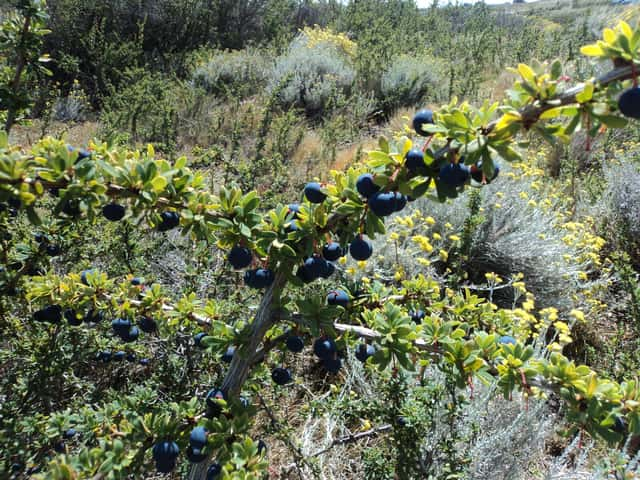
Berberis microphylla, known as calafate, is a spiny shrub in the family Berberidaceae, native to southern Chile and Argentina, from the Maule region to Tierra del Fuego and from sea level to about 2,000 meters. It grows 1.5 to 2.5 meters tall and spreads wide, with arching branches covered in three-pronged spines. The leaves are small, tough and glossy; in cold winters the shrub may drop some of them. In spring it bears masses of small yellow-orange flowers. Round blue-black berries follow; they are sweet with little acidity and are eaten fresh or made into jam, ice cream and even beer. It is also sold as Berberis buxifolia, an older name still in wide use.
How to Propagate Calafate?
Seed
Fresh seed germinates fastest. Stored seed needs a cold period before it will sprout.
- 1 Take seeds from fully ripe berries and wash off the pulp
- 2 Sow right away in a sheltered outdoor seedbed, or keep in the fridge at 4 °C for 3 to 4 months before sowing
- 3 Keep seedlings well ventilated to avoid damping off
- 4 Move them to individual pots and plant out the following year
Materials needed:
Stem cutting
Calafate is hard to root from cuttings, so take several to get a few plants. Wear gloves for the spines.
- 1 In midsummer, cut 10-15 cm semi-ripe tips
- 2 Strip the lower leaves and dip the base in rooting hormone
- 3 Insert into moist sandy mix in a propagator or covered pot
- 4 Keep in light shade and moist until rooted
Materials needed:
How Big Does Calafate Grow?
TLDR: Calafate can reach up to 2.5m tall with Medium growth rate.
Max height
2.5m
Spread
4.0m
Foliage
Semi-evergreen
Warning: Toxic Plant
This plant can be toxic if ingested. Keep out of reach of:
Plant Uses
Ornamental
Great for decoration
Edible
Can be consumed
Medicinal
Medicinal properties
Medicinal Uses
- Traditional use of root and bark, which contain berberine (harmful in excess; do not use without medical advice)
Culinary Uses
- Fresh berries
- Jams, preserves and ice cream
- Calafate beer and liqueurs
Is your plant showing symptoms?
Click on the symptom to discover possible causes:
What Diseases Commonly Affect Calafate?
TLDR: Calafate is susceptible to 4 known diseases. Monitor regularly for early detection.
Aphids
Aphids are small, soft-bodied, pear-shaped insects (1/16 to 1/8 inch long) that feed by sucking nutrient-rich sap from plants. They reproduce rapidly and can quickly weaken plants, causing distorted growth and transmitting plant viruses. Aphids come in various colors including green, black, red, yellow, brown, and gray. They secrete honeydew, a sticky substance that attracts ants and encourages sooty mold growth.
Scale Insects
Scale insects are small sap-sucking pests that appear as brown, shell-like bumps on plant stems and leaves. There are over 25 species, divided into armored (hard) and unarmored (soft) scales. They feed by piercing plant tissue and extracting sap, which weakens the plant and can lead to yellowing, stunted growth, and even death if left untreated. They also excrete honeydew, which attracts ants and promotes sooty mold growth.
Powdery Mildew
Powdery mildew is a common fungal disease caused by various fungi species including Erysiphe, Podosphaera, Oïdium, and Leveillula. It affects over 10,000 plant species worldwide. The disease thrives in warm, dry climates with high humidity and appears as a distinctive white powdery coating on plant surfaces.
Damping Off
Damping off is a soil-borne fungal disease that affects seeds and young seedlings, causing rotting of stem and root tissues at and below the soil line. It is caused by several fungi including Pythium, Rhizoctonia, Fusarium, and Phytophthora. The disease thrives in cold, wet conditions with poor air circulation.
Meaning & Symbolism
Patagonian legend says that whoever eats a calafate berry will always return to Patagonia.
Fun Facts
The Argentine town of El Calafate is named after this shrub.
Its wood and roots were used to dye wool.
The berries get their dark color from anthocyanins, the same pigments found in blueberries.
Frequently asked questions
Are calafate berries edible?
Is calafate cold hardy?
When does calafate flower and fruit?
Are calafate and Berberis buxifolia the same plant?
Compare with similar plants
| Attribute | Difficulty | Light | Watering | Pet Safe |
|---|---|---|---|---|
| Field Maple | Easy | Bright indirect | 14d | ✓ |
| Iberian Houseleek | Easy | Direct sun | 14d | ✓ |
| Silver Birch | Easy | Direct sun | 14d | ✓ |
| Common Blanketflower | Easy | Direct sun | 10d | ✓ |





